What determines AC Cost in Florida
Air conditioning is a “big ticket” item in Florida.
Our climate is the envy of America but it is hard on air conditioning systems. They need regular AC maintenance and may need repairs or replacement sooner than in most of the country.
Florida’s HVAC landscape has also changed in the past few years, with new federal regulations and refrigerant rules affecting decisions (and costs) for homeowners.
So, how much does a new AC unit cost to install in Florida if you need to replace a system this year?
Let’s find out…
COST TO INSTALL A NEW AC IN FLORIDA
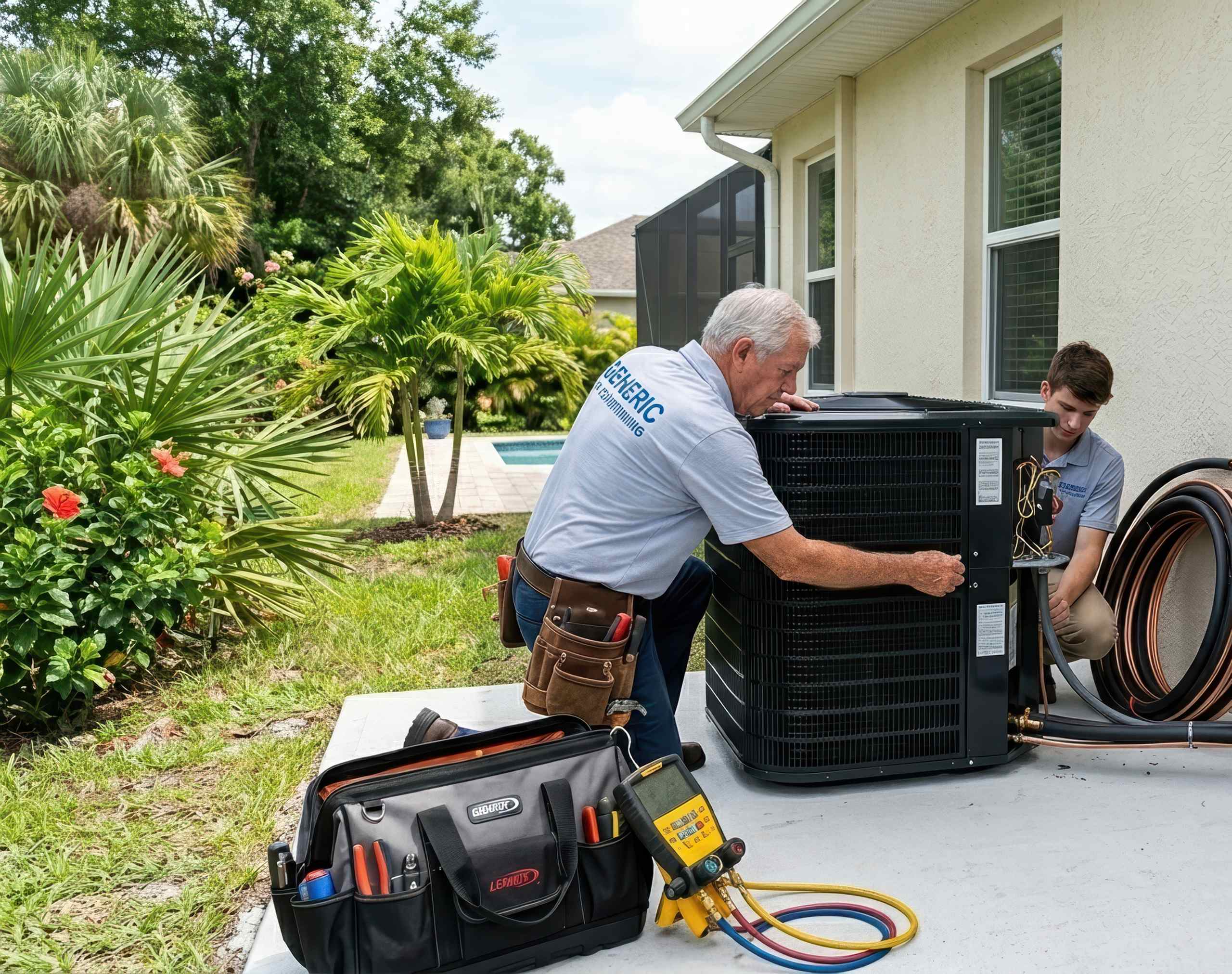
For most average-sized Florida homes (1,500 square feet), a standard 3-ton, 14.3-SEER2 AC system typically ranges from $6,000 to $9,500. Precise costs depend on several factors, some of which are in your control (like the type/brand/size of unit you select and the AC installation company you choose) and others that depend on your home’s characteristics.
In this article, we look at each of the main factors that impact the price of a new AC unit in Florida and break down the costs for you.
STAY COOL ALL YEAR ROUND WITH ONE WAY AIR…
The team at One Way Air installs, services, and repairs all types of air conditioning systems in Southwest Florida. Get in touch with us here for a quote or call 239-233-4356 in emergencies.
NEW AC UNIT COST SUMMARY FOR FLORIDA
Following are the estimated costs for a standard central AC installation in Florida in 2026. These figures include the outdoor condenser, indoor air handler, professional labor, and any required permits.
|
HOME SIZE IN SQUARE FEET |
ESTIMATED UNIT SIZE |
AVERAGE INSTALLED COST |
PREMIUM HIGH-EFFICIENCY TIER |
|
1,000-1,200 |
1.5 – 2.0 Tons |
$5,500 – $7,800 |
$9,500+ |
|
1,300 – 1,600 |
2.5 – 3.0 Tons |
$6,800 – $9,200 |
$12,000+ |
|
1,700 – 2,000 |
3.5 Tons |
$8,500 – $11,500 |
$15,000+ |
|
2,100 – 2,500 |
4.0 Tons |
$9,800 – $13,600 |
$17,500+ |
|
2,600 – 3,000+ |
5.0 Tons |
$12,500 – $17,000 |
$22,000+ |
Note: Due to the gradual refrigerant transition, prices reflect the newer equipment required by federal law (using R-32 or R-454B refrigerants), which can add 10–20% to the base cost compared to older models.
Following are the estimated installation costs for ductless mini-split AC units in Florida in 2026. These units cool individual rooms rather than cooling centrally, and are used mainly in homes without existing ductwork.
|
NUMBER OF ZONES (INDOOR HEADS) |
TOTAL COOLING CAPACITY (BTU) |
AVERAGE INSTALLED COST |
TYPICAL USE CASE |
|
1 Zone |
9,000-12,000 |
$3,500 – $6,000 |
Master bedroom or garage |
|
2 Zones |
18,000-24,000 |
$6,500 – $9,500 |
Two bedrooms or guest suite |
|
3 Zones |
30,000-36,000 |
$9,000 – $14,000 |
Small apartment or wing |
|
4 Zones |
36,000-42,000 |
$12,500 – $18,000 |
Multi-room main living areas |
|
5 Zones |
48,000-60,000 |
$16,000 – $22,000 |
Whole-home configuration |
NOTE: As of 2026, costs have shifted due to the phase-out of R-410A refrigerant and the expiration of the 25C federal tax credit for installations completed after December 31, 2025.
The total costs for a fully installed air conditioner will depend on:
Let’s examine each of these factors more closely…
AC COST IN FLORIDA: INFLUENCING FACTORS
If your cooling system has failed, basic AC repairs or maintenance can often get you back up and running. If not, you may need to “bite the bullet” and start researching a new AC unit.
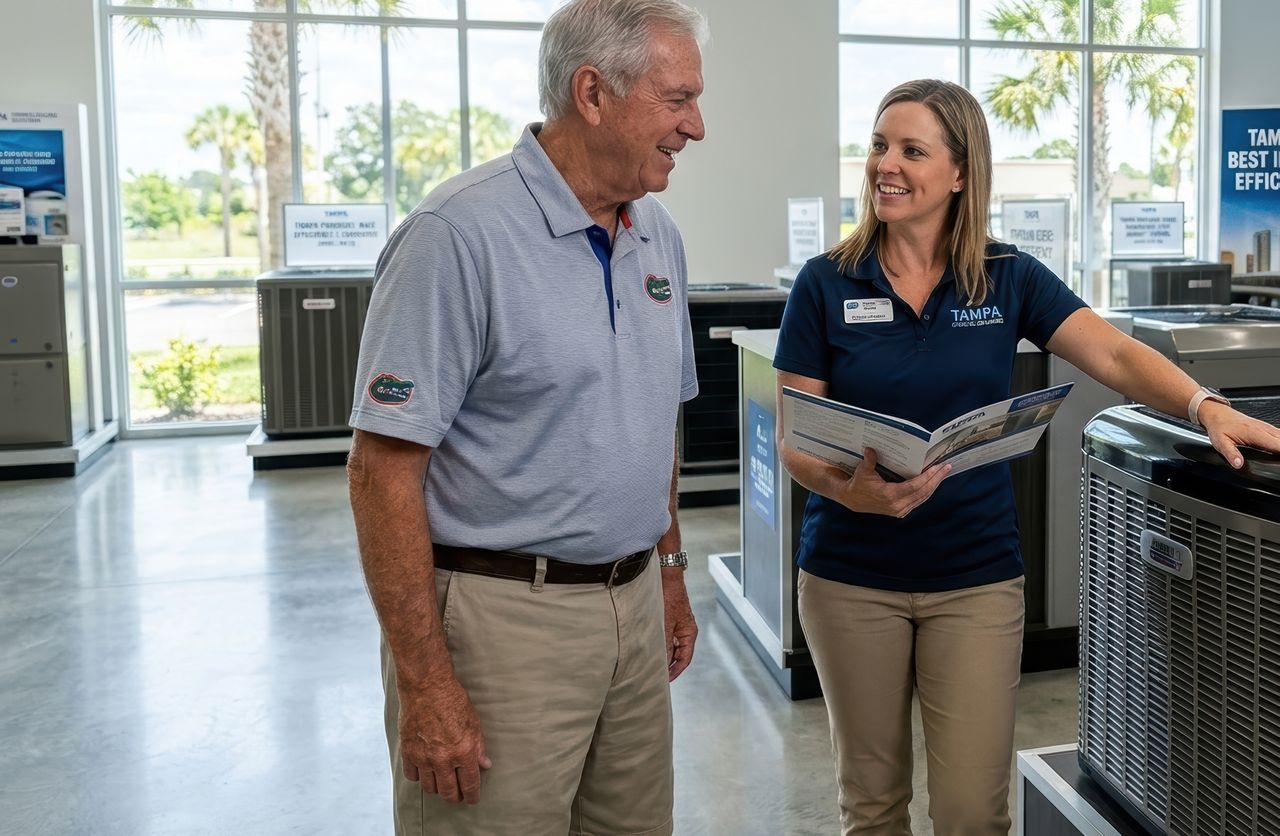
It often makes more sense to upgrade an existing, aging, inefficient unit than spend more money on repairing a unit that’s on its way out anyway.
HVAC systems often account for over 40 percent of the total utility bills in Florida. Most homeowners don’t want this figure to creep any higher and are looking for energy-saving ideas.
A new AC may be one of the best ideas but the associated costs depend on these factors…
THE SIZE (AND OTHER FEATURES) OF YOUR HOME
The average size of a home in Florida is just over 1,600 square feet. Home size is a major influencer of AC costs. If all else is equal, a 3,000-square-foot home needs almost double the cooling power of the average-sized home.
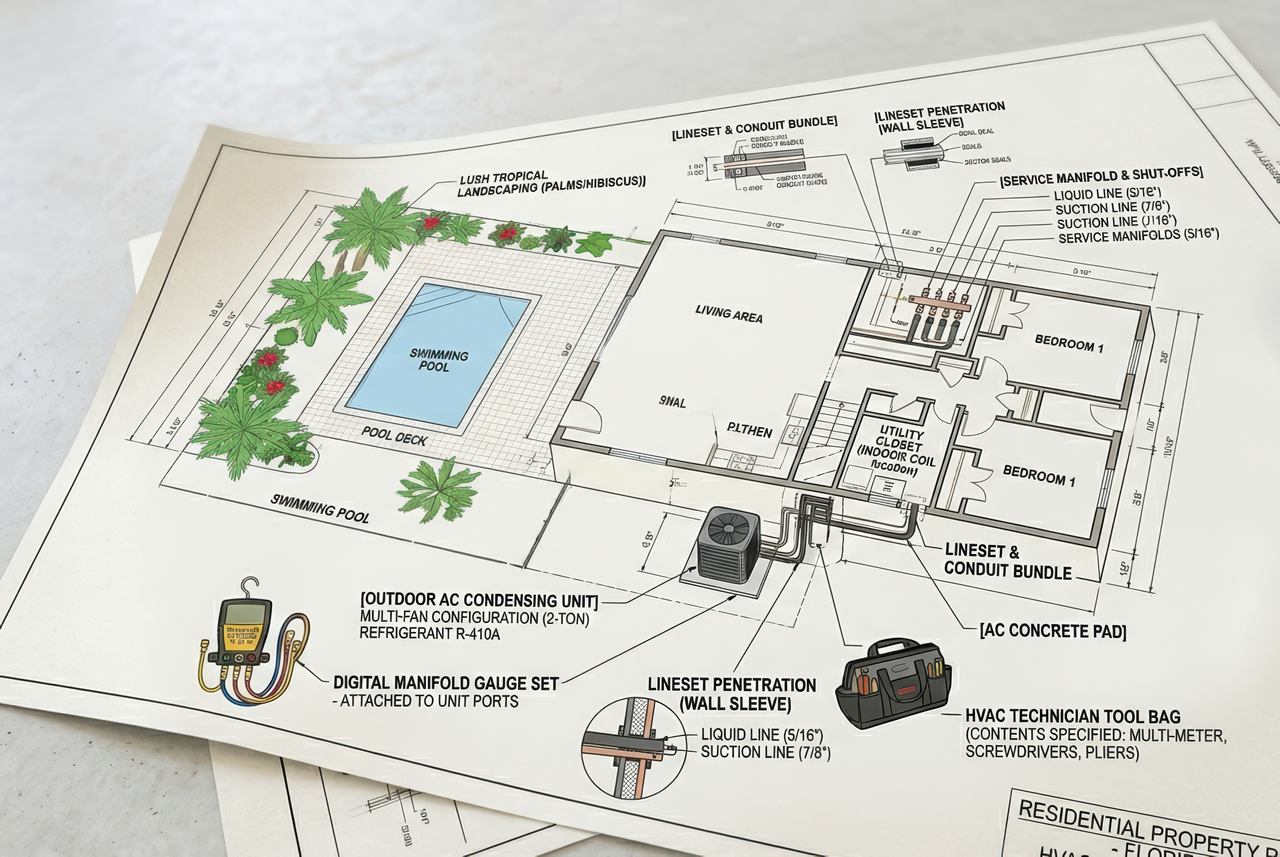
The required cooling power you need is often also influenced by the following factors:
HVAC professionals should perform a full load capacity assessment before recommending the best AC unit for your home.
THE AC UNIT TYPE
There are two main types of AC systems used in Florida: ducted HVAC systems and ductless mini-split systems.
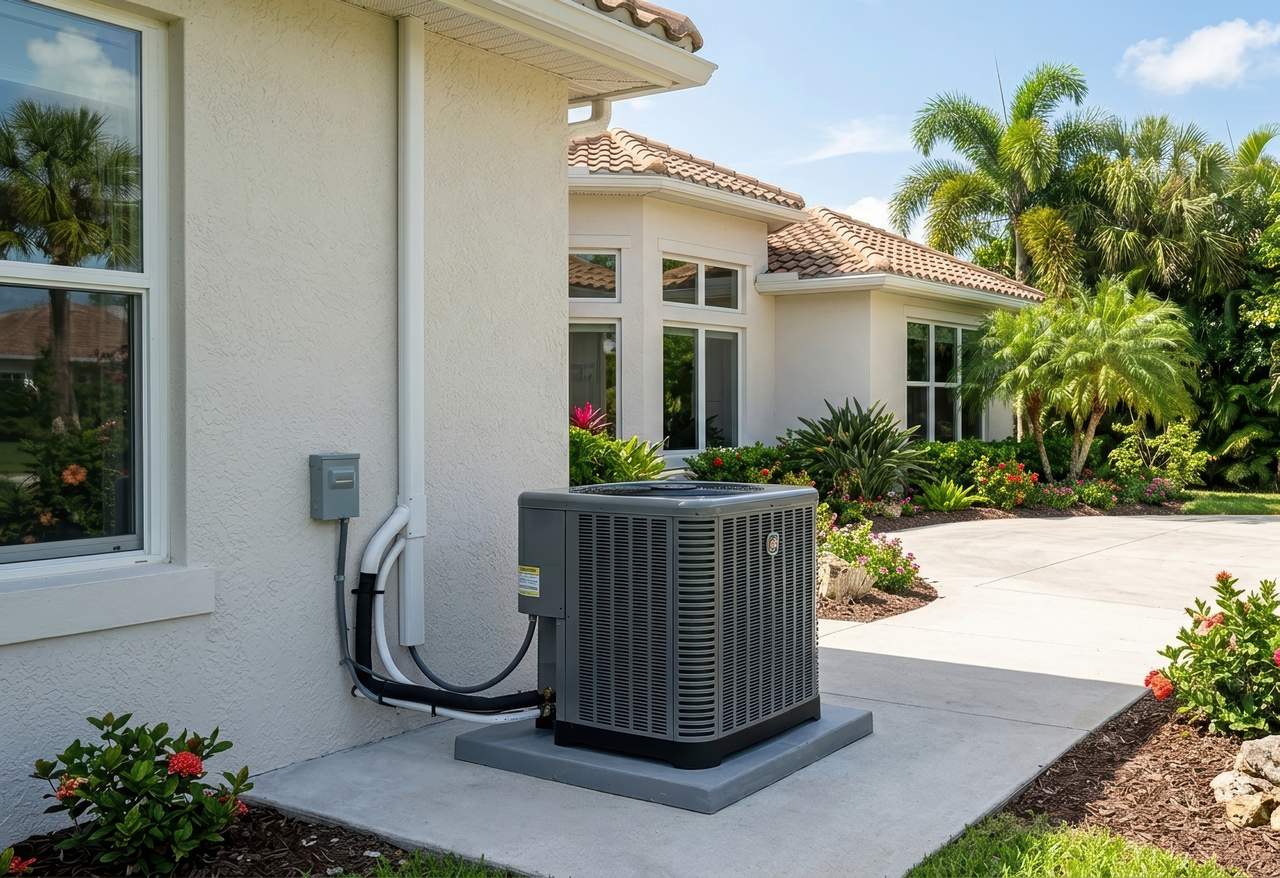
Ducted HVAC systems offer centralized cooling and heating for homes. Central air conditioners consist of an air handler, usually housed in the attic or garage, and an outdoor condenser unit. Cool air is blown through the ducting to multiple rooms or zones, where it is expelled through vents. Central air conditioning is used in almost 90 percent of Florida houses.
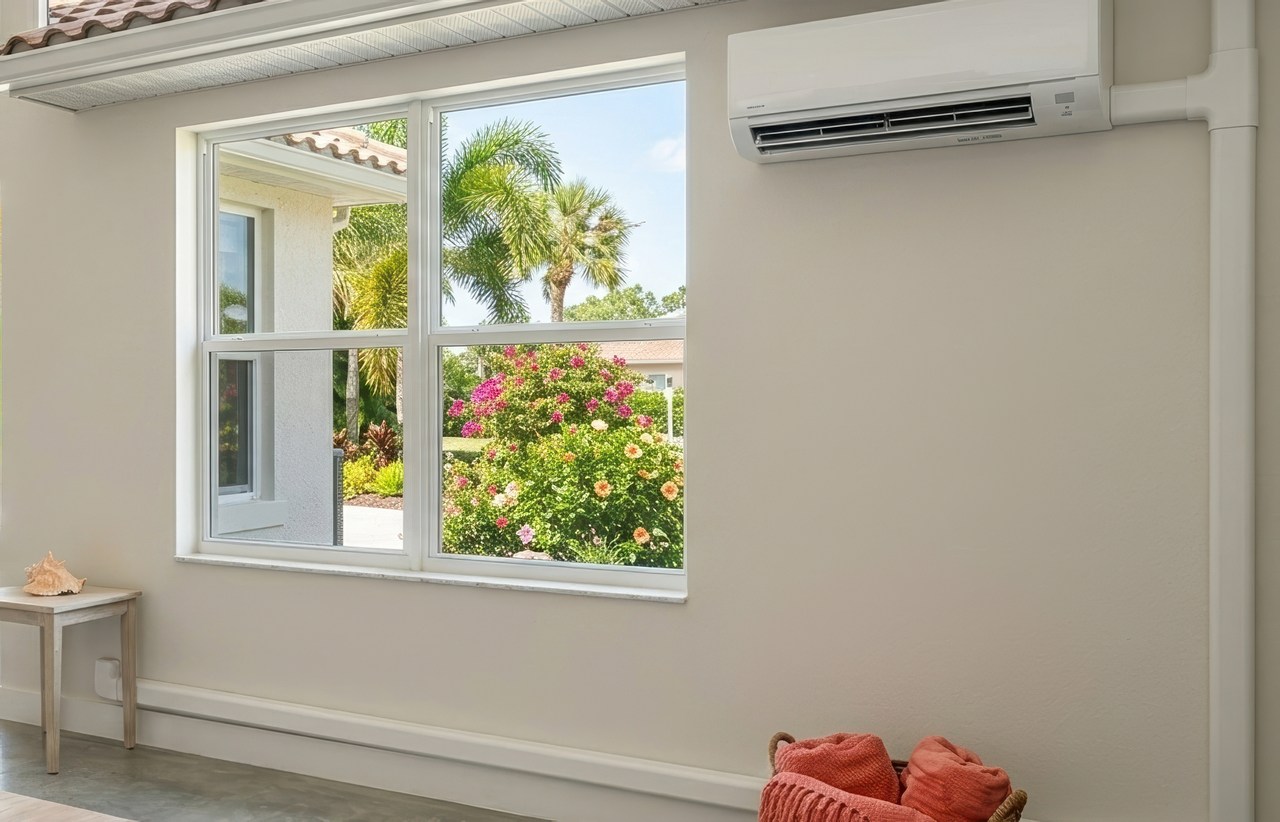
Ductless mini-split systems have an indoor unit (air handler) and an outdoor unit (condenser) to manage the cooling process. These are often used in homes without existing ductwork.
Note: Packaged systems, which contain all the components in a single unit, are rarely used in homes in Florida. Heat pumps are more common and can heat the home as well as cool it by reversing the heat exchange process (you’ll pay a premium for this extra functionality).
THE SIZE OF THE AIR CONDITIONER/BTU RATING
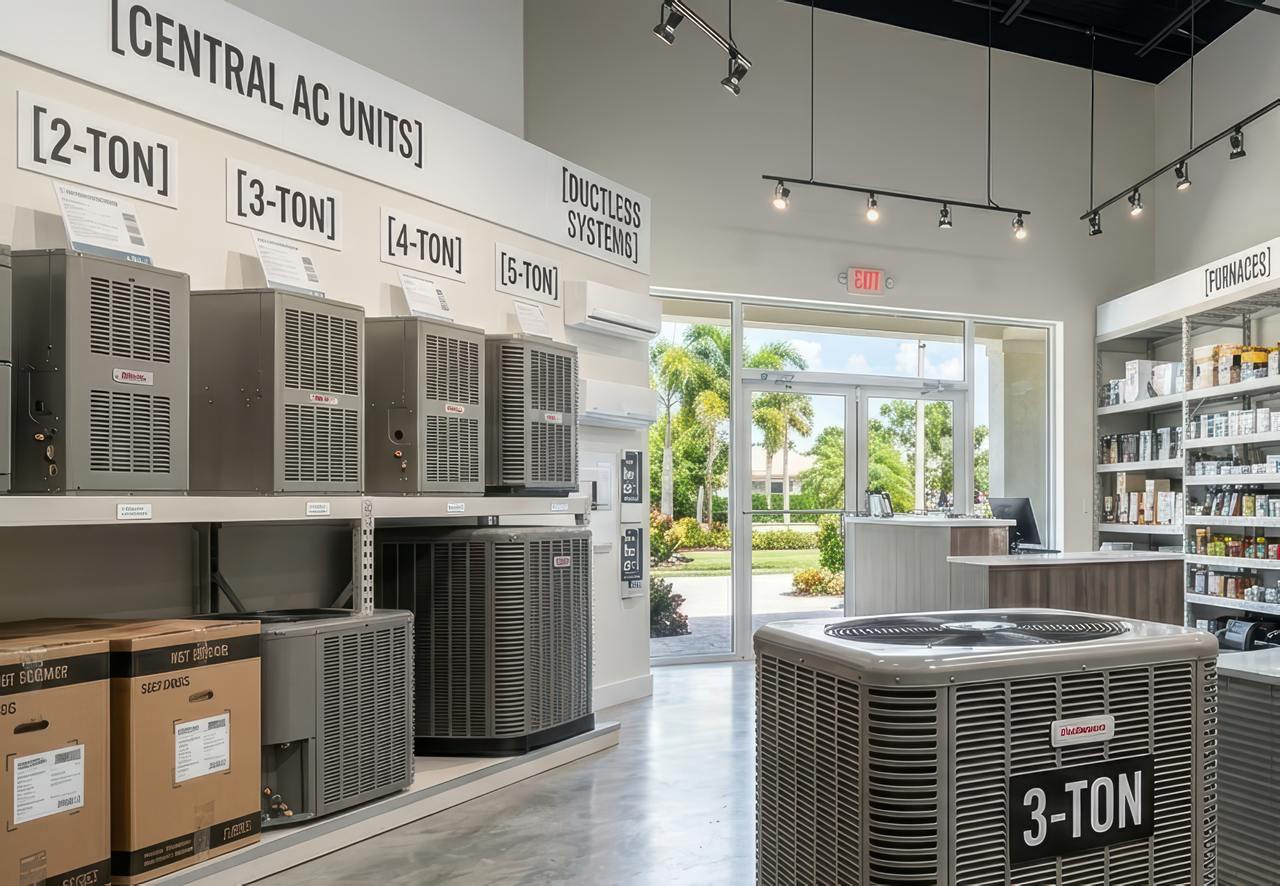
Central air conditioner unit sizes in Florida are commonly measured in tonnage, while most mini-split systems carry a BTU (British Thermal Unit) rating.
Both measurements essentially tell you how much heat the system can remove from your home. The larger the tonnage or the higher the BTU rating, the greater the cooling power and the higher the cost (generally speaking).
Average-sized homes in Florida need a central AC unit of around 3 tons or 36,000 BTU to cool the entire home.
A couple of good rules of thumb for modern Florida homes are:
A professional HVAC contractor should perform a Manual J load calculation to determine the cooling/size of AC you need. This calculation factors in not only the size of your home but also:
IMPORTANT NOTE: In Florida, humidity is as big a factor as heat. Be wary of installing a unit that is too large rather than too small, as it will short-cycle frequently, leaving your home feeling cool but clammy.
SINGLE-STAGE VS. TWO-STAGE VS. VARIABLE-SPEED
Most older air conditioners are single-speed AC units. They are either on or off. Newer air conditioners are more sophisticated and can adjust their speeds using variable-speed compressors for greater comfort and efficiency:
These newer types of air conditioners are more expensive but pay back the investment in lower electricity costs. The substantial savings month over month in Florida can often justify the higher installation costs.
Here are some estimated annual cooling costs and savings for a typical 1,500–1,800 sq. ft. Florida home with a 3-ton unit as the baseline:
|
COMPRESSOR TYPE |
AVERAGE EFFICIENCY |
ESTIMATED ANNUAL COOLING COST |
ESTIMATED ANNUAL SAVINGS VS. SINGLE-STAGE |
|
Single-stage (Baseline) |
14.3 SEER2 |
$1,150 – $1,350 |
$0 (Baseline) |
|
Two-Stage |
16 – 18 SEER2 |
$920 – $1,050 |
$230 – $300 |
|
Variable-Speed |
20 – 25+ SEER2 |
$650 – $850 |
$500 – $650 |
THE BRAND OF THE UNIT
Most of the leading AC brands are well-established and offer reliable and durable units. Few homeowners will want to risk opting for an unproven manufacturer with such a “big-ticket” item. Learn how to choose the right air conditioner brand here.
A few major brands dominate new installations in Florida, and many common household names are part of the same parent company. These include:
THE ENERGY EFFICIENCY OF THE UNIT
Newer air conditioners are generally more energy efficient than older models. As cooling technology has improved, the big variations in energy efficiency between units increasingly affect the monthly electricity bills homeowners pay.
SEER (Seasonal Energy Efficiency Ratio) has traditionally been used to measure an AC unit’s energy efficiency but the industry has moved to SEER2 now, which uses a more rigorous testing protocol.
The higher the SEER2 rating, the more energy-efficient the unit is and the higher the cost (if all else is equal).
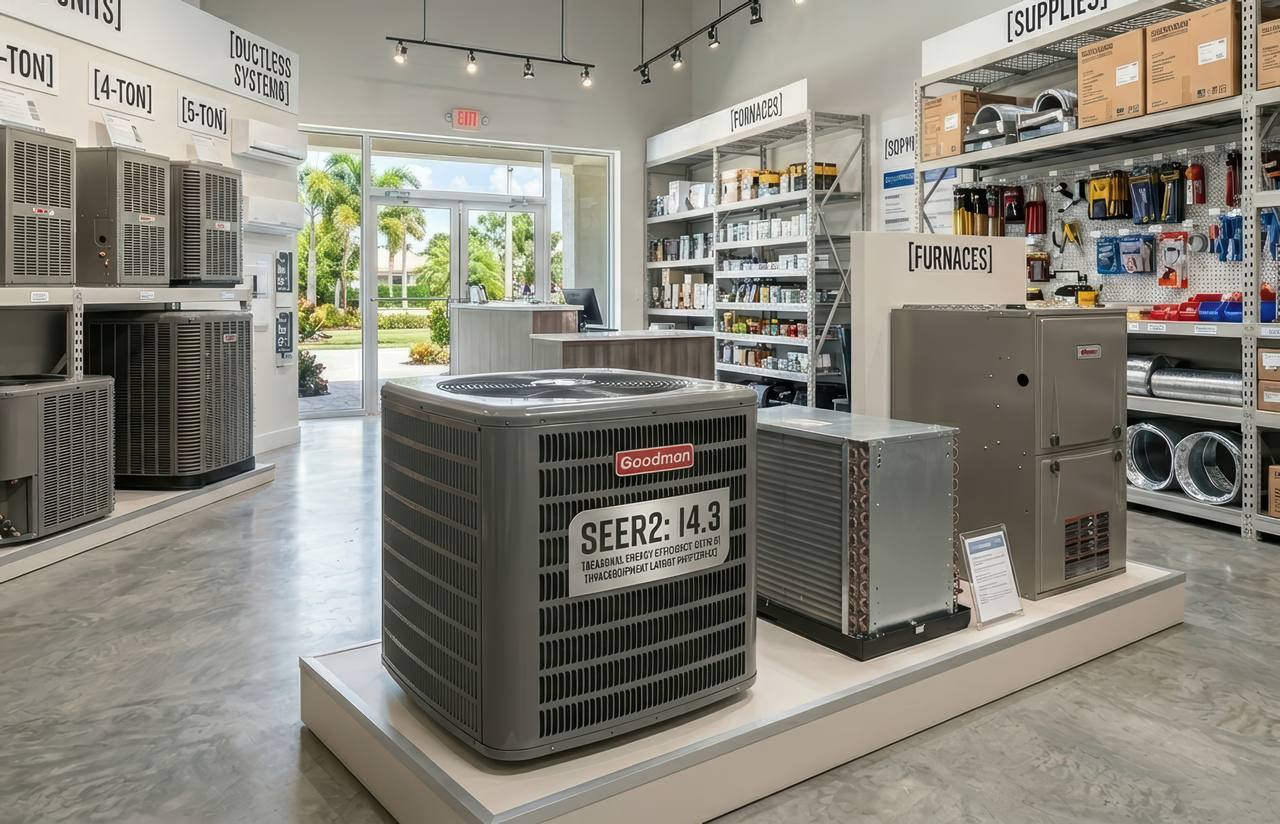
The legal minimum rating for all new split-system central air conditioners in Florida is now 14.3 SEER2, which is roughly equivalent to the old 15 SEER. Ratings go up to 25-28 SEER2 for the highest-efficiency central AC units and even higher (33-35 SEER2) for the best ductless mini-splits.
THE WARRANTY
A longer warranty may bump up the initial price you pay for your AC system. Professional HVAC contractors in Florida usually offer the following:
While a longer warranty comes with a slightly higher upfront cost, it can save you on maintenance and AC repair costs over the years.
All AC systems sold and installed by One Way Air include a 10-year manufacturer’s warranty for extra peace of mind.
THE INSTALLATION EXPERTISE YOU HIRE
The best HVAC contractors may charge a little more for their expert advice and installation experience.
AC installation is highly specialized and technical work. Labor costs average out at around $2,500 to $3,500 or more, depending on the complexity of the installation.
Don’t try to cut corners here. A reputable, experienced AC contractor will help you reap the efficiency benefits of having the right type/size of cooling system installed in your home and reduce the risk of premature repairs or replacement being needed.
Look for:
FAQs
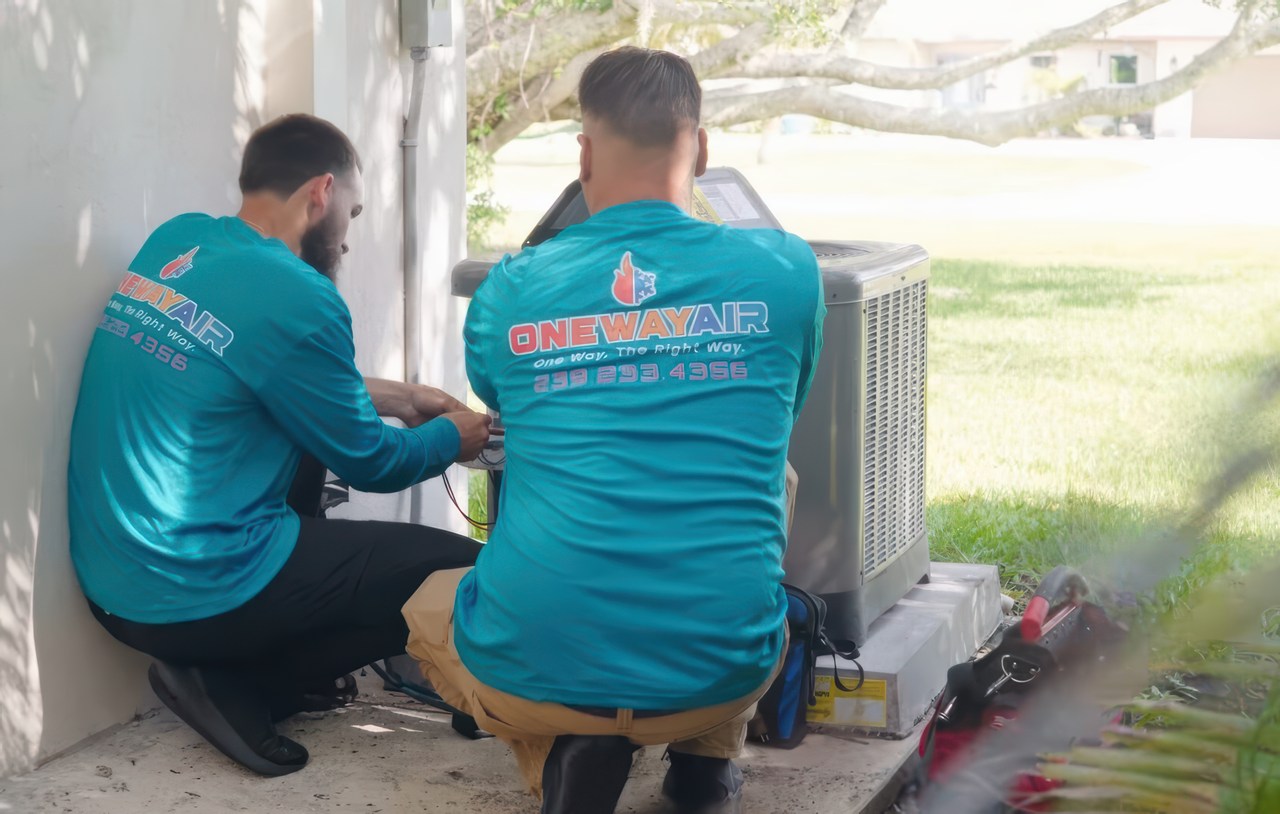
PROFESSIONAL AC INSTALLATIONS ACROSS FLORIDA
The cost to install a new AC system in Florida is, on average, $6,000 and $9,000 but beyond this range, there are many higher-end options. AC installation costs vary with:
To replace an AC unit and upgrade your cooling system, contact the team at One Way Air for reliable advice and service levels that may surprise you.