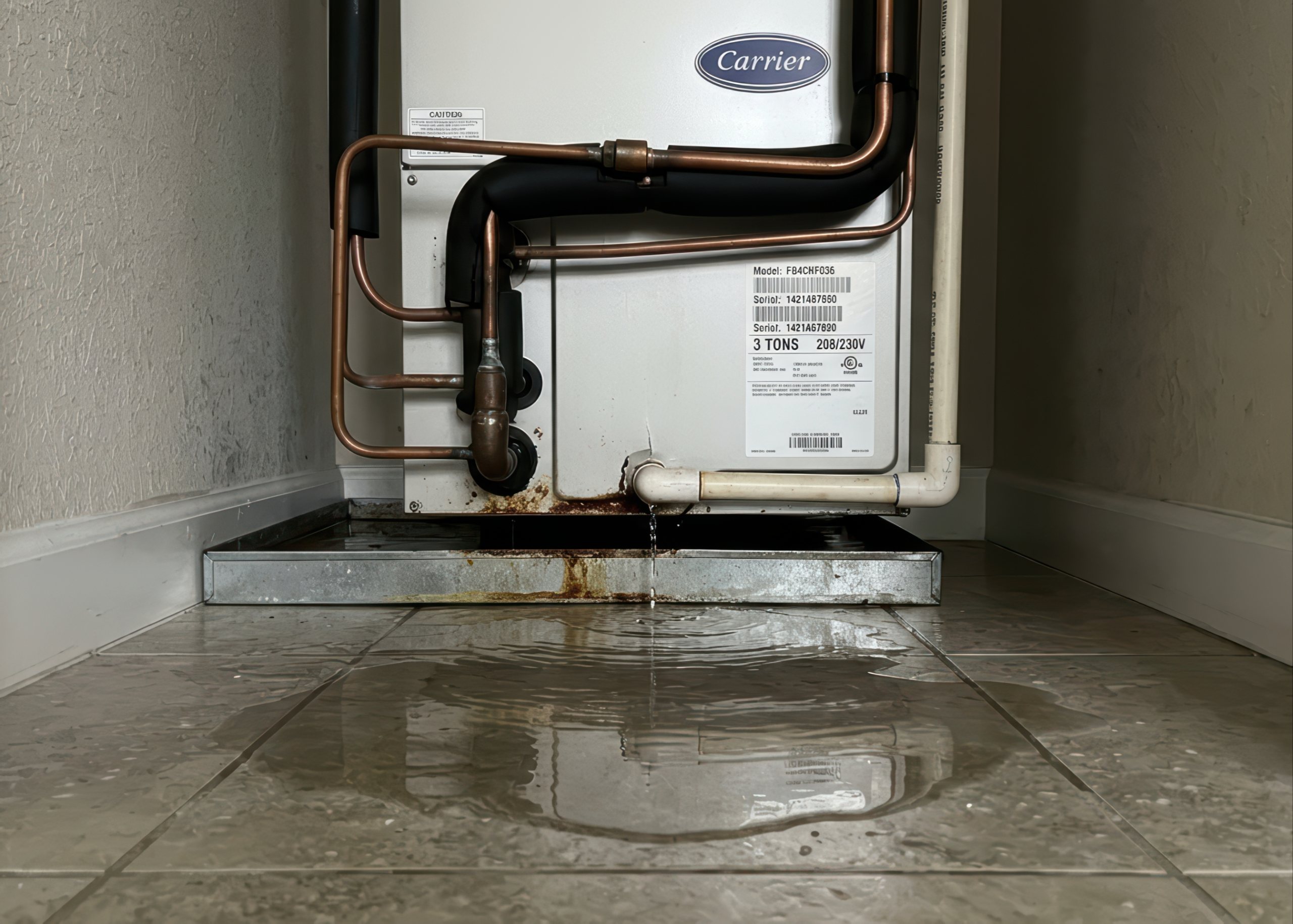
If your air conditioner is running but not blowing cold air, the sauna-like conditions it creates will quickly tell you something’s up.
It’s one of the major signs that your AC needs a tune-up or repairs.
Many common reasons can cause an AC to blow warm air. Most are fixable. All are covered below, and most require attention from an HVAC professional.
AIR CONDITIONER NOT BLOWING COLD AIR BUT RUNNING? HERE’S WHY:
The main reasons why your AC is running but not blowing cold air are:
Some of these you can fix yourself, and some need professional care. Occasionally, the problem is more “terminal”. A new AC installation may be more cost-effective than repairs if your system is:
STAY COOL ALL YEAR ROUND WITH ONE WAY AIR…
The team at One Way Air installs, services, and repairs all types of air conditioning systems in Southwest Florida. Get in touch with us here for a quote or call 239-233-4356 in emergencies.
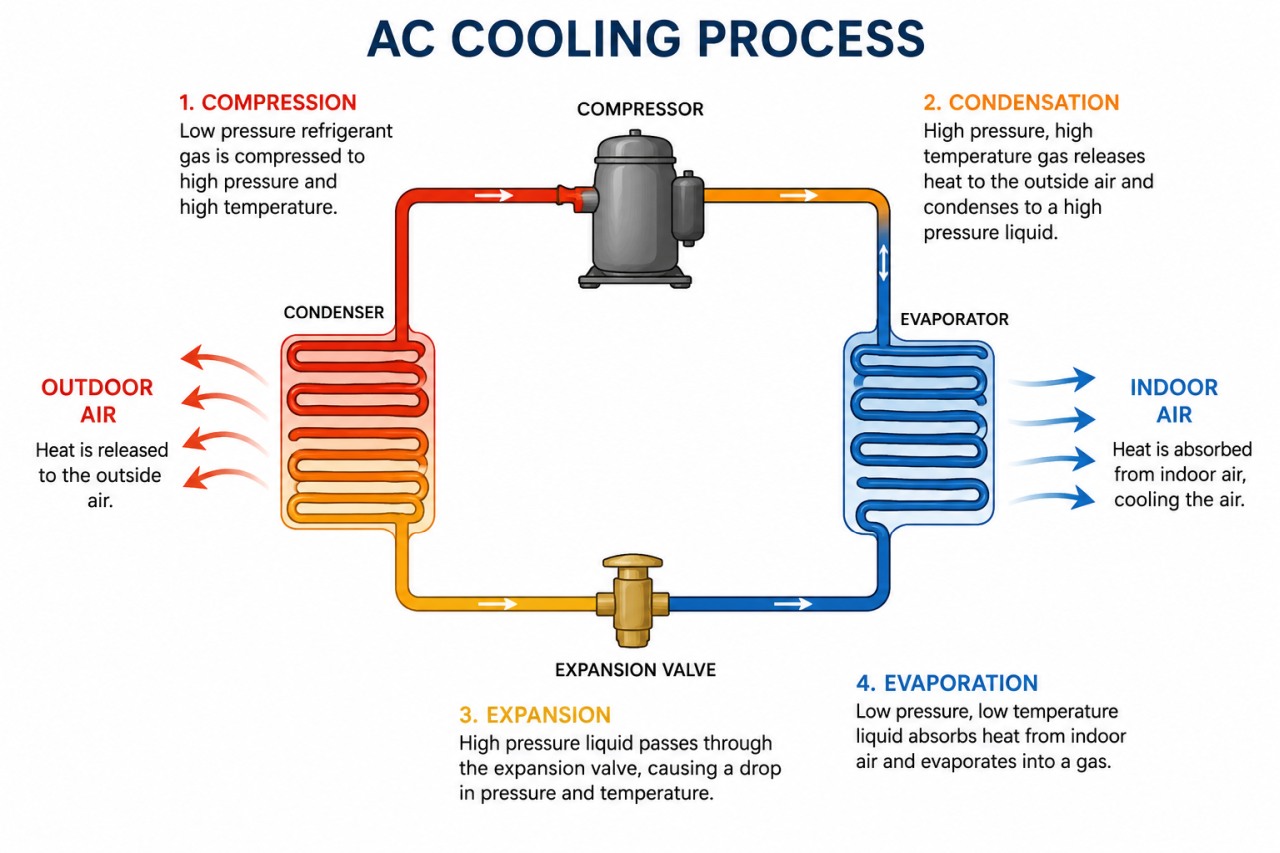
HOW DOES AC ACTUALLY COOL YOUR HOME?
An air conditioner cools a home like this:
Any interruptions to this cooling cycle can cause warm-air problems.
9 REASONS YOUR AC IS RUNNING BUT NOT BLOWING COLD AIR
An AC blowing warm air affects comfort levels, energy usage, and potentially the life of your AC system. Nobody should ignore the issue.
But what’s causing it? Here are the main issues to troubleshoot:
1. A FAULTY OR INCORRECTLY SET THERMOSTAT
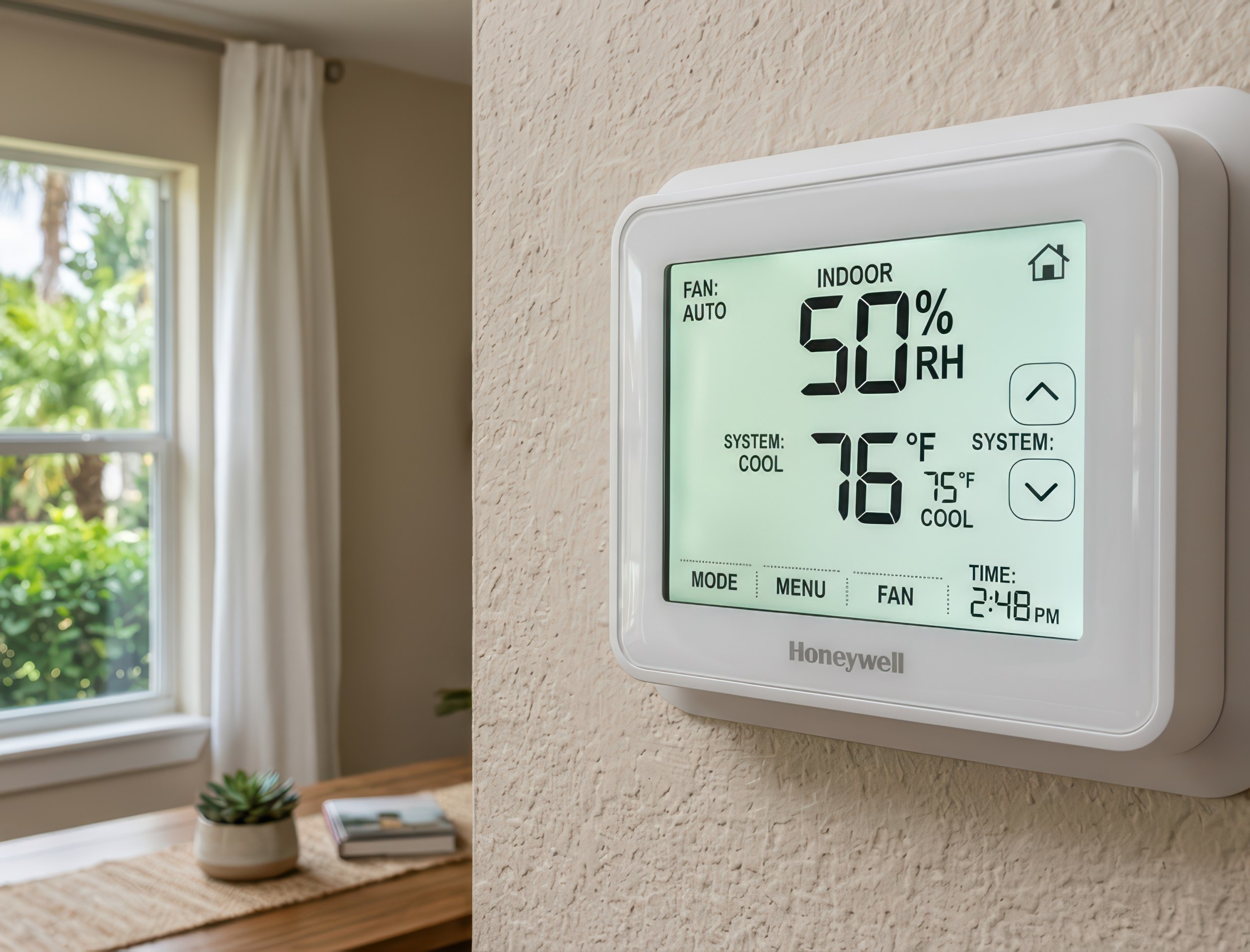
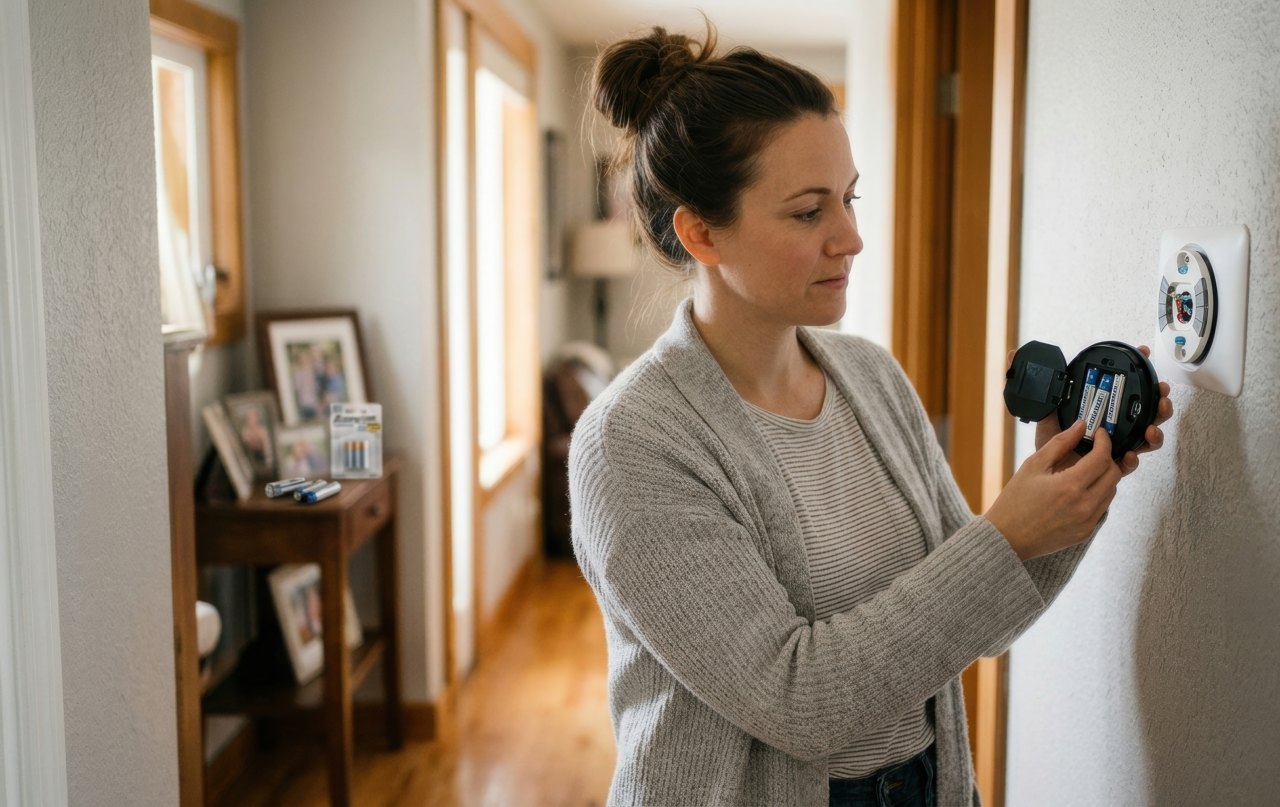
The thermostat controls the temperature of your home. If it is set incorrectly, low on power, or gets adjusted by accident, the system won’t cool your home properly.
Make sure the thermostat is set to AUTO and the desired temperature. Also, check that the batteries are working.
Quick fix or call a pro?
If you turn down the thermostat or replace the batteries and the AC is still not blowing cold air, a professional should repair or replace the thermostat if you’re sure that’s the problem (it may be something else—read on).
2. A CLOGGED FILTER
Clogged or dirty filters are the #1 cause of problems with air conditioners and HVAC systems.
Filters trap dust and other airborne particles. If they become clogged, airflow may be restricted, indoor air quality compromised, and AC components wear out more quickly. The AC might also run but not blow cold air.
Quick fix or call a pro?
Inspect the filter every 30 days. It’s usually housed near the air handler section of the indoor unit. If it’s dirty or clogged, replace it or clean it (if you have a reusable filter).
3. A FROZEN EVAPORATOR COIL
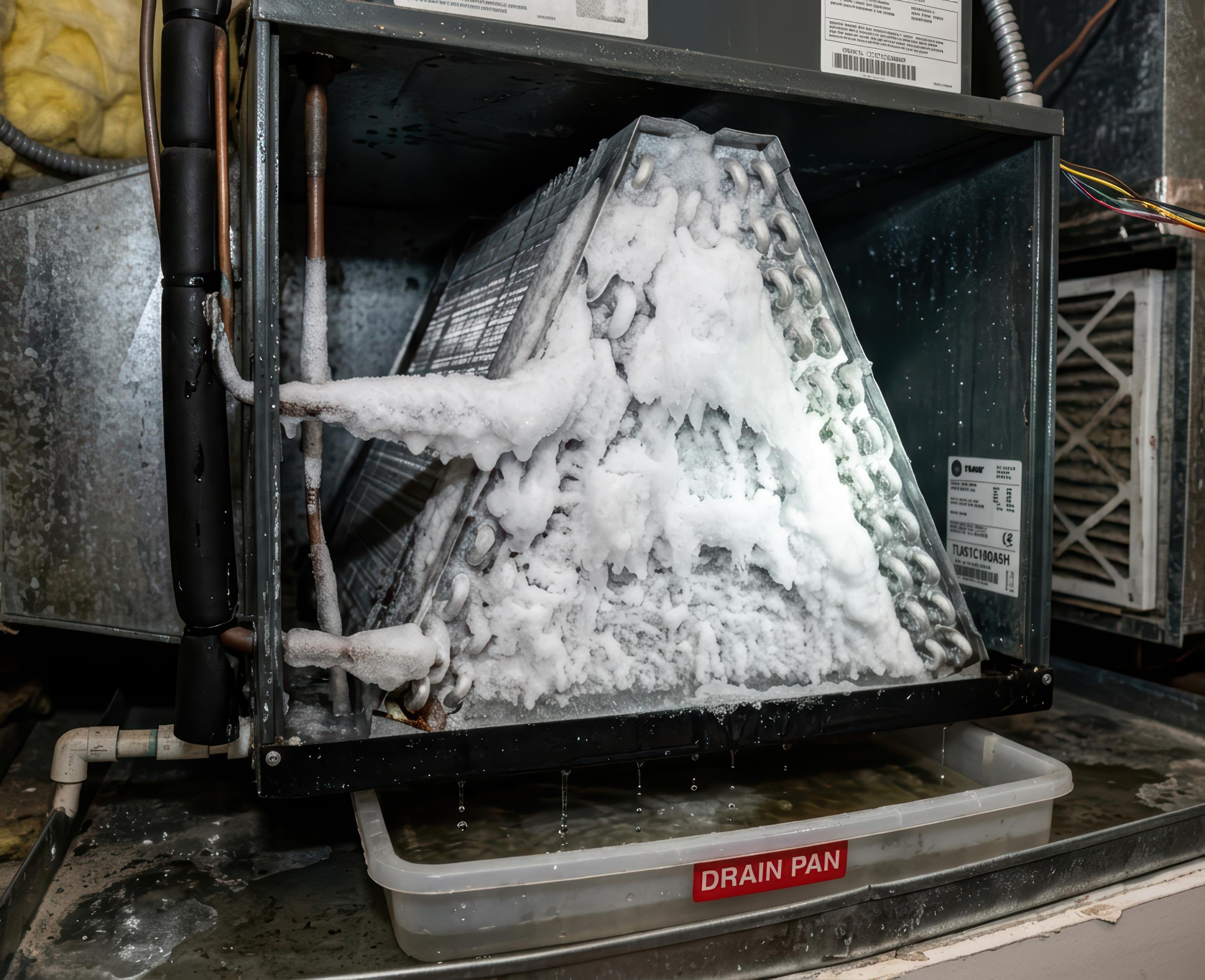
Another problem related to restricted airflow in the AC system is a frozen evaporator coil.
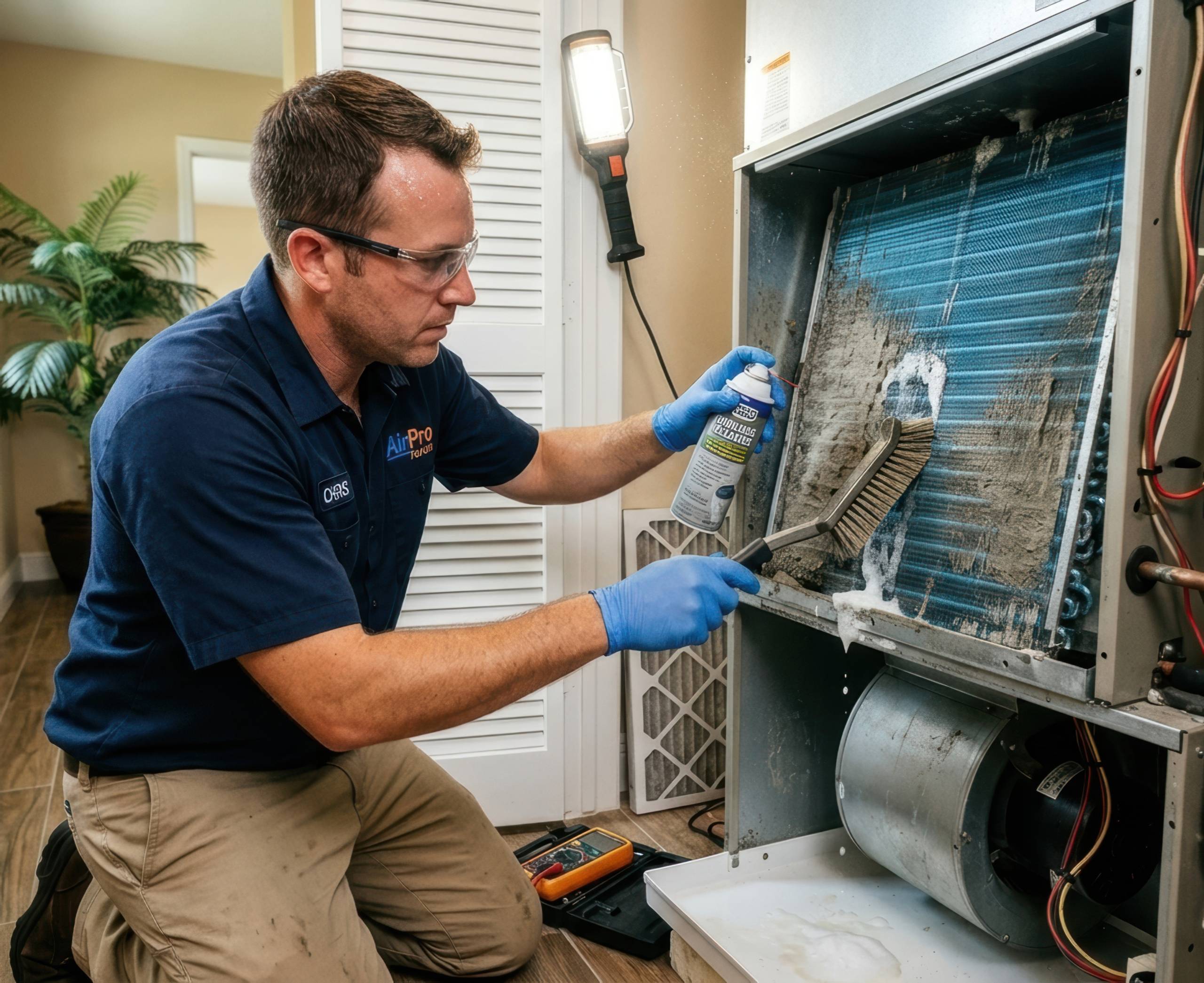
Restricted airflow can cause the evaporator coil to ice up, greatly impacting the system’s cooling capacity. Warm air may blow out, while energy bills rise as the system struggles to cope.
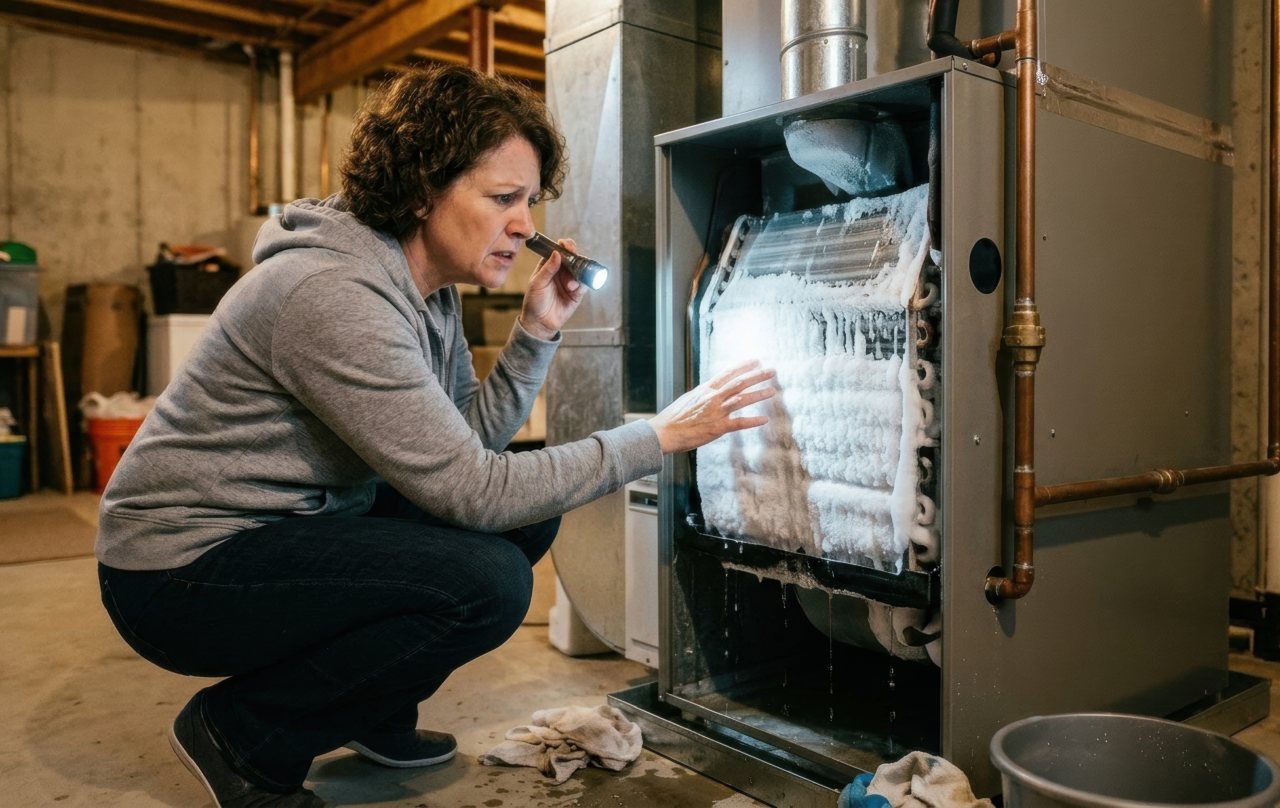
Restricted airflow may be caused by:
Quick fix or call a pro?
It’s best to call a pro if the evaporator coil is frozen. AC coils should be cleaned regularly, a part of standard AC maintenance.
4. A DIRTY OR BLOCKED CONDENSER UNIT
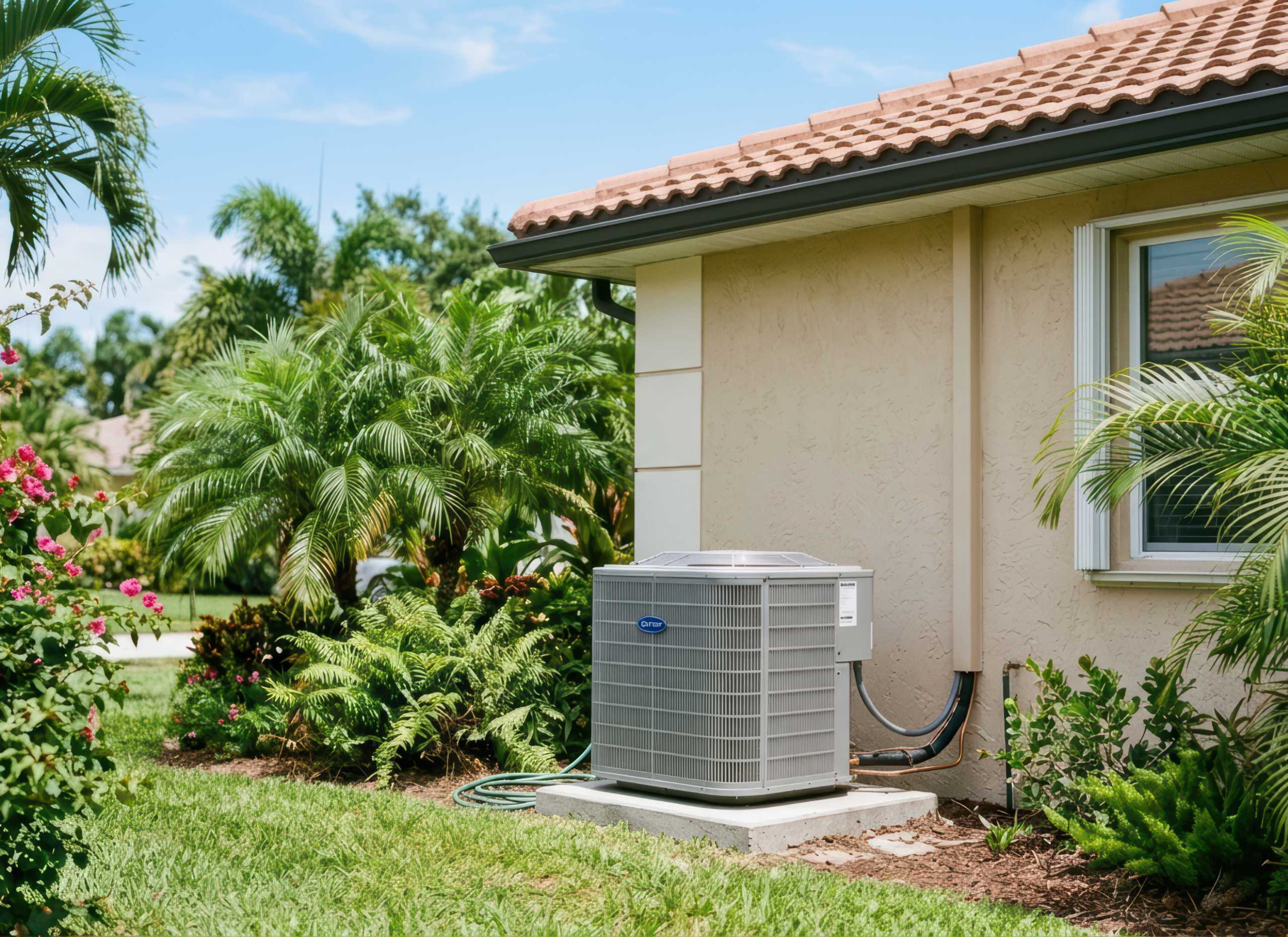
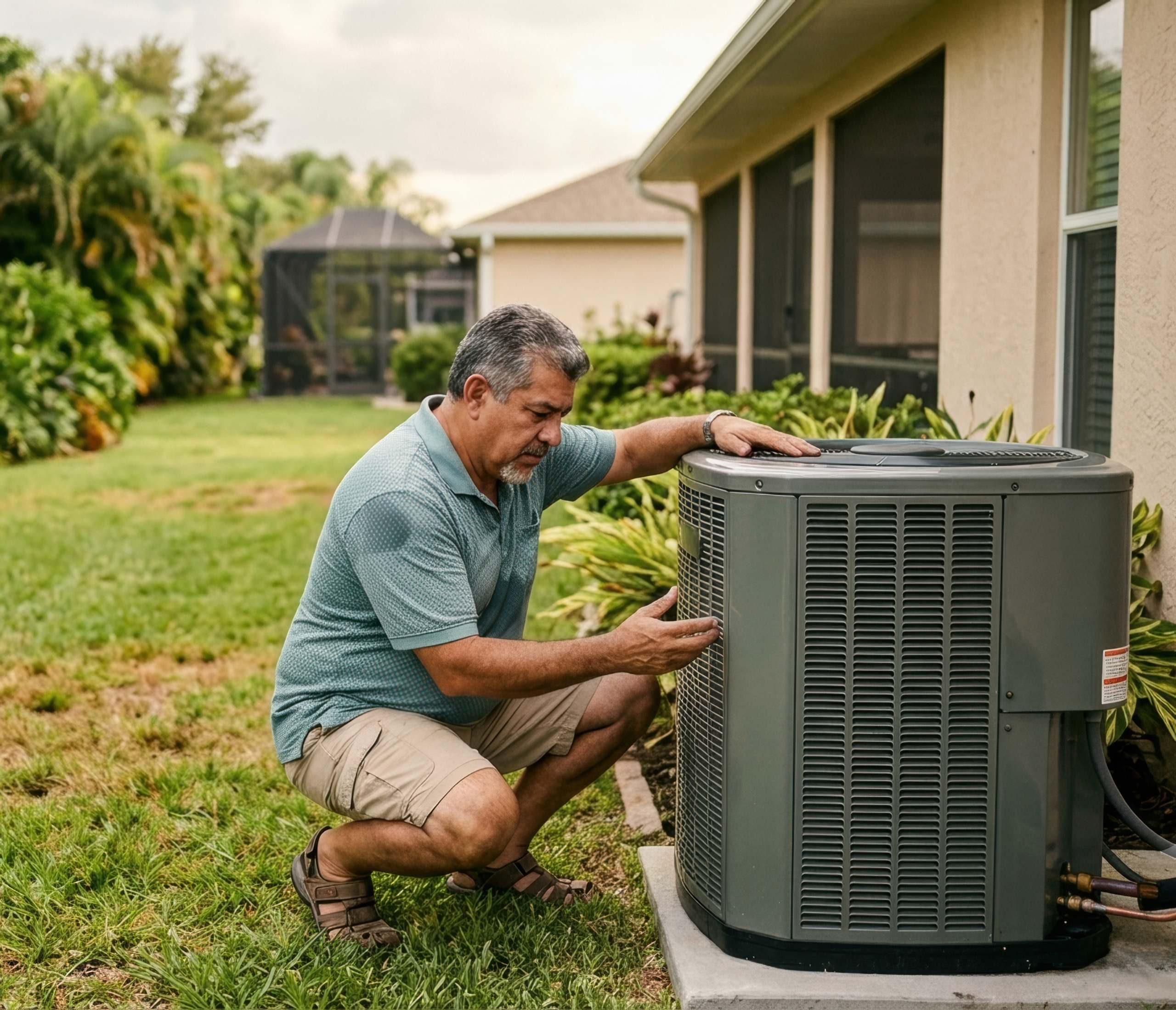
Split AC systems have an indoor evaporator unit and an outside condenser unit. The outdoor unit contains a large coil with thin metal fins spaced tightly together.
If the outdoor unit is clogged with dust, dirt, or debris, restricted airflow may cause warm air to be blown into the home or even cause a complete system shutdown.
Quick fix or call a pro?
Keep the area around your outdoor unit clear and ensure the fins are not exposed to excessive dust, vegetation, or debris. Check after storms, especially. If the problem isn’t resolved, call a professional for more in-depth AC troubleshooting.
5. A REFRIGERANT LEAK
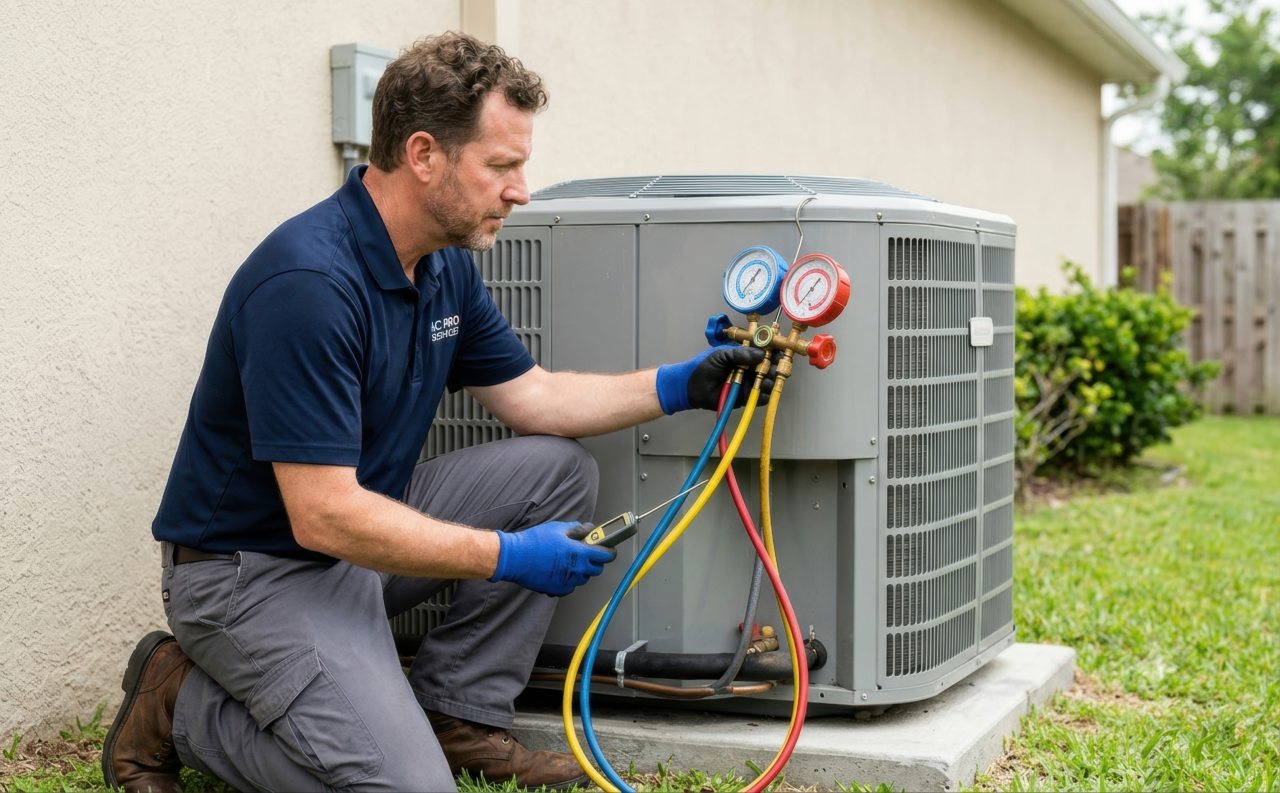
AC refrigerant is central to the heat transfer process during the cooling cycle, as it changes from liquid to gas. If the AC is running but not cooling the home, refrigerant levels may be too low and need recharging.
In a well-maintained AC system, refrigerant levels should be steady, but sometimes, leaks occur.
Quick fix or call a pro?
It is illegal for homeowners to handle R-410A, R-454B, and R-32, which are the main refrigerants used in AC units in Florida. It’s a job for AC professionals.
6. BLOCKED VENTS OR DAMAGED DUCTWORK
For central AC systems, check if your AC is blowing warm air through the vents. Cool air should travel through the ductwork into every room. If the passage of the air is restricted, it could be due to:
Quick fix or call a pro?
If everything looks fine on the outside, consider calling in a professional for a deeper ductwork inspection if you have ruled out other possible reasons the AC isn’t blowing cold air.
7. AN AGING AC SYSTEM NEARING THE END OF ITS LIFE
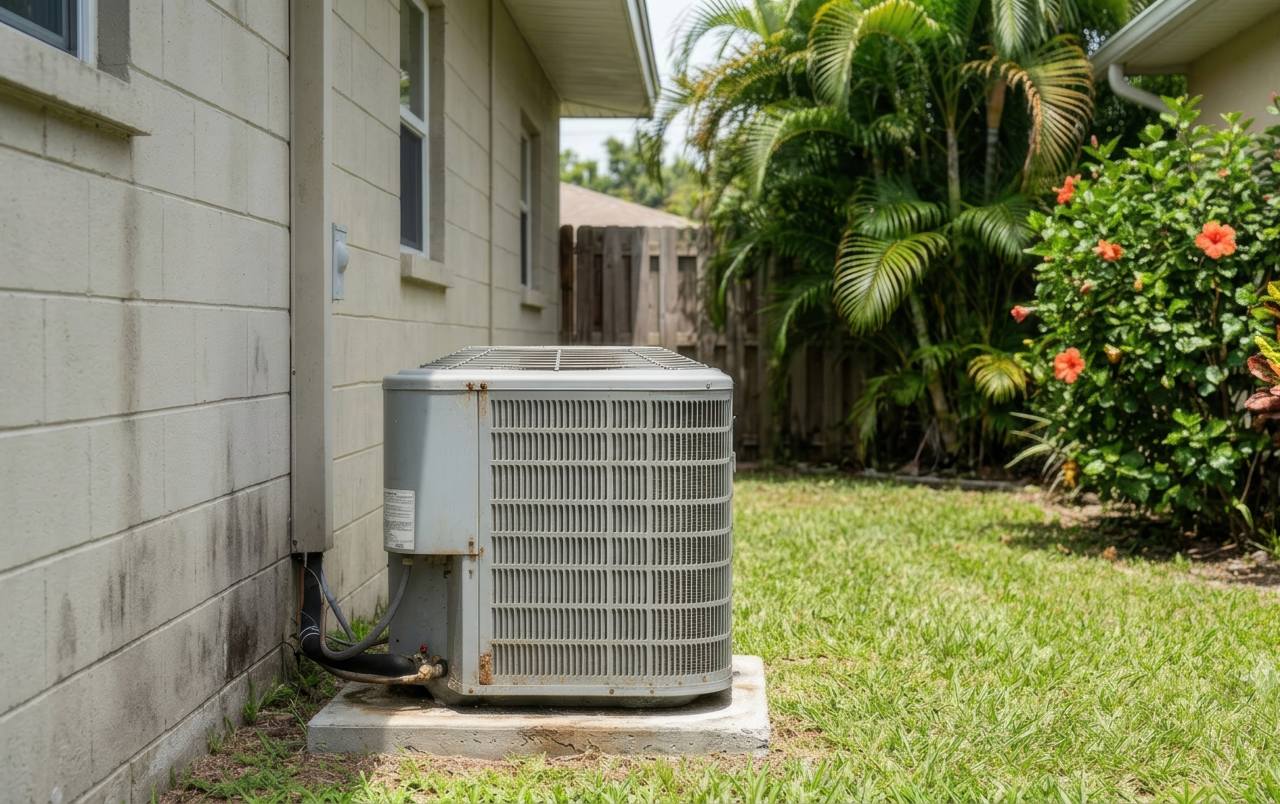
If your AC system stops blowing cold air, you’ve checked all of the reasons mentioned so far, and it’s 10-15 years old or more, the problem is likely age-related.
Quick fix or call a pro?
If components are worn out, talk to a professional about upgrading to a new, more efficient model, such as a variable- or two-stage air conditioner. The One Way Air team can help you select and install the new AC system.
8. LACK OF MAINTENANCE
In Florida, our AC systems need to work hard for much of the year. Even well-maintained systems can run into problems as they age. Problems are even more likely if AC maintenance has been neglected.
Quick fix or call a pro?
Book a professional AC tune-up twice per year: once before the summer and once afterward. This will help maintain performance and flag any problems before they become terminal.
9. AN INCORRECTLY SIZED AC
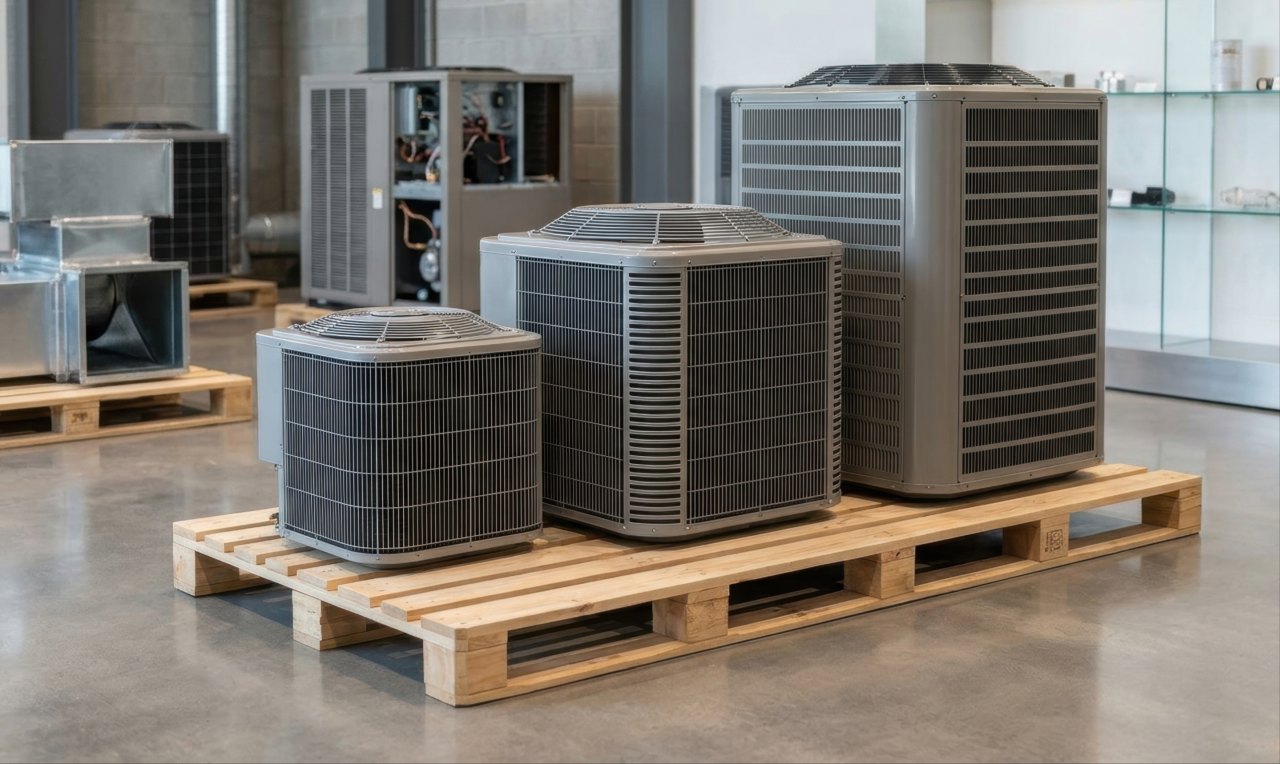
An air conditioner that is too small will struggle to cool your home adequately. An oversized unit may start to short-cycle (turn on and off too frequently), increasing strain on components and causing unnecessary wear and tear.
Quick fix or call a pro?
If you don’t want to change your central AC unit, you might be able to add a ductless unit to rooms with cooling problems.
Resizing AC systems is a job for a professional who should check how much cooling power your home requires before recommending a solution.
QUICK CHECKLIST: WHEN TO DIY VS. CALL A PROFESSIONAL
|
DIY-FRIENDLY (HOMEOWNER-SAFE) |
REQUIRES AN HVAC PROFESSIONAL |
|
Thermostat settings |
Frozen evaporator coils |
|
Filter changes |
Refrigerant issues |
|
Clearing debris around the outdoor unit |
Regular AC maintenance |
|
Electrical problems |
|
|
Ductwork repairs |
|
|
Resizing your AC |
IS IT TIME FOR AN AC TUNE-UP OR REPLACEMENT?
A little DIY attention and twice-yearly professional AC tune-ups will catch most of the problems outlined above before they escalate.
If the unit is incorrectly sized or is aging (10-15 years or more) and frequently not blowing enough cold air, replacement may be more cost-effective than repairs.
Find out the cost of a new AC in Florida to start preparing.
FAQs
AC TUNE-UPS AND REPAIRS IN FLORIDA
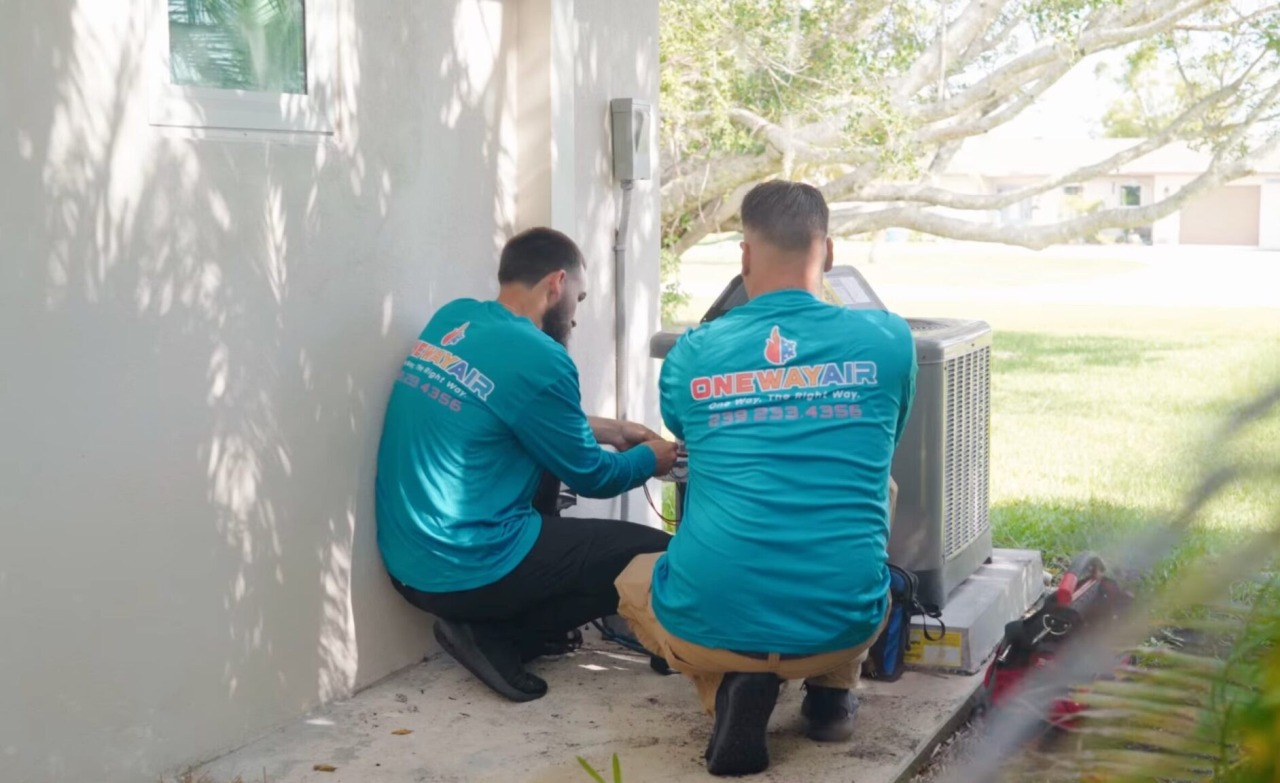
Air conditioning systems involve many parts working together in balance. A lot can go wrong, but most fixes are relatively simple.
If you’re in Florida and have any issues with your cooling system, contact One Way Air to arrange a full inspection and fix.