Air conditioning performs not one but two important functions in Florida homes:
- It cools the indoor air (obvious).
- It removes moisture from the indoor air (less obvious).
No Florida homeowner needs reminding about how humidity can be a problem if not controlled but many want to know whether running the AC fan reduces humidity on its own.
Running the AC fan on its own uses less electricity but does it dehumidify the home?
DOES RUNNING THE AC FAN REDUCE HUMIDITY ON ITS OWN?
The quick answer? No. Running the AC fan circulates the air that’s already in the home. It has little meaningful effect on cooling the air or reducing humidity. However, simply moving the air in a room may help to improve comfort levels a little.
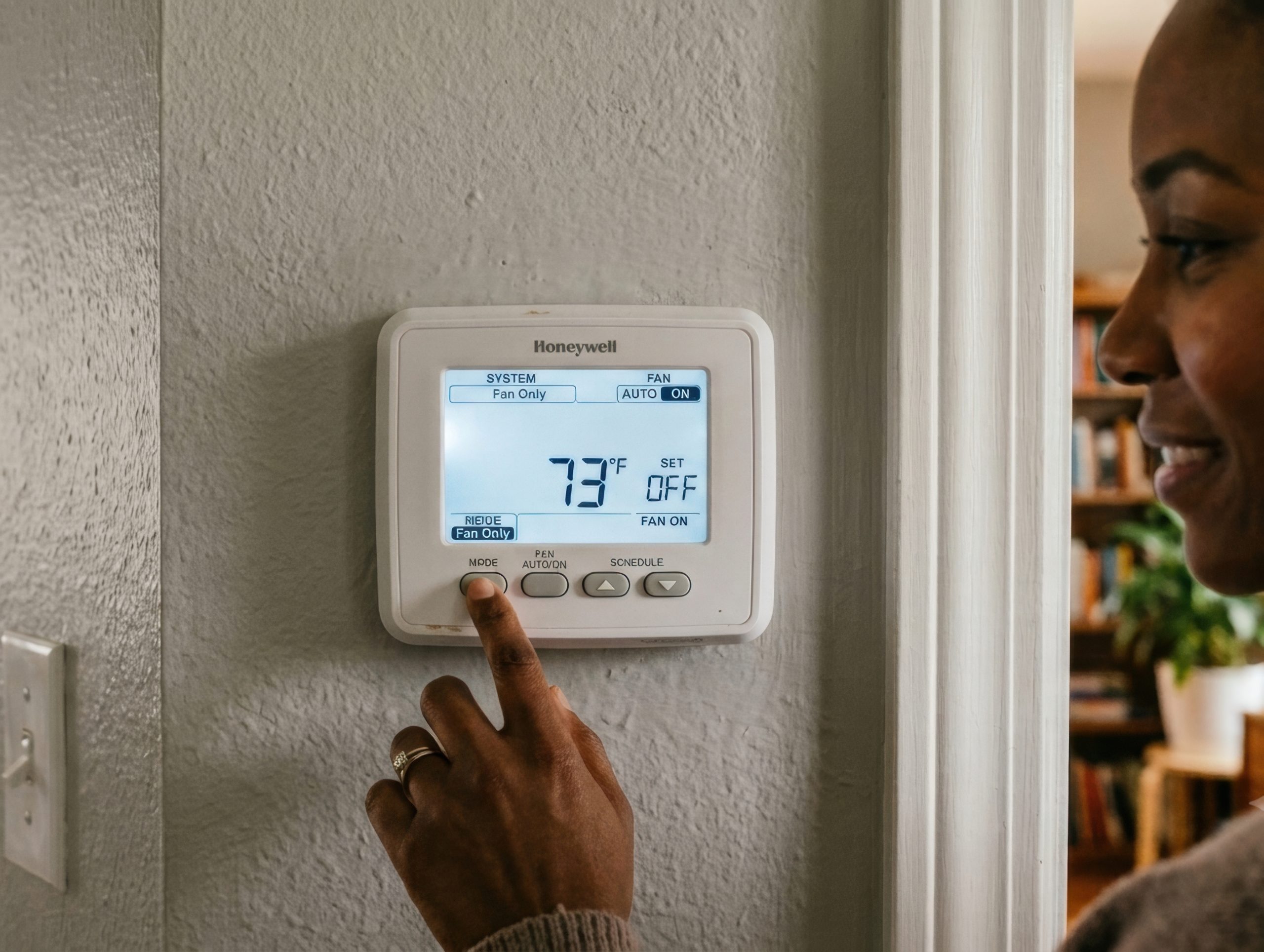
There are times when you may need to use the fan-only mode on your AC, such as:
If you turn to fan-only mode after the cooling cycle is complete, it will circulate cool air for a while until the room gradually returns to previous levels of heat and humidity.
DO YOU HAVE A HUMIDITY PROBLEM IN YOUR HOME?
SW Florida outdoor humidity averages 58–90%. EPA guidance on healthy indoor humidity says that you should aim to keep it between 30 and 50%.
If your indoor humidity levels are at 60% or higher, you’re risking:
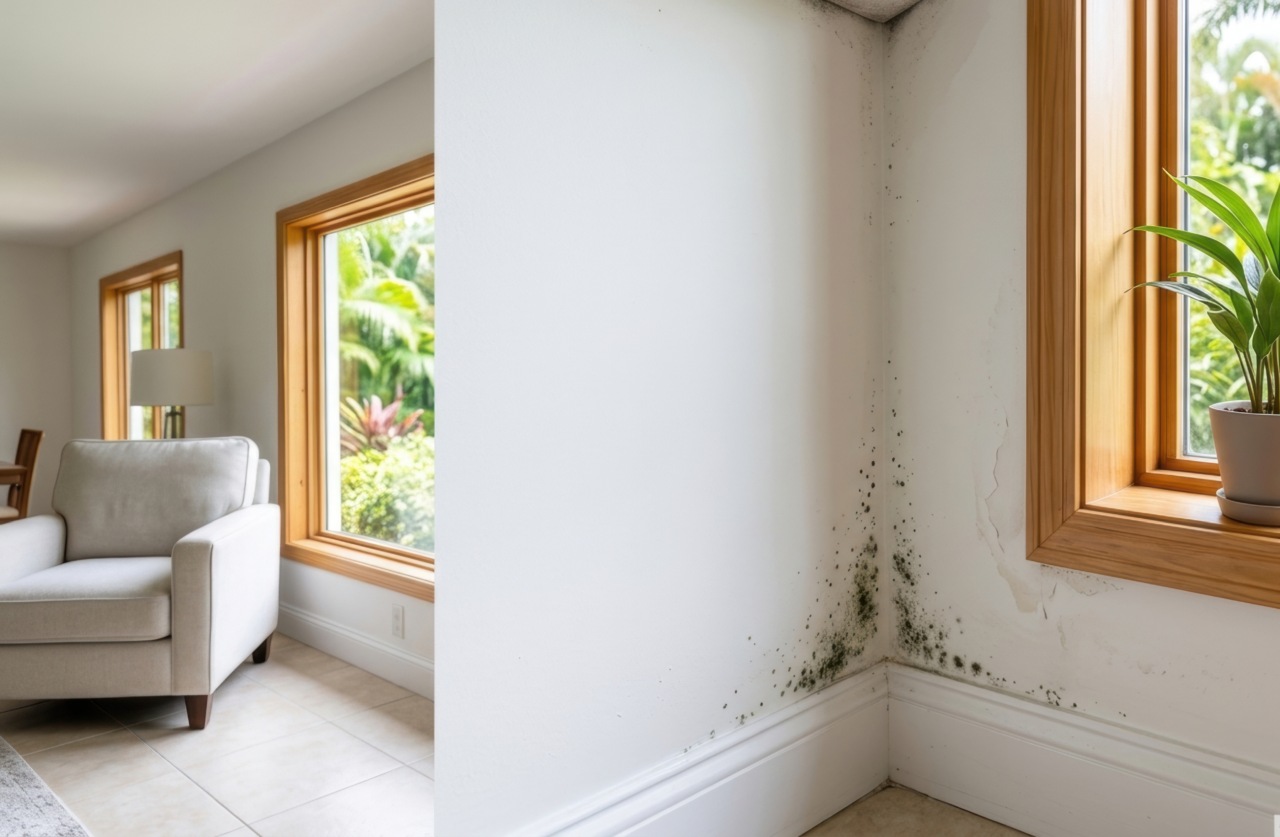
If you’re not sure why your home has mold problems, speak to one of our HVAC professionals for an inspection and troubleshooting.
STAY COOL ALL YEAR ROUND WITH ONE WAY AIR…
The team at One Way Air installs, services, and repairs all types of air conditioning systems in Southwest Florida. Get in touch with us here for a quote or call 239-233-4356 in emergencies.
HOW DOES AN AC ACTUALLY REDUCE HUMIDITY?
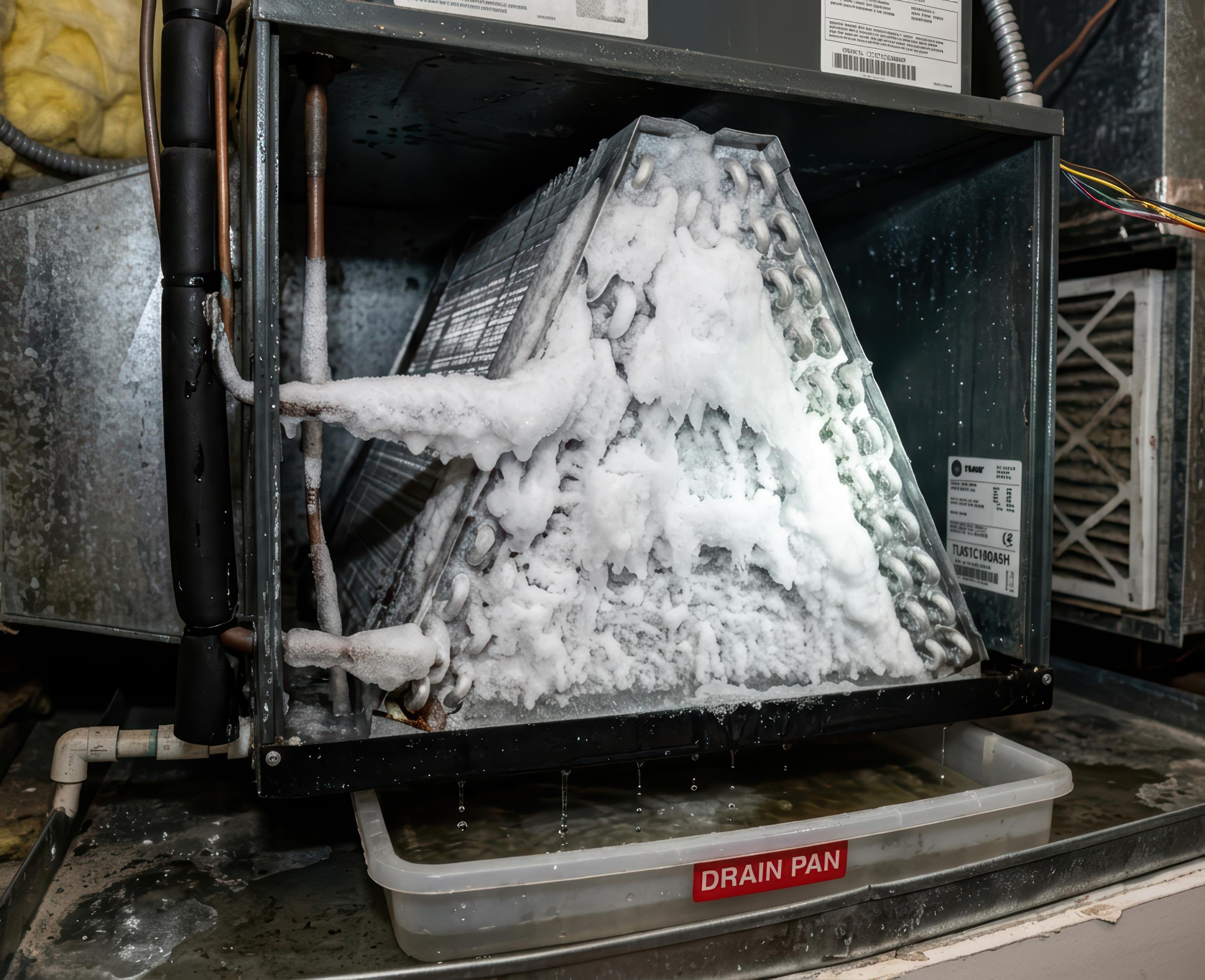
Well-maintained AC systems are effective at controlling humidity levels during their cooling cycles. That’s because the AC system works by:
- Taking in warm, moist air at the start of the cooling process (when the AC is switched on).
- Blowing the warm, moist air over the cold evaporator coil.
- Absorbing heat from the air and condensing water vapor as it passes over the coil.
- Sending the refrigerant (now a gas) to the compressor, which pressurizes it into a hot gas, then on to the outdoor condenser coil, where it releases heat and turns back into a cool liquid.
- Recirculating the now-cooled, drier air back into your home, lowering both the temperature and the humidity level.
NOTE: Dehumidification only happens during active cooling, not fan-only operation.
WHAT DOES THE AC BLOWER FAN DO?
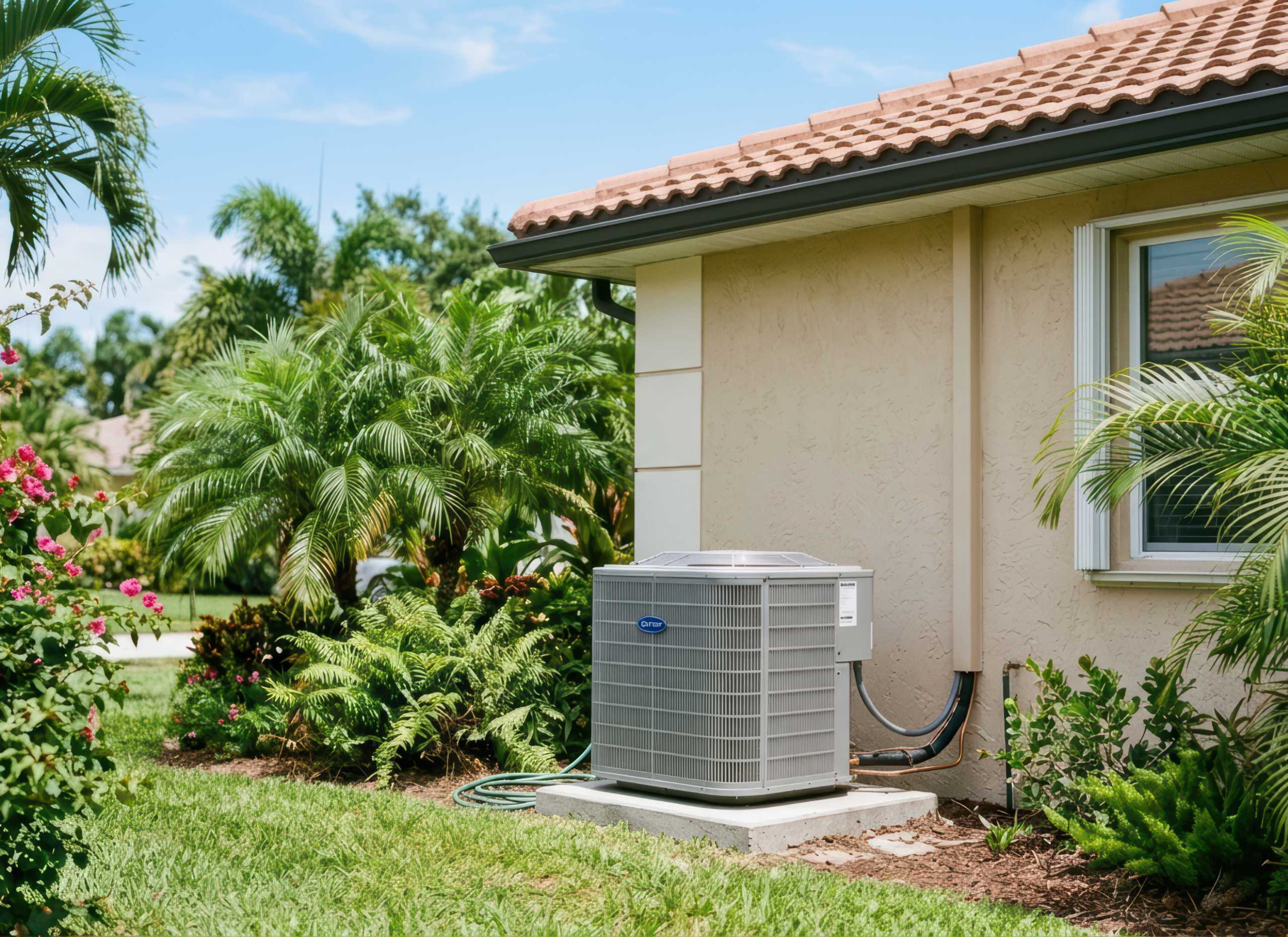
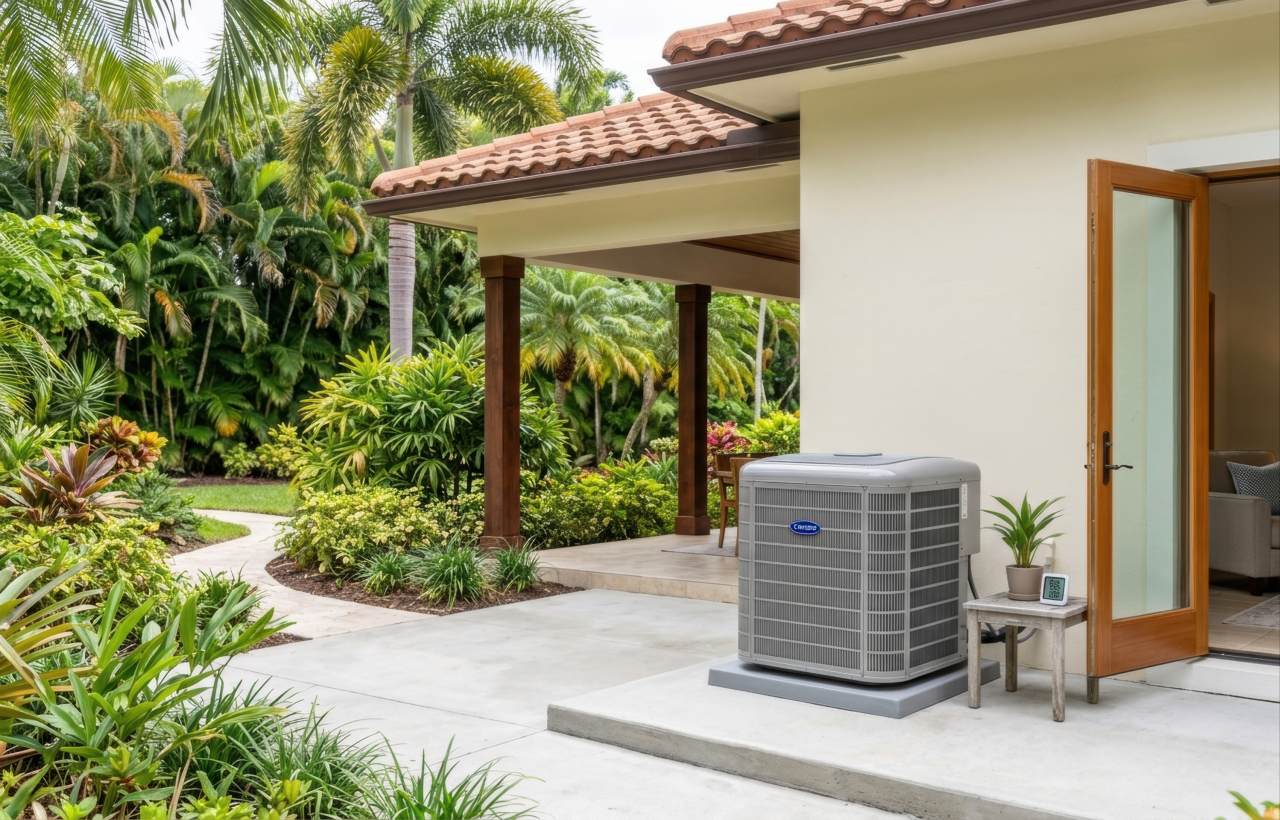
When people say “fan on”, they usually mean the indoor unit’s fan. Central AC systems have two fans:
- A blower fan behind the cooling coils in the indoor unit, forcing cool air into the ductwork.
- A compressor fan in the unit outside to keep the compressor cool.
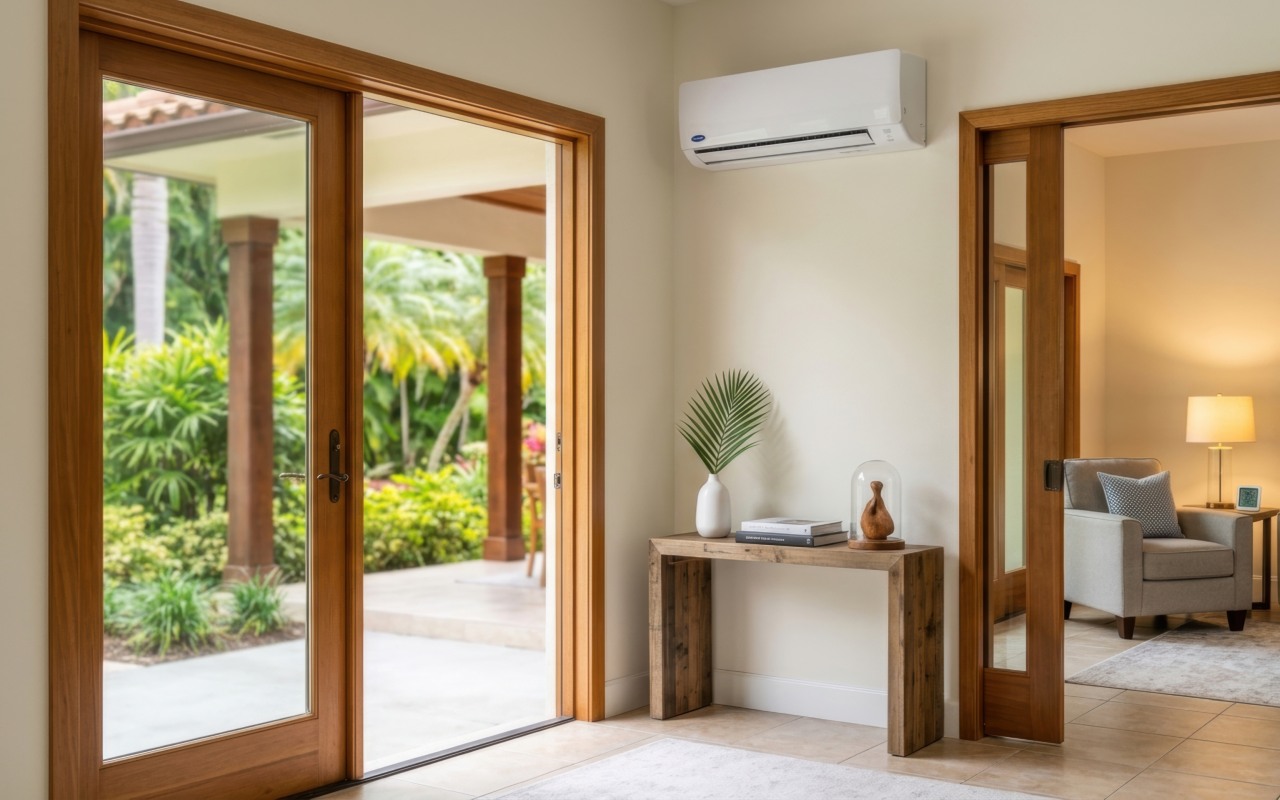
With a ductless mini-split system, the fan sits inside the wall-mounted unit and blows cooled air into the room.
HOW DO THERMOSTAT SETTINGS AFFECT HUMIDITY?
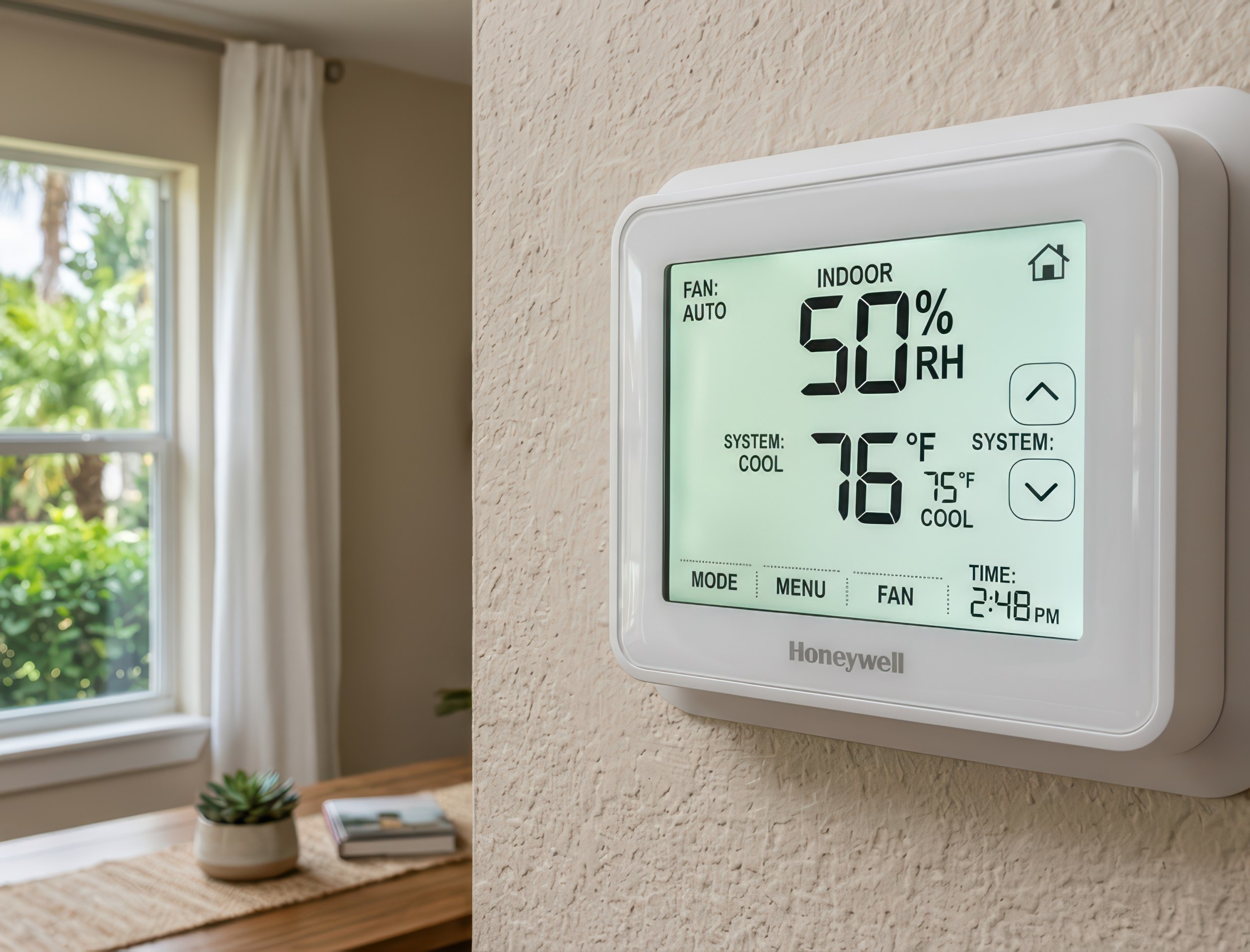
Your thermostat settings also affect humidity levels in your home. There are usually two settings:
- The AUTO setting: the fan blows only during the cooling cycle.
- The ON position: the fan blows constantly, even when the AC isn’t cooling.
WHICH FAN SETTING IS BEST FOR HUMIDITY: AUTO OR ON?
The AUTO setting is best for dehumidification because:
ON mode may make sense during cleaning or removing general stuffiness in a room but it won’t reduce humidity. The constant running will also increase wear on the blower fan, which can accelerate the need for costly AC repairs.
HOW ELSE CAN YOU REDUCE HUMIDITY IN YOUR FLORIDA HOME?
If you’re fighting a losing battle against humidity in Florida, you might want to consider some of these options:
INSTALL A DEHUMIDIFIER
A dehumidifier’s job is to suck moisture out of the air. Units can work with or without your central AC system, depending on your setup.
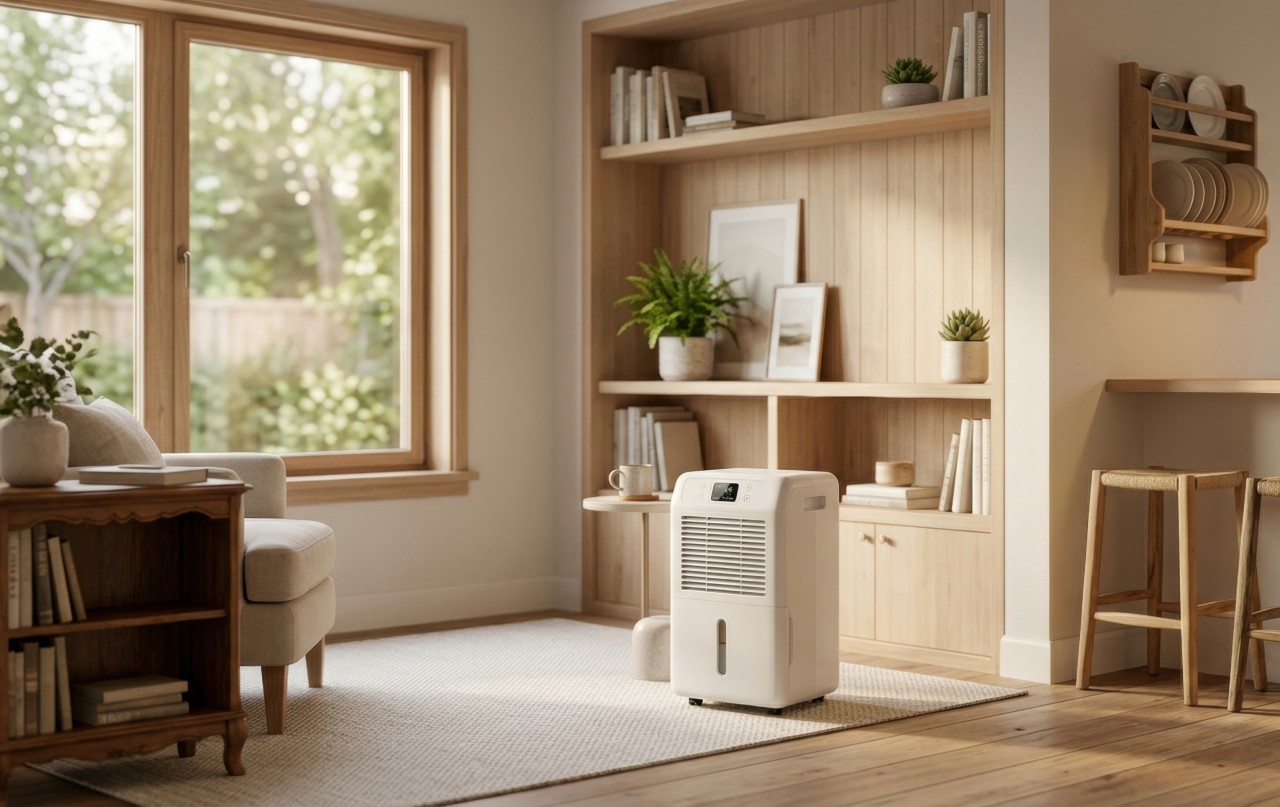
Talk to an HVAC professional before selecting a unit. Also ask about how your dehumidifier can be set to automatically turn on when humidity levels rise above the comfort zone.
IMPROVE VENTILATION IN YOUR HOME
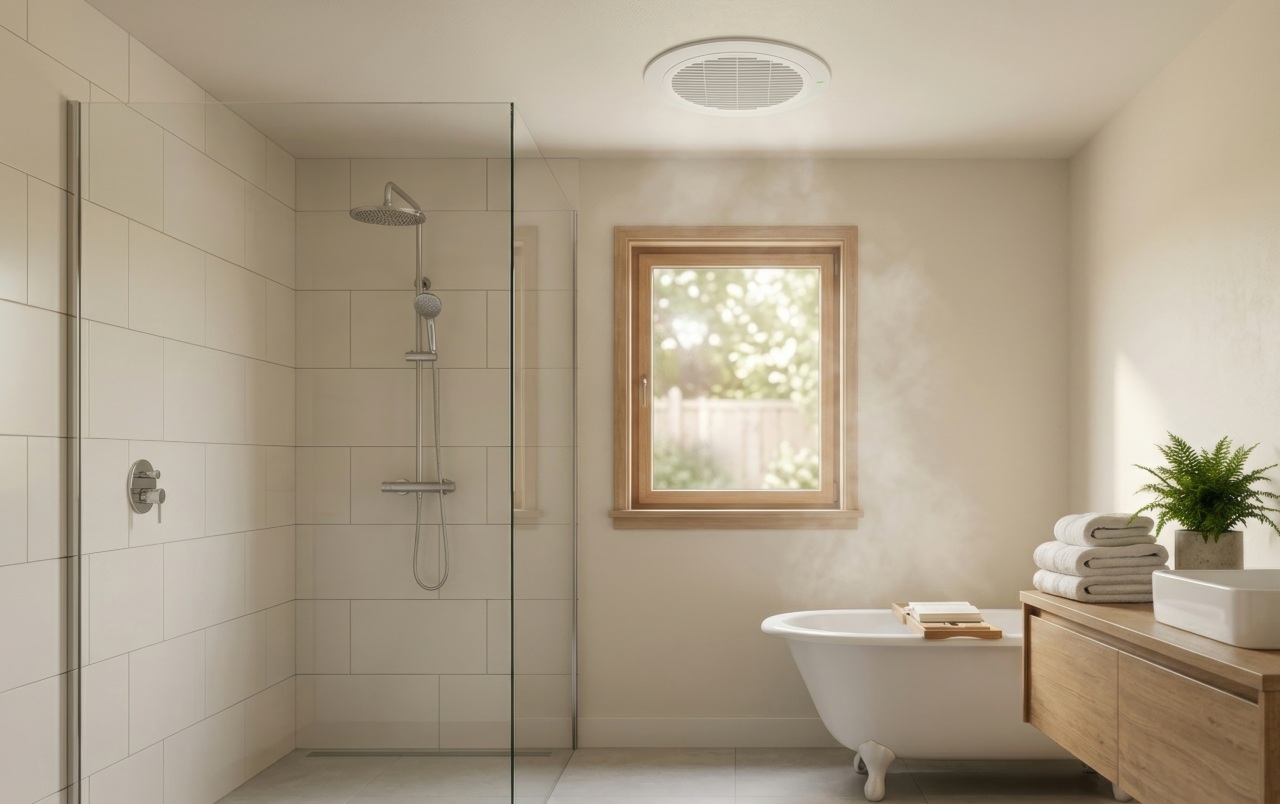
Poor ventilation is a common cause of excess humidity in homes:
STOP WATER FROM ENTERING YOUR HOME
Make sure that you’re not making the indoor humidity problem worse with water unnecessarily entering your home:
SCHEDULE REGULAR AC TUNE-UPS
Regular AC maintenance, preferably twice per year, can help control humidity by keeping your AC system running at peak performance.
High humidity might be a sign that you need an AC tune-up sooner rather than later. Looking after your AC with regular maintenance makes sense for homeowners who want to protect their investment.
FAQs

LOWER HUMIDITY IN YOUR FLORIDA HOME TODAY
If you have a humidity problem in your Florida home, don’t rely on the air conditioner’s fan to solve it. However, the AC can help if it is well-maintained, cooling properly, and paired with a dehumidifier in the worst cases.
Discuss your options with an AC professional at One Way Air. Contact us today.