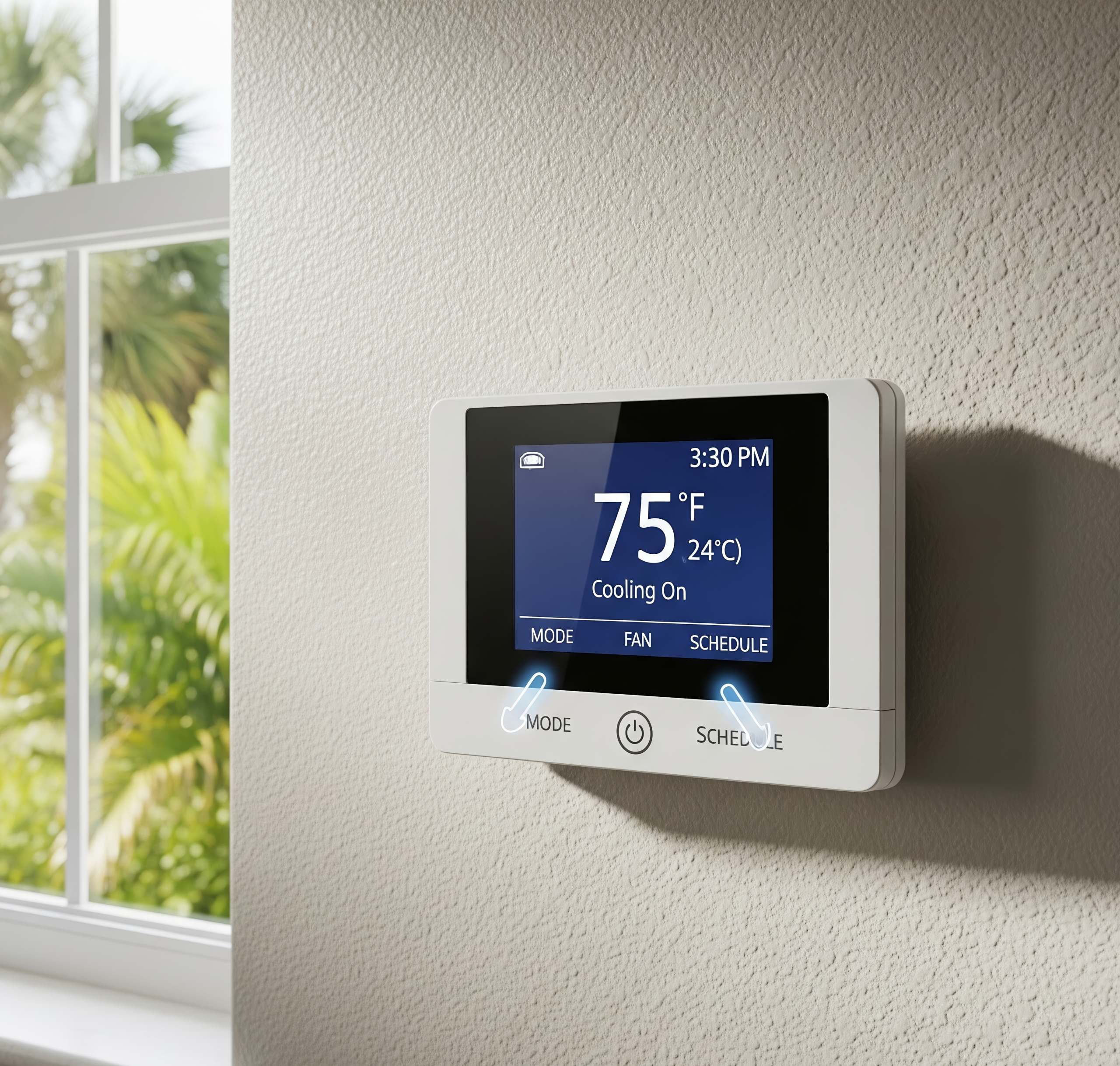
You raise the thermostat on a cool morning, hold your hand up to the vent, and feel air that seems cold. Many homeowners notice this and assume the system is broken. In some cases it is. In many others, a heat pump blowing cold air is part of normal operation, and the real question is how long it lasts and what the air temperature actually is.
This guide explains why a heat pump can feel cool at the start of a heating cycle, which heat pump heating problems deserve attention, and how to tell the difference. It also covers what a qualified technician looks at during an air conditioner repair visit, since heat pumps and air conditioners share many of the same components.
How a Heat Pump Produces Heat
A heat pump does not burn fuel to create warmth. It moves heat from one place to another. During the heating season, the outdoor unit pulls heat energy from outside air, even when that air feels cool, and the refrigerant carries that energy indoors. The indoor coil releases the heat into the air that your blower pushes through the ducts.
Because of this process, the air leaving a heat pump vent is usually warmer than room temperature but cooler than the air from a gas furnace. A heat pump typically delivers air in the range of 85 to 100 degrees Fahrenheit, while a furnace often delivers air well above 120 degrees. Human skin sits around 91 to 95 degrees on the surface, so air at 90 degrees can feel lukewarm or even cool on your hand, even though it is gently warming the house.
Why the Air Feels Cooler Than Expected
Three simple factors explain much of the cool sensation:
- The air is closer to body temperature than furnace air, so it does not feel hot.
- Air moving quickly across your skin creates an evaporative cooling effect.
- Ductwork may still hold cooler air from the previous cycle, which reaches the vents first.
None of these indicate a fault. They describe how this type of equipment behaves.
Normal Reasons for a Heat Pump Blowing Cold Air
Before assuming a repair is needed, consider the situations below. Each one can make a healthy system feel like it is not working.
The System Is Still Warming Up
When the heat pump starts, the compressor and refrigerant need a short time to build the temperature difference needed to deliver warm air. During this period, the blower may already be running and pushing out air that has not been heated yet. This startup window usually lasts a few minutes. If the air gradually becomes warmer within about five to ten minutes, the system is probably working as designed.
The Defrost Cycle Is Running
When outdoor temperatures drop and humidity is present, frost can form on the outdoor coil. To clear it, the heat pump enters a defrost cycle. The system temporarily reverses the refrigerant flow, which pulls heat from inside the home to melt the ice outside. During this time, you may feel cool air from the vents, and you may see steam rising from the outdoor unit.
A normal defrost cycle generally lasts between five and fifteen minutes and does not happen constantly. If your system seems to be stuck in defrost, or the outdoor unit is covered in thick ice, that points to a problem rather than routine operation.
Auxiliary Heat Has Not Started
Many heat pumps include a backup heat source, often electric resistance strips, which activates when the outdoor temperature is low or when the home is far from the set temperature. Until that backup stage turns on, the air from the vents may feel mild. Once it engages, the air should feel noticeably warmer.
The Thermostat Settings Are Off
Sometimes the cause is as simple as a setting. If the thermostat fan is set to “on” rather than “auto,” the blower runs continuously, even between heating cycles. That can push unheated air through the vents. A thermostat set to cool instead of heat, or one with dead batteries or an incorrect schedule, can produce similar symptoms.
For a step-by-step way to rule out simple causes, these AC troubleshooting steps walk through checks you can do safely before requesting service. Understanding how a two-stage heat pump operates can also help you recognize how different heating stages affect your home’s comfort and temperature.
Heat Pump Heating Problems That Need Attention
If the air stays cool well beyond the startup window, or the house never reaches the set temperature, a mechanical or airflow issue may be involved. These are the most common heat pump heating problems that technicians find.
Dirty Air Filter or Restricted Airflow
A clogged filter limits the amount of air moving across the indoor coil. Reduced airflow lowers the heat delivered to the home and can make the system run longer without warming the rooms. Closed or blocked vents, collapsed ducts, and dirty coils create a similar effect. Checking and replacing the filter is one of the easiest steps and often makes a noticeable difference.
Low Refrigerant Charge
Refrigerant is the medium that carries heat. If there is a leak, the system cannot move enough heat indoors, and the air from the vents stays cool. Low refrigerant is not something that gets used up; a low charge means there is a leak that must be located and repaired. Adding refrigerant without finding the leak is only a short-term measure.
A Faulty Reversing Valve
The reversing valve switches the heat pump between heating and cooling modes. If it sticks or fails, the system may keep running in cooling mode even though the thermostat calls for heat. This is a common reason why a heat pump blowing cold air continues for long periods. A technician can confirm this by checking refrigerant pressures and the valve operation.
Frozen Outdoor Coil or Failed Defrost Control
When the defrost board, sensor, or control fails, ice can build up on the outdoor coil and block heat exchange. The unit may run constantly but deliver little warmth. Heavy ice on the outdoor unit should not be chipped off, since that can damage the coil. Turning the system off and requesting service is the safer response.
Compressor or Electrical Component Issues
A weak compressor, failing capacitor, or faulty contactor can reduce the system’s ability to move heat. Symptoms may include humming noises, short cycling, tripped breakers, or an outdoor fan that spins while the compressor does not. These components carry electrical risk and should be handled by licensed professionals only.
Leaky Ductwork
Even a healthy heat pump will struggle if warm air escapes before reaching the rooms. Leaks in ducts running through an attic or crawl space can waste a large share of the heated air, leaving vents cool and some rooms colder than others.
Quick Comparison: Normal Behavior vs. Possible Problem
The table below summarizes how to separate typical operation from signs that call for professional help.
| Situation | What You Notice | Normal or Problem | Suggested Action |
|---|---|---|---|
| Startup phase | Cool air for the first few minutes, then gradual warming | Normal | Wait up to ten minutes and recheck |
| Defrost cycle | Cool air, steam from the outdoor unit, short duration | Normal | No action unless it repeats constantly |
| Auxiliary heat delay | Mild air until backup heat engages | Normal | Monitor whether warmth improves |
| Thermostat fan set to on | Cool air between heating cycles | Setting issue | Switch fan to auto |
| Dirty filter | Weak airflow, long run times, uneven rooms | Problem | Replace the filter, then recheck |
| Low refrigerant | Cool air continues, ice on lines or coil | Problem | Schedule leak detection and repair |
| Reversing valve failure | System cools while set to heat | Problem | Request professional diagnosis |
| Heavy ice on outdoor unit | Thick frost that does not clear | Problem | Turn off the system and call for service |
If several rows in the table sound familiar, scheduling maintenance may help. This list of signs you need an AC tune-up covers warning signals that often apply to heat pumps as well.
What You Can Safely Check at Home
Some basic checks are reasonable for any homeowner and do not require tools or electrical work.
- Confirm the thermostat is set to heat, with a set point several degrees above room temperature.
- Set the fan to auto rather than on.
- Replace the air filter if it looks gray or clogged.
- Make sure supply vents and return grilles are open and not blocked by furniture.
- Look at the outdoor unit for leaves, debris, or heavy ice, and keep the area around it clear.
- Give the system ten to fifteen minutes to run through its startup and any defrost cycle.
If the problem remains after these steps, avoid opening panels or handling wiring. Refrigerant and electrical repairs require training, proper tools, and licensing.
Why Heat Pumps in Florida Can Feel Different
In Southwest Florida, winters are mild, and heat pumps are commonly used for both cooling and heating. Because the heating season is short, many systems sit idle for months and then run heating mode only a few days a year. That long period of inactivity can reveal issues that went unnoticed, such as a worn reversing valve, a dirty coil, or a failing capacitor. Humidity can also affect how the outdoor coil behaves during cooler mornings.
For these reasons, having the system inspected before the first cold snap is a practical habit. A technician can verify refrigerant levels, test the reversing valve, inspect electrical connections, and confirm that airflow is correct.
When to Call an HVAC Repair Service
Contact a licensed technician if you notice any of the following:
- Cool air continues for more than fifteen minutes after the system starts.
- The outdoor unit is covered in thick ice that does not clear.
- The system blows cold air while set to heat.
- You hear grinding, banging, or loud humming from the unit.
- The breaker trips repeatedly.
- Energy bills rise without a change in usage.
An HVAC repair service can diagnose the cause with proper gauges and testing equipment rather than guessing. Many heat pump heating problems share causes with cooling failures, so the same professional skills apply to air conditioner repair and heat pump service. Choosing an AC repair service that works on both system types helps ensure the full system is evaluated, including the indoor coil, outdoor unit, controls, and ductwork.
How One Way Air Approaches Heat Pump and AC Concerns
One Way Air is a Florida air conditioning company that provides AC repair, installation, and maintenance, along with emergency service for urgent breakdowns. When a customer reports a heat pump blowing cold air, the technician typically starts with the simple items, such as thermostat settings, filters, and airflow, then moves on to refrigerant levels, electrical components, and operating cycles. The goal is to identify the actual cause before recommending a repair, so homeowners understand what is happening with their equipment.
If you are unsure whether what you feel from your vents is normal, a short diagnostic visit can answer that question. Contact our team to describe the symptoms and arrange an inspection.
Final Thoughts
A heat pump blowing cold air is not always a sign of failure. Startup delays, defrost cycles, auxiliary heat timing, and thermostat settings can all explain a cool first blast. When the cool air lasts, when ice builds up, or when the system runs in the wrong mode, the cause is more likely mechanical or electrical and should be checked by a professional. Understanding the difference helps you avoid unnecessary repair calls while still acting quickly when something is truly wrong.
If your system is not warming your home the way it should, contact our team to schedule an evaluation with a licensed technician.
Frequently Asked Questions
Yes, brief cool air at startup is common. The system needs a few minutes to build heat, and the air may also feel cool because heat pump output is lower than furnace output. If the air does not warm after ten to fifteen minutes, an inspection is recommended.
Possible causes include a defrost cycle, a thermostat set incorrectly, a dirty filter, low refrigerant, or a failed reversing valve. The duration of the cold air and any additional symptoms, such as ice or unusual noises, help narrow down the cause.
Most defrost cycles run between five and fifteen minutes. They happen occasionally when frost forms on the outdoor coil. Cycles that repeat very often or never finish suggest a sensor or control problem.
Yes. A dirty filter restricts airflow, which reduces heat transfer and can cause the system to run longer while delivering less warmth. Regular filter replacement is one of the simplest ways to protect performance.
If the cold air lasts only a few minutes, there is no need to shut it off. If there is heavy ice, burning smells, loud noises, or a repeated breaker trip, turn the system off and request professional service.
Many technicians who handle air conditioners are trained on heat pumps because the two systems share a refrigeration cycle, compressor, coils, and controls. It is worth confirming that the company services heat pumps before booking.
Annual maintenance is a common recommendation, ideally before the season when you rely on heating most. Regular service helps catch refrigerant, electrical, and airflow issues early.