Water puddling around your AC is one of the more obvious signs that something’s wrong. It’s also a common issue reported to almost any Florida HVAC company, especially in summer when humidity is high.
As alarming as a water leak may look, most of the cases are fixable, and some you can handle yourself.
Before acting, learn the main causes of water leaks in air conditioning, the DIY fixes you can look after yourself, and when to call a pro.
WHY IS YOUR AC LEAKING WATER?
The main reasons for a leaking AC are:
STAY COOL ALL YEAR ROUND WITH ONE WAY AIR…
The team at One Way Air installs, services, and repairs all types of air conditioning systems in Southwest Florida. Get in touch with us here for a quote or call 239-233-4356 in emergencies.
WHEN IS LEAKING WATER NORMAL AND WHEN IS IT A PROBLEM?
The indoor evaporator unit of your AC sucks warm, moist air in and produces condensation as a normal byproduct of the cooling process.
A little water dripping from your indoor unit or near the drain line is, therefore, usually nothing to worry about, especially in the middle of a hot, humid Florida summer. It’s more common here than almost anywhere else in the country.
It becomes a problem if you see:
If you observe any of these signs of leaking water, it’s important to act quickly, as it can lead to mold growth or even structural damage.
THE 7 MOST COMMON REASONS YOUR AC IS LEAKING WATER
These are the main reasons why your AC is leaking water more than it should:
1. FROZEN EVAPORATOR COILS
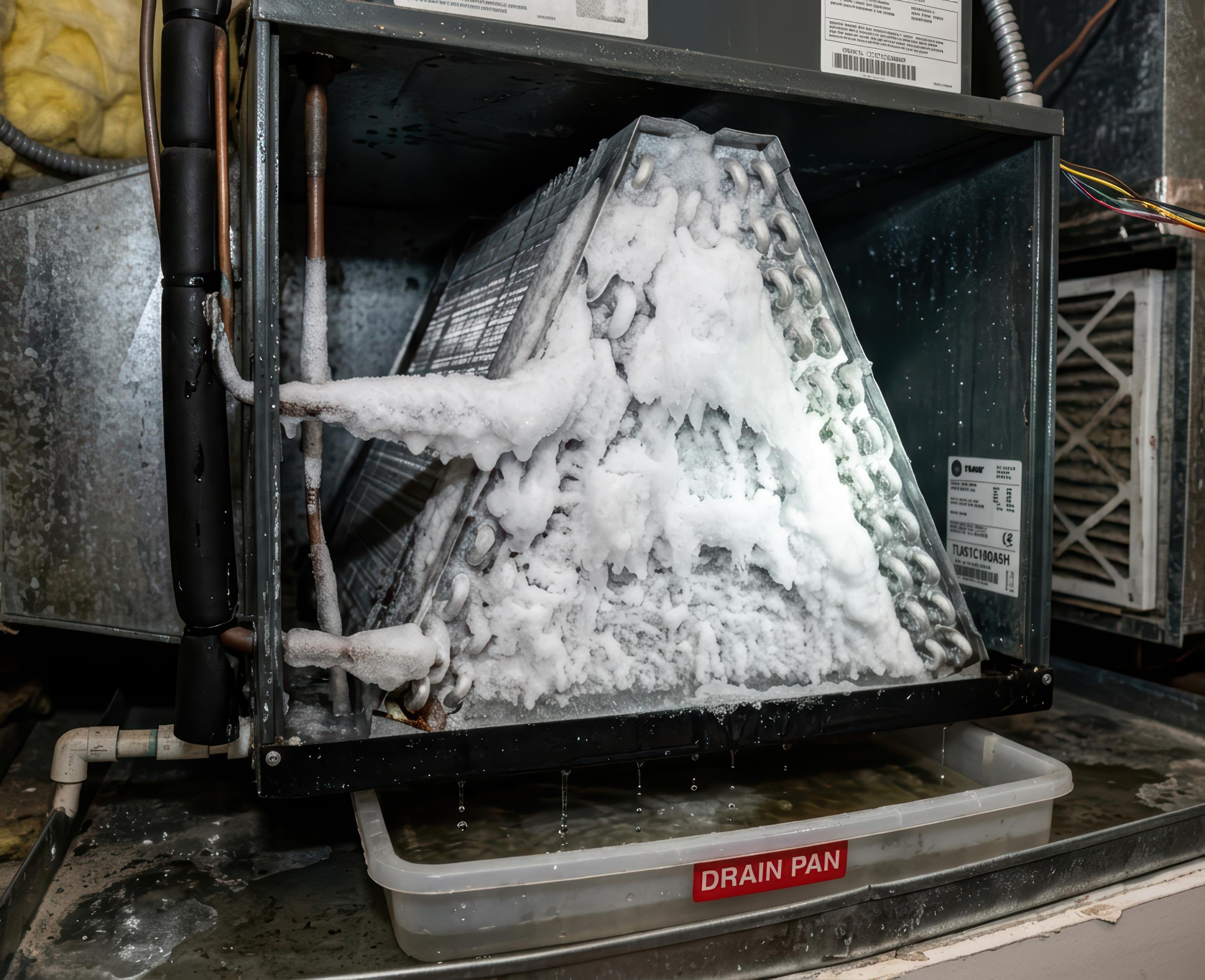
A frozen AC is an alarming sight but it usually has a simple cause: often, it’s simply due to low refrigerant or a clogged or dirty filter. This will disrupt the normal cooling process and cause ice to form on the evaporator coils.
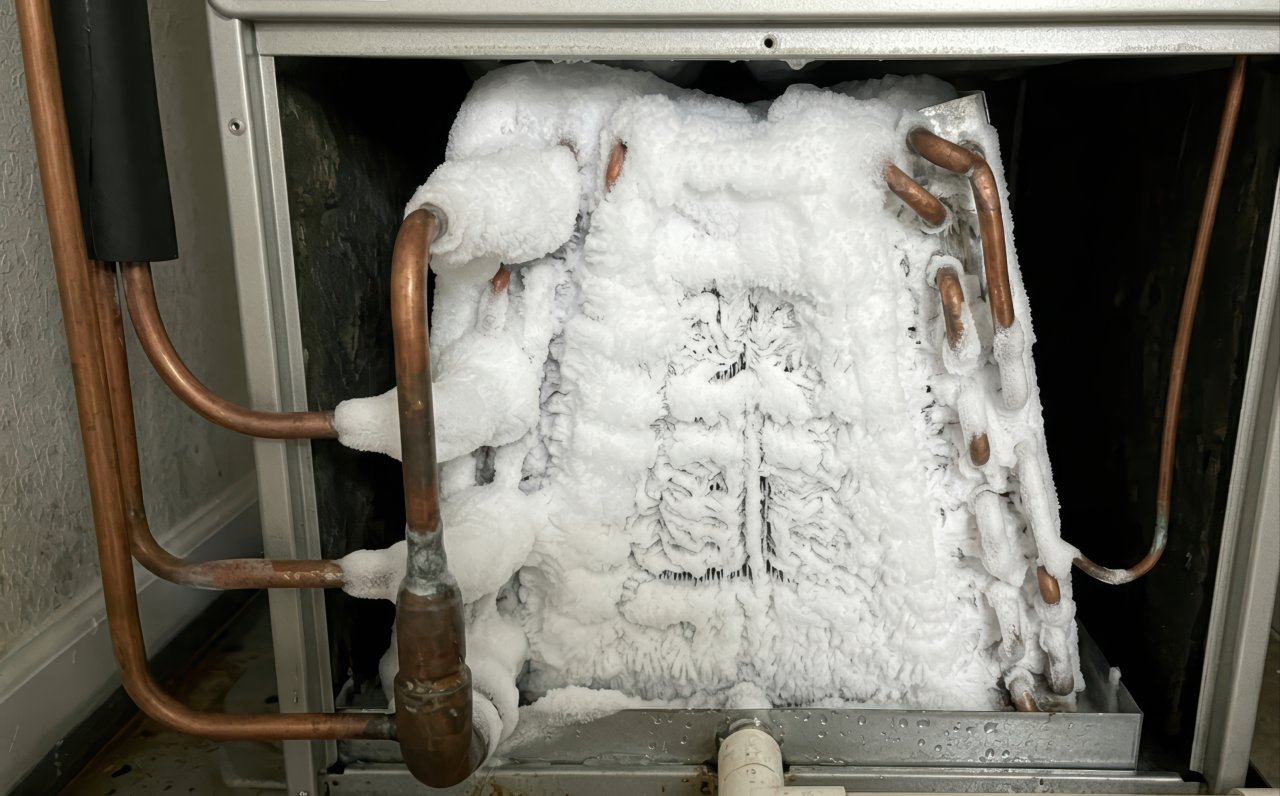
When the ice melts, water drips into the drain pan, which can overflow and lead to pools of water on the floor below.
2. CLOGGED CONDENSATE DRAIN LINE
One of the most common causes of an AC leaking water is a clogged condensate drain line.
The condensate line channels moisture away from the inside AC unit to the outside of your home. If this is blocked, water can back up and pool inside the home.
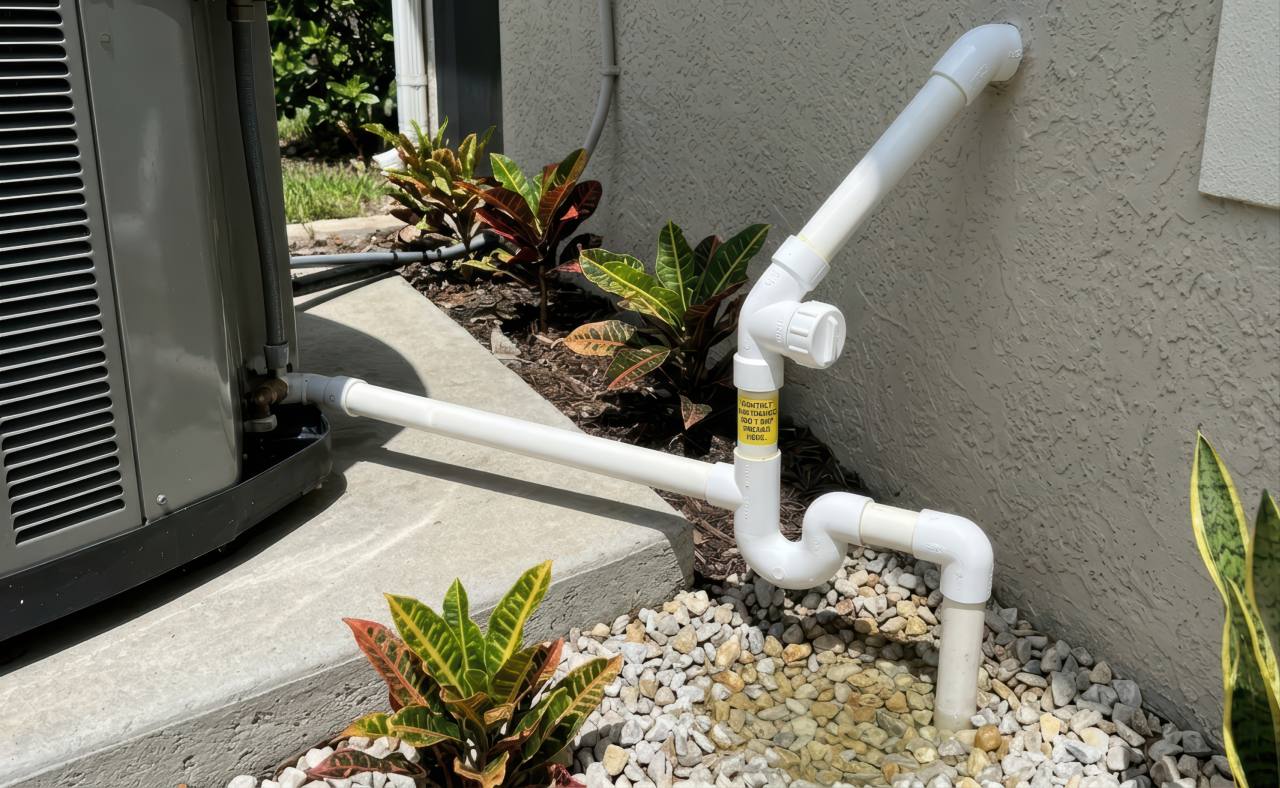
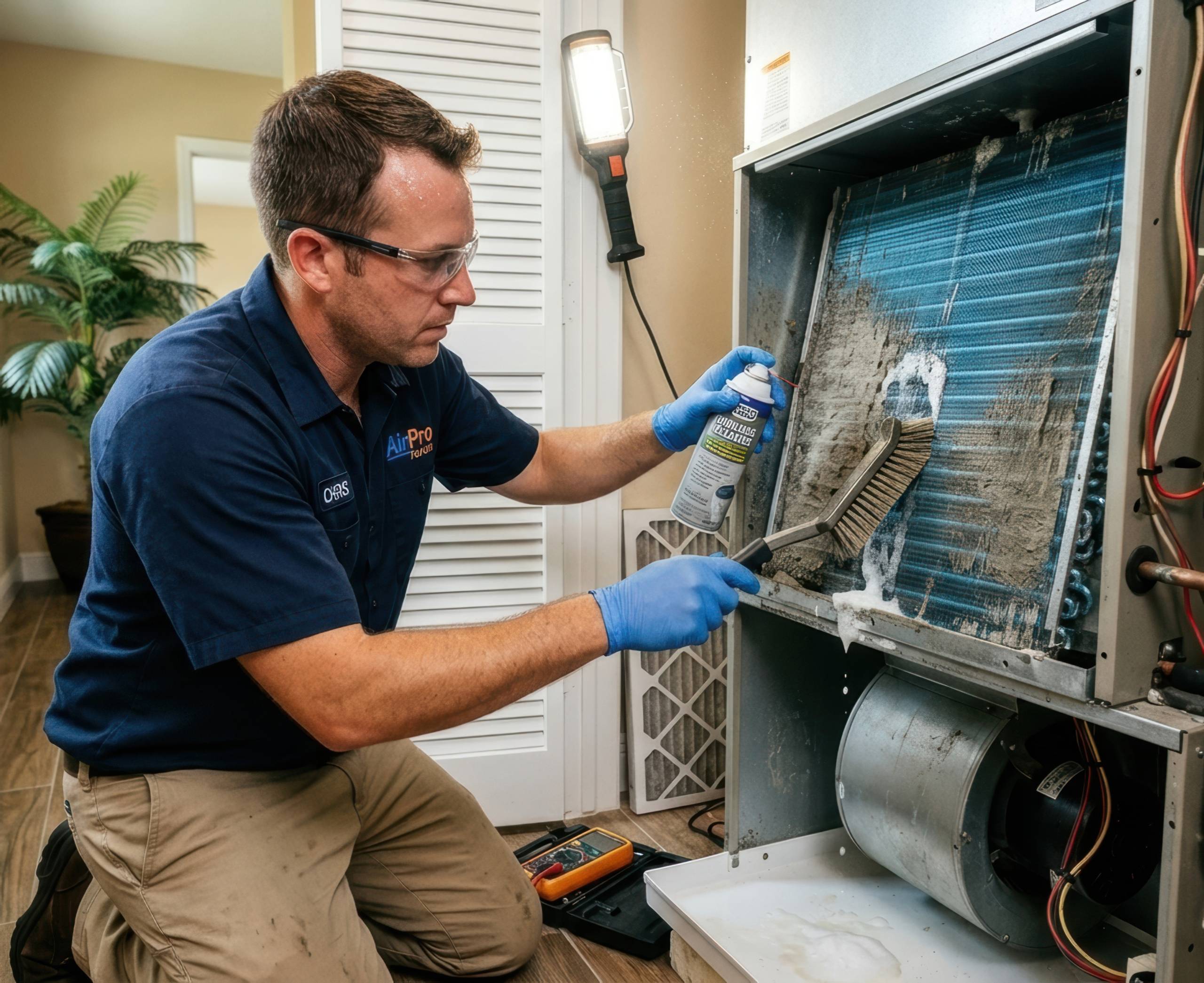
In Florida’s humidity, algae and slime build up fast, especially in systems that don’t undergo frequent AC maintenance. Debris and dust may also make their way into the drain line and clog it.
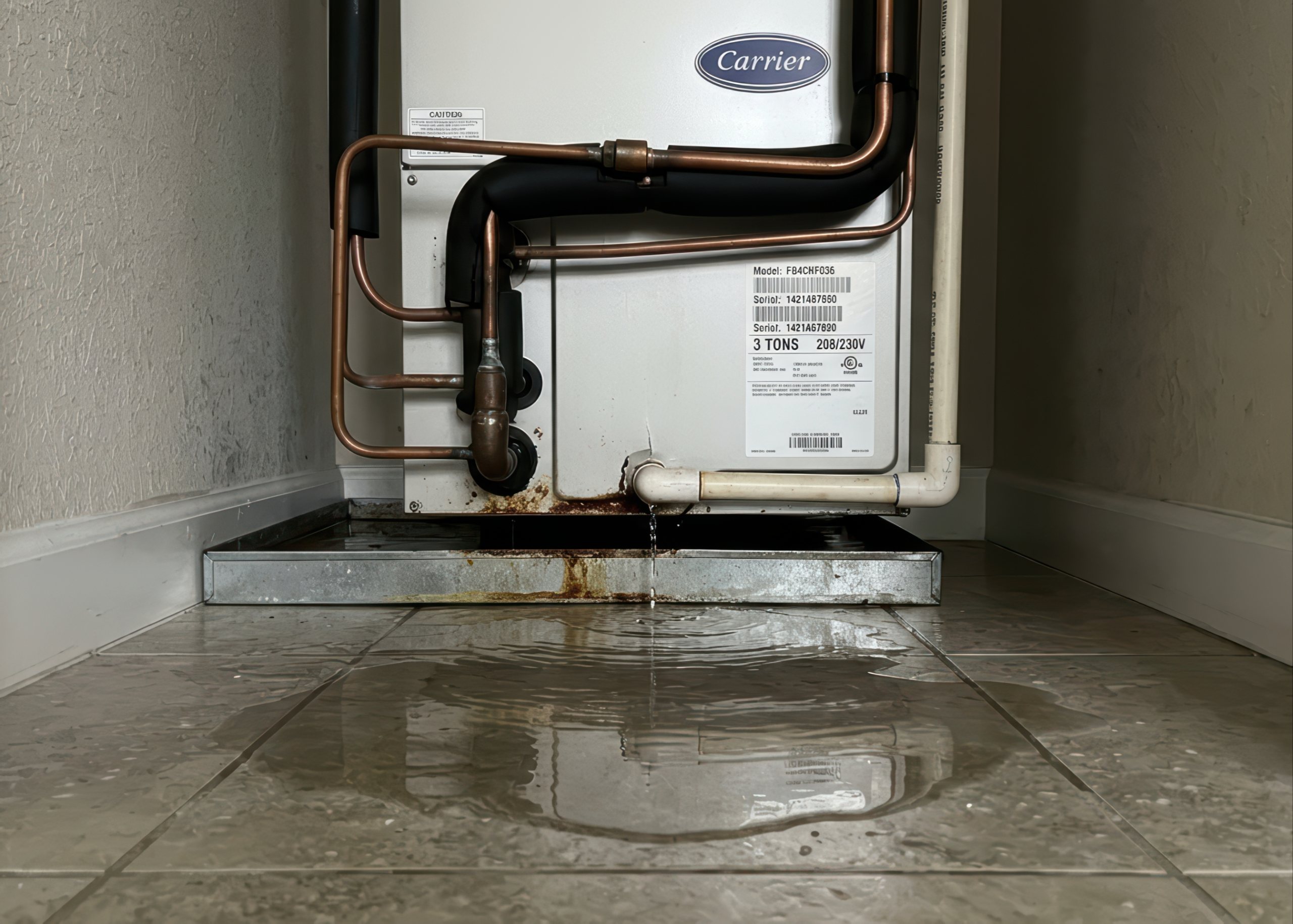
3. CRACKED OR RUSTED DRAIN PAN
The drain pan collects the condensation produced during the normal cooling process as it drips off the evaporator coil.
If this develops cracks from age, rust, or another issue, the water can start collecting beneath the indoor unit and cause mold and mildew to form.
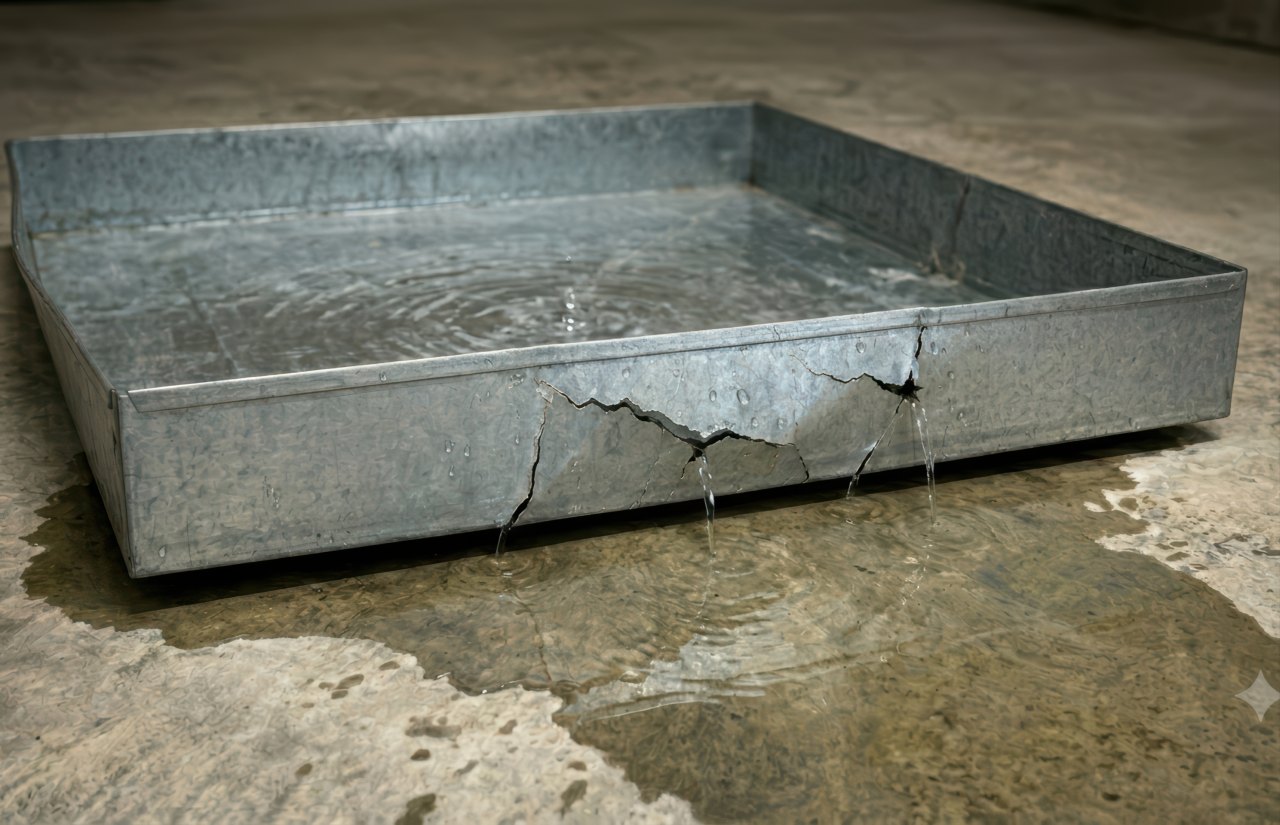
This problem is common in older AC units, especially in humid Florida garages and attics by the coast, where corrosion can be a particular problem.
4. LOW REFRIGERANT LEVELS
The cooling process involves a delicate balance of pressure and temperature, using AC refrigerant. These chemicals (typically R-410A, R-32, or R-454B in modern systems, or R-22 in older units) have unique properties that help the system regulate pressure.
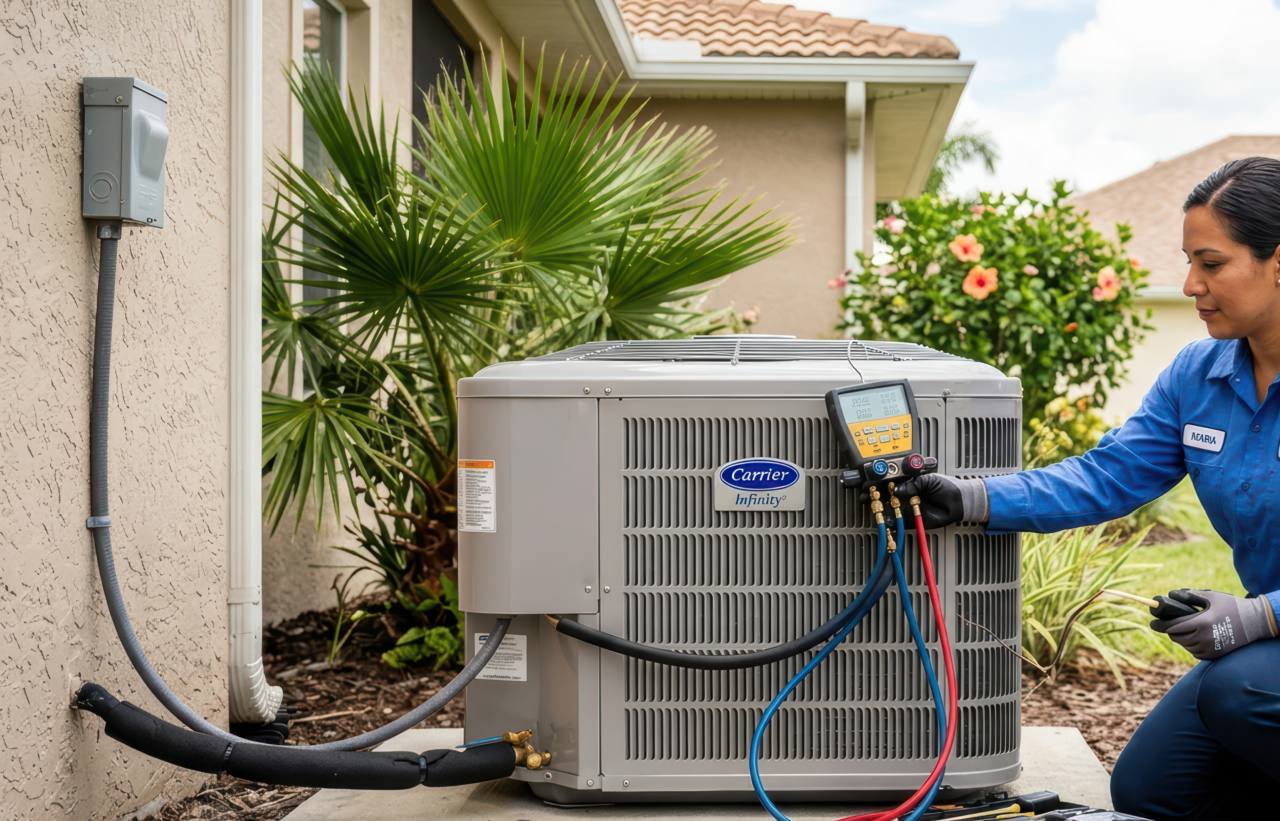
If refrigerant levels drop from a leak in the system, the pressure will drop, and the col can freeze up, leading to overflow when it melts.
5. CLOGGED AC FILTER
The single most common cause of cooling problems in Florida is a dirty or clogged AC filter, which restricts air flow in the air conditioning system.
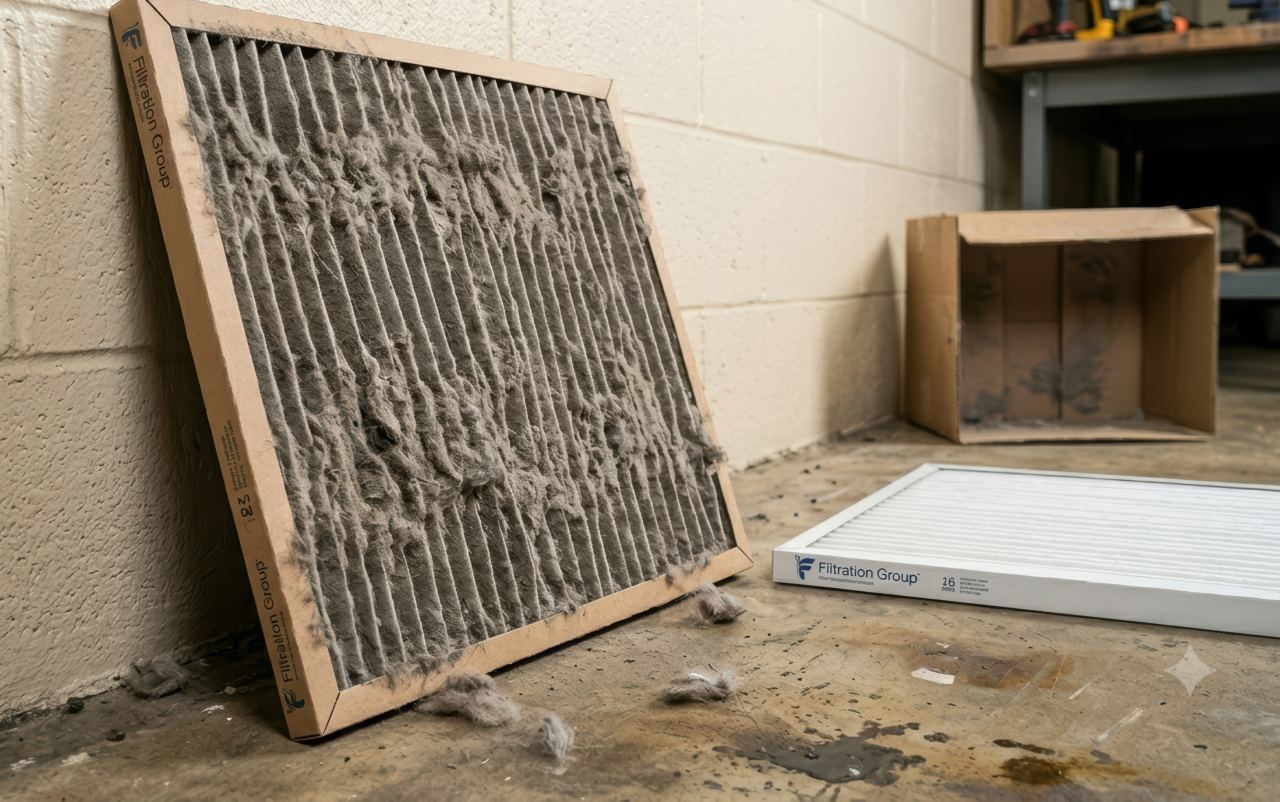
The filter helps maintain indoor air quality but requires changing every one to two months, depending on the time of year, AC usage, and home conditions. Otherwise, it becomes dirty, restricts air flow, and can lead to a frozen coil and water leaks.
6. IMPROPER INSTALLATION OR INCORRECT UNIT TILT
AC units should be professionally specified and installed. That will ensure not only that you get the right size AC unit but also that everything functions as it should.
AC units can leak water if the water doesn’t drain properly or the unit isn’t level.
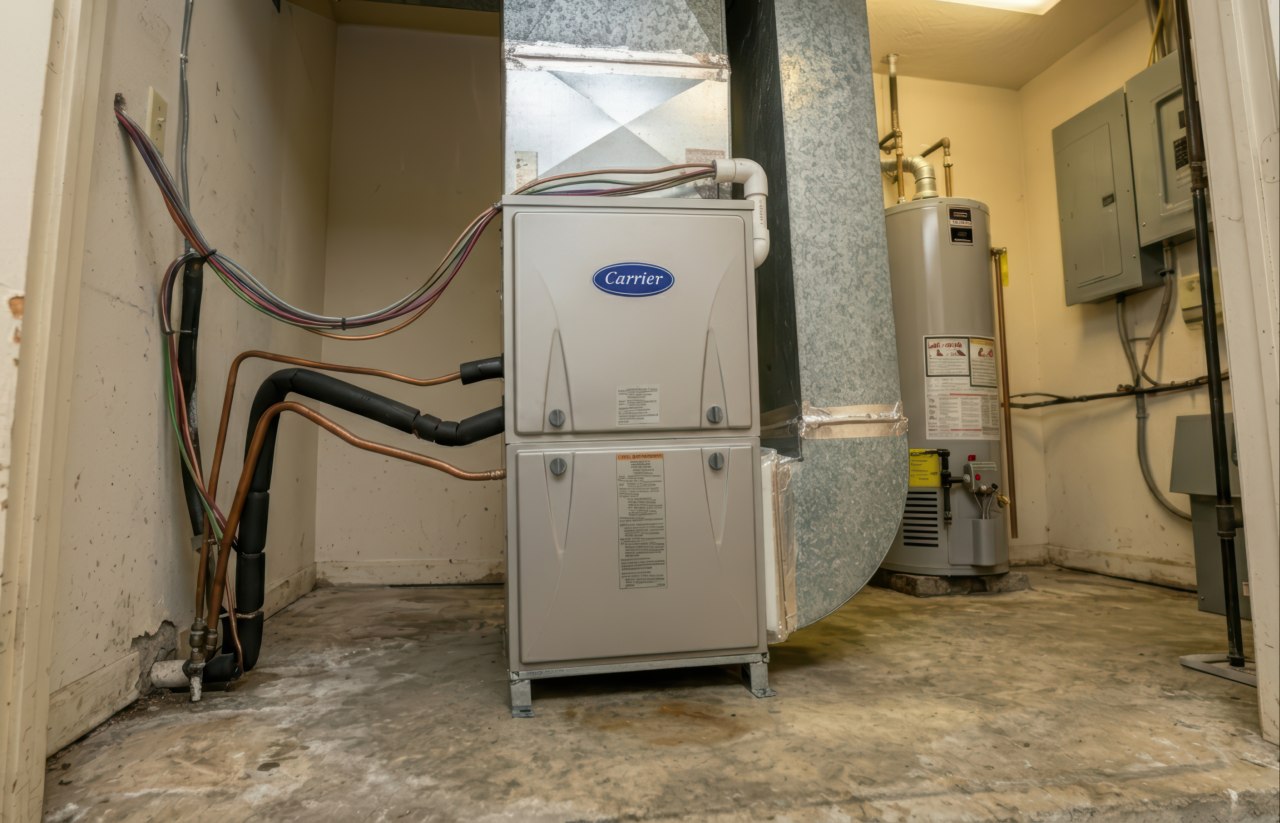
Poor installation is an avoidable cause: a certified Florida HVAC technician will ensure correct drainage slope, secure fittings, and proper leveling from day one.
7. DAMAGED OR MISSING REFRIGERANT LINE INSULATION
Damaged or missing insulation on the refrigerant lines (the suction line specifically) or on the air handler cabinet causes warm, humid air to contact the cold surface directly, leading to condensation that drips and can look like a leak.
In Florida’s climate, this is more of a real-world issue than in drier states because the ambient indoor humidity means even a small gap in insulation produces noticeable moisture.
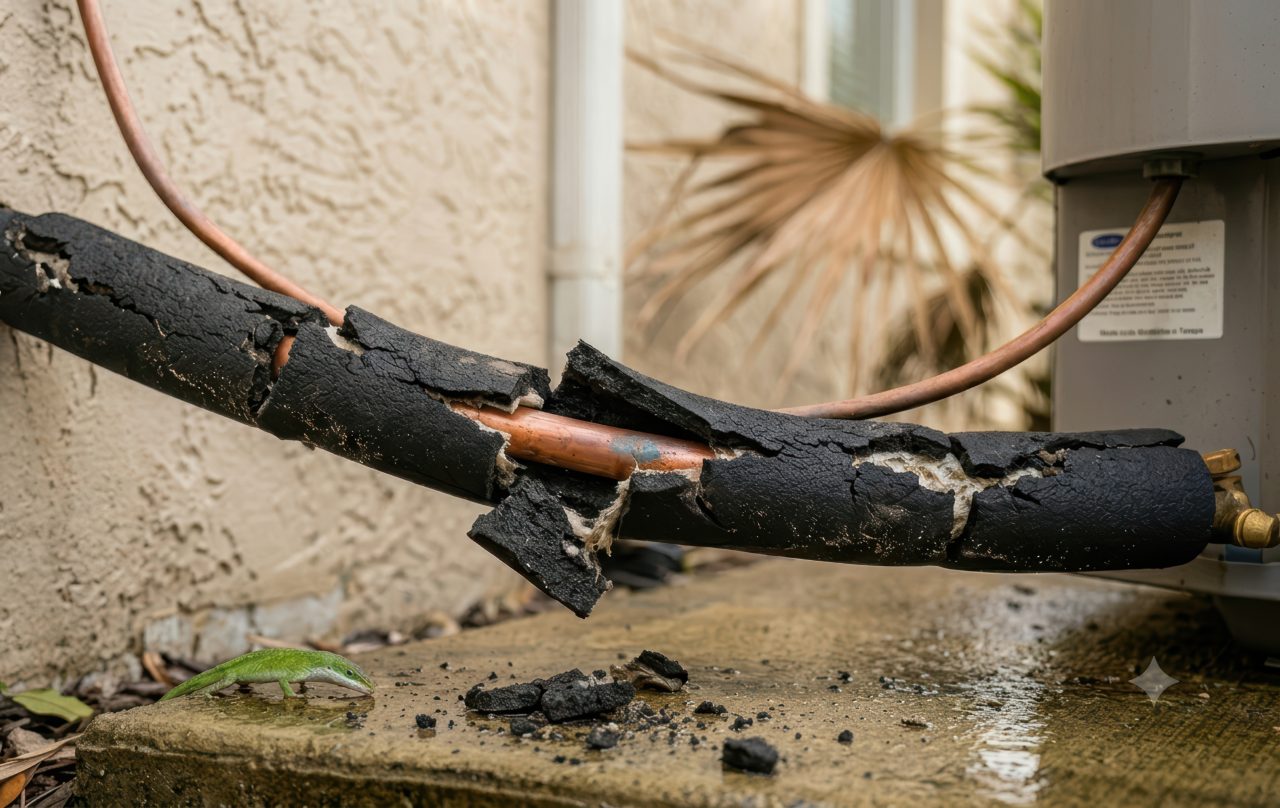
New systems with professional AC installation are less susceptible to this issue than older units.
DIY FIXES: WHAT CAN YOU DO RIGHT NOW?
If your AC is leaking water and you’re not sure what to do, play it safe and call an HVAC professional.
However, some simple AC troubleshooting steps and DIY fixes can stop the leaking water problem:
WHEN TO CALL AN AC PROFESSIONAL
WARNING! If at any stage of the troubleshooting process, you see ice on the coils, smell something musty, or water is near electrical components, call an HVAC professional.

A pro is required to fix a leak you can’t locate or that returns after DIY attempts. Also, call a pro if you notice:
HOW TO PREVENT AC WATER LEAKS YEAR-ROUND IN FLORIDA
A few simple steps by homeowners can protect air conditioners from water leaks all year round:
In addition to these DIY steps, an annual drain line flush by an HVAC technician and installing a float switch that shuts off the unit if the drain pan overflows are both good preventative measures.
AC is costly in Florida, accounting for a large chunk of the monthly energy bill. Don’t let problems like water leaks get out of hand before calling a pro or it could end up costing you more.
If you’re in central or southwest Florida and have a problem with water leaking from your AC, contact us to arrange a full inspection and reliable, affordable AC repairs.