Which Air Conditioner Brands to Avoid in Florida
Florida can be a “torture test” for air conditioners. With the year-round heat, humidity, and salty air, it’s the harshest environment in the country for cooling equipment.
Systems run most of the year here. So, choosing the right unit is higher stakes than in the rest of the U.S.
Many homeowners ask about the air conditioner brands to avoid in Florida—and how to make the best choice when shopping for AC units.
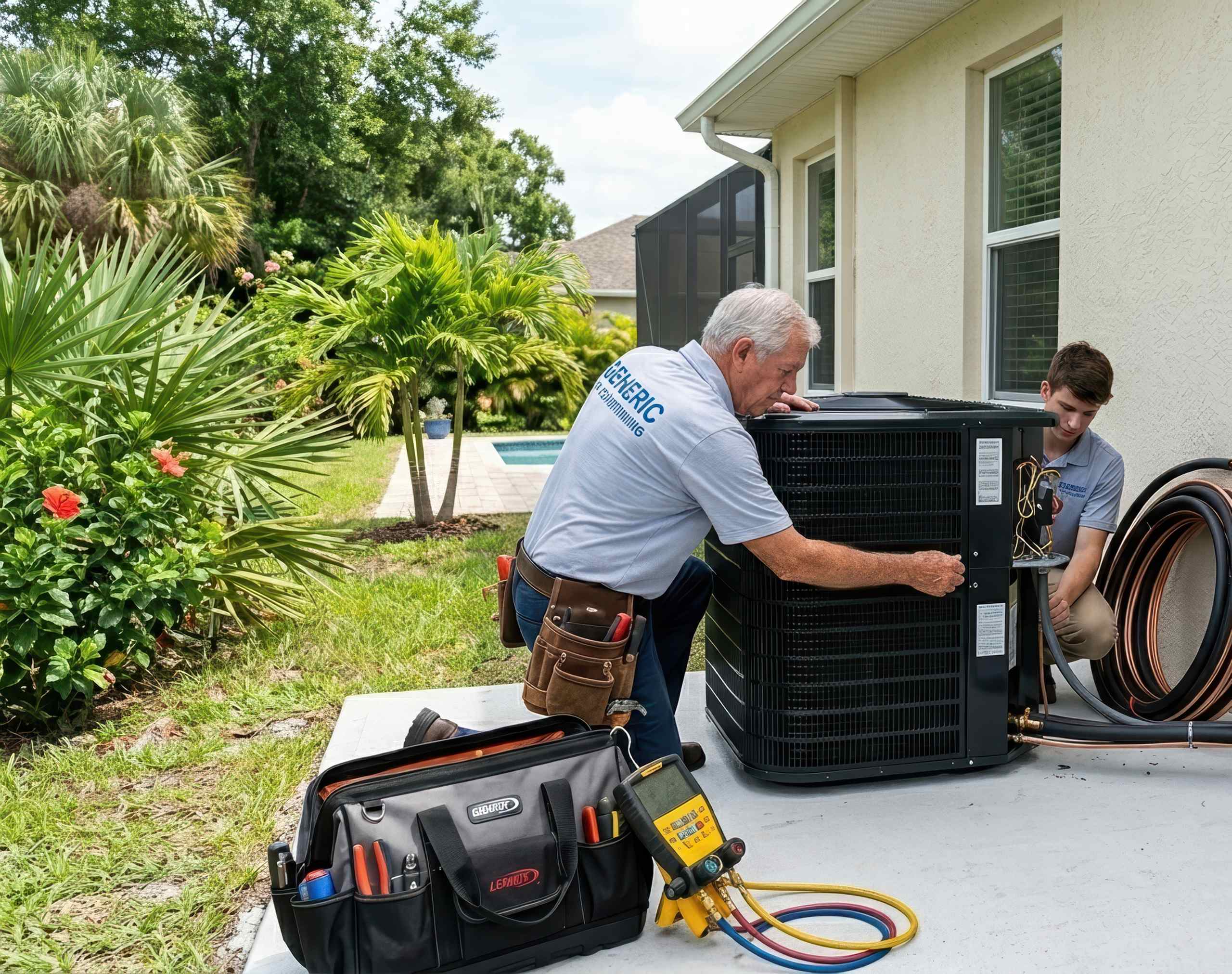
But getting it right is not so much about the name on the box. You need to weigh up the size, efficiency, and performance of the unit. Then get it installed professionally by the best HVAC team.
Let’s look at what to avoid and what to look for when buying an air conditioner in Florida…
ARE THERE AC BRANDS—OR TYPES—TO AVOID IN FLORIDA?
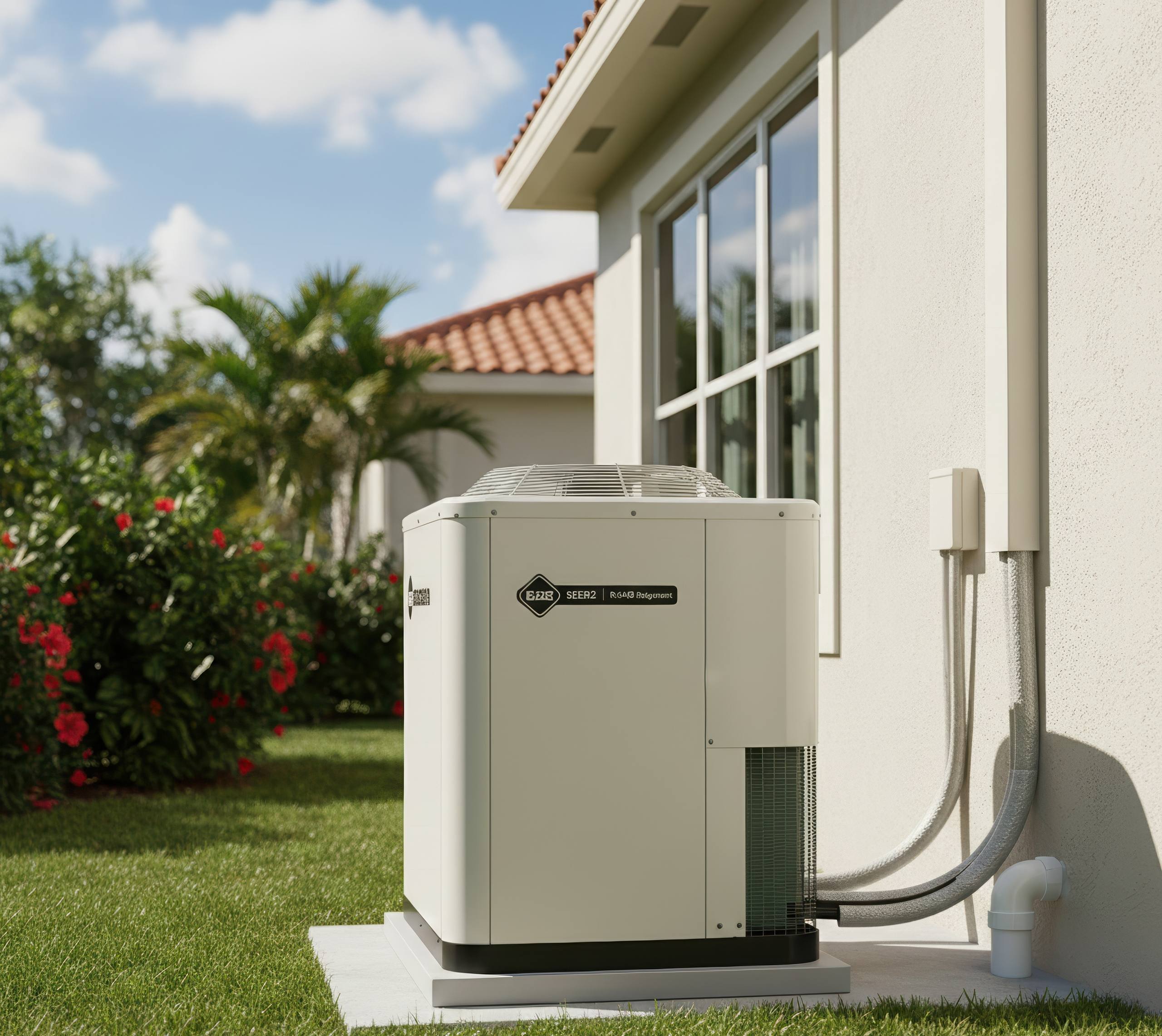
Whether you’re in the Fort Myers, Orlando, Tampa, or Fort Lauderdale area, you need to deal with very hot summers, high temperatures in spring and fall, intense humidity, and (often) salty air.
Most of the leading-name air conditioners on sale in Florida will be suitable for the conditions and will run reliably and efficiently if professionally installed and maintained.
Identifying air conditioner brands to avoid usually comes down to personal preference but there are certain types and categories of AC units best avoided in Florida because they do a poor job of handling the conditions here compared to others.
Let’s go deeper…
STAY COOL ALL YEAR ROUND WITH ONE WAY AIR…
The team at One Way Air installs, services, and repairs all types of air conditioning systems in Southwest Florida. Get in touch with us here for a quote or call 239-233-4356 in emergencies.
WHAT EFFICIENCY SHOULD YOU LOOK FOR—AND IS THE MINIMUM ENOUGH?
Many of the leading AC brands like Carrier, Trane, York, Lennox, Bryant, Goodman, Rheem, Amana, and Ruud have been manufacturing AC units for many decades—and some for over a century.
They know what they’re doing. And they do it well.
So, the question for homeowners should be more about the size and efficiency of the unit. You can check out how to correctly size an air conditioner here.
AC efficiency needs some explanation because of recent changes in energy efficiency measurements and minimum requirements.
The SEER rating (Seasonal Energy Efficiency Ratio) is the standard measurement for AC efficiency. It measures:
A higher SEER rating indicates:
SEER 2
You’ll increasingly see SEER2 ratings on new air conditioning equipment in Florida.
This variation was introduced by the U.S. Department of Energy (DOE) to better represent real-world operating conditions for air conditioners and heat pumps.
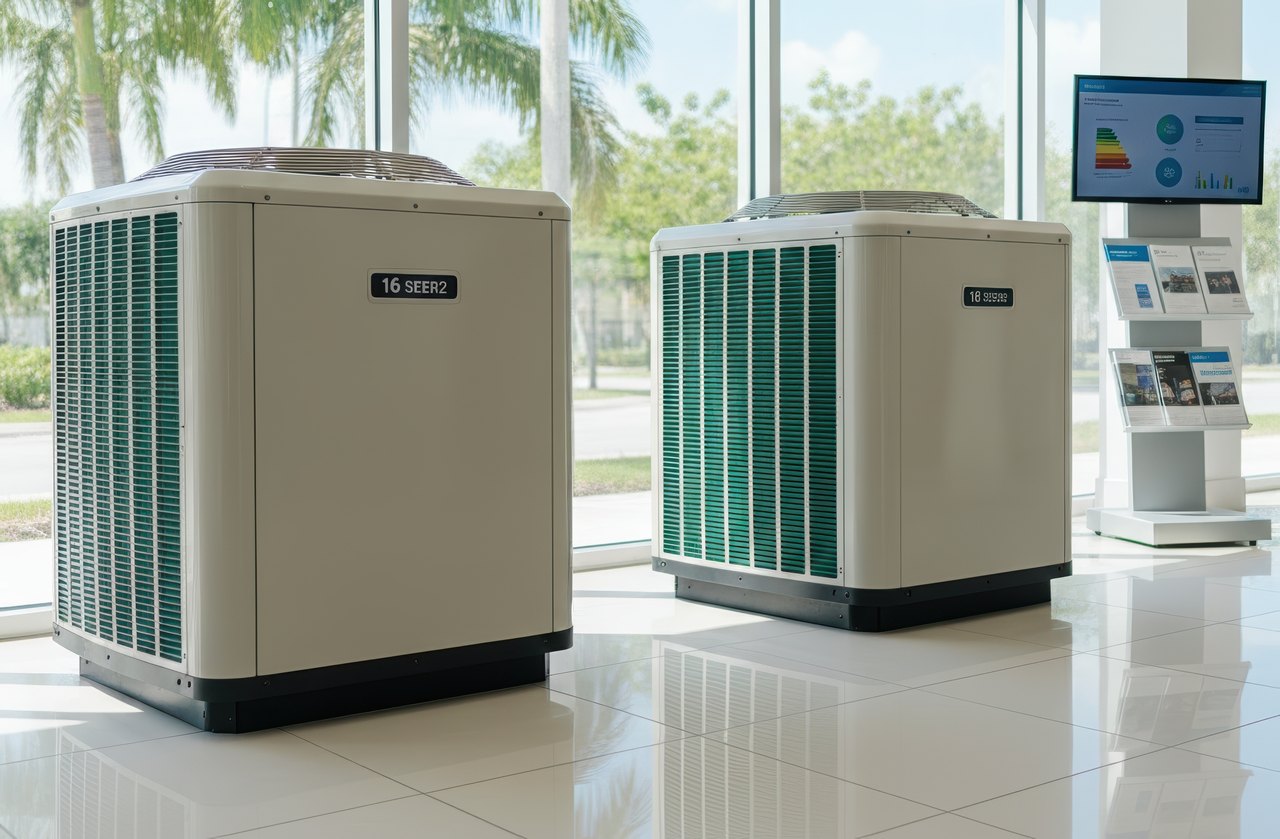
SEER2 ratings are usually about 4–7 percent lower than SEER ratings, due to stricter test conditions.
MINIMUM SEER REQUIREMENTS IN FLORIDA
A minimum SEER2 rating of 14.3 (15 SEER) is required for most residential (split-system) AC units sold in Florida and other parts of the Southeast region.
Most homes in Florida have central air conditioning and should expect to comply with these minimums when installing new AC equipment.
Although it is illegal for dealers to sell split-system AC units (like central air conditioners or ductless minis-splits) with SEER ratings lower than the minimum, they may still be provided by unscrupulous dealers at low prices.
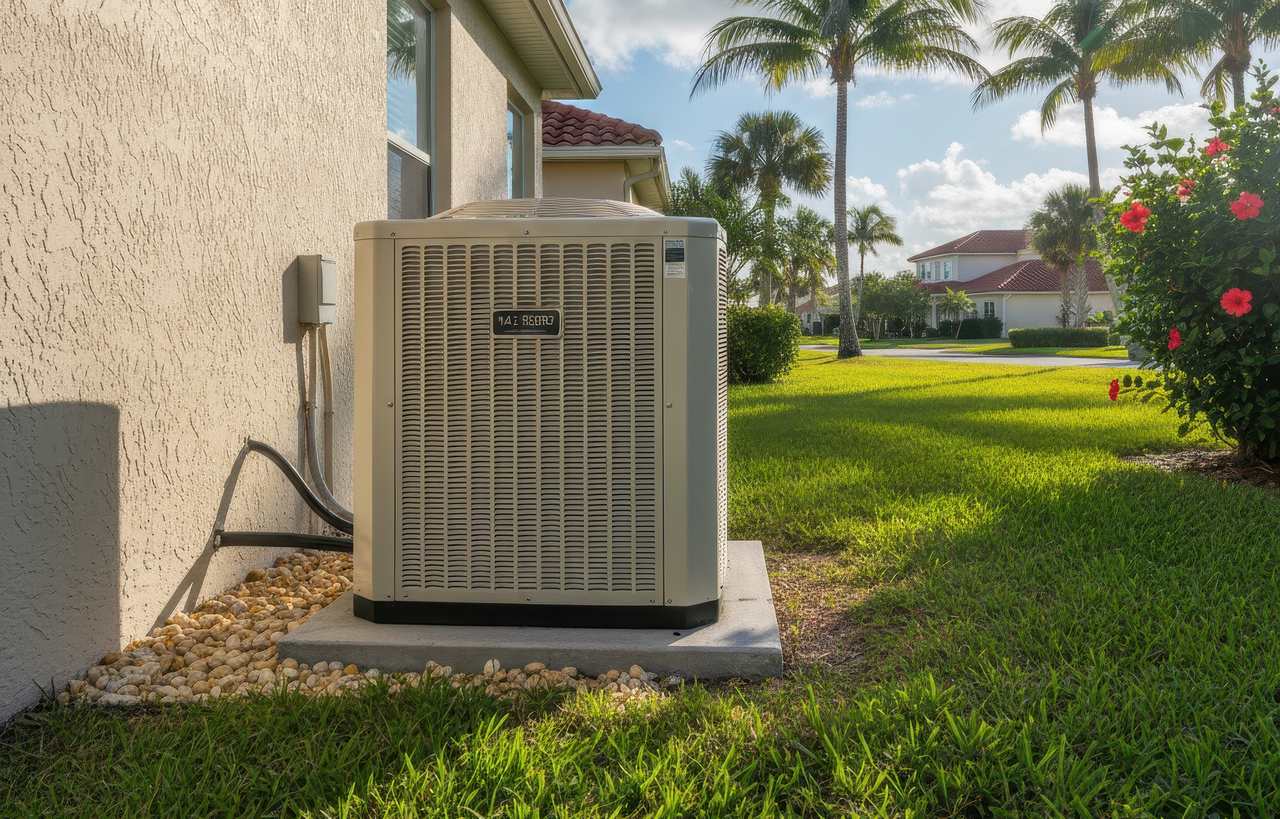
Avoid these brands/types of air conditioners. The price may seem attractive but “bargain” units that barely hit the minimum efficiency mark may struggle to cool the home sufficiently during the July and August peak temperatures. They can also add to the monthly electricity bills.
Focus on finding the most efficient unit you can, according to your budget. This might be:
Paying a little more upfront with a new, high-efficiency AC installation can pay dividends over the years that follow, with lower monthly electricity bills.

There are some other red flags to avoid with AC units in Florida…
RED FLAGS: CATEGORIES OF AC UNITS TO AVOID IN FLORIDA
Florida works AC units hard. Homeowners should look out for the following possible signs of AC brands to avoid:
THE MOST IMPORTANT AC BRAND IS YOUR INSTALLATION COMPANY!
While most of the leading AC brands offer only fractional differences, the same can’t necessarily be said for the HVAC installation companies you deal with.
There can be big differences from supplier to supplier with:
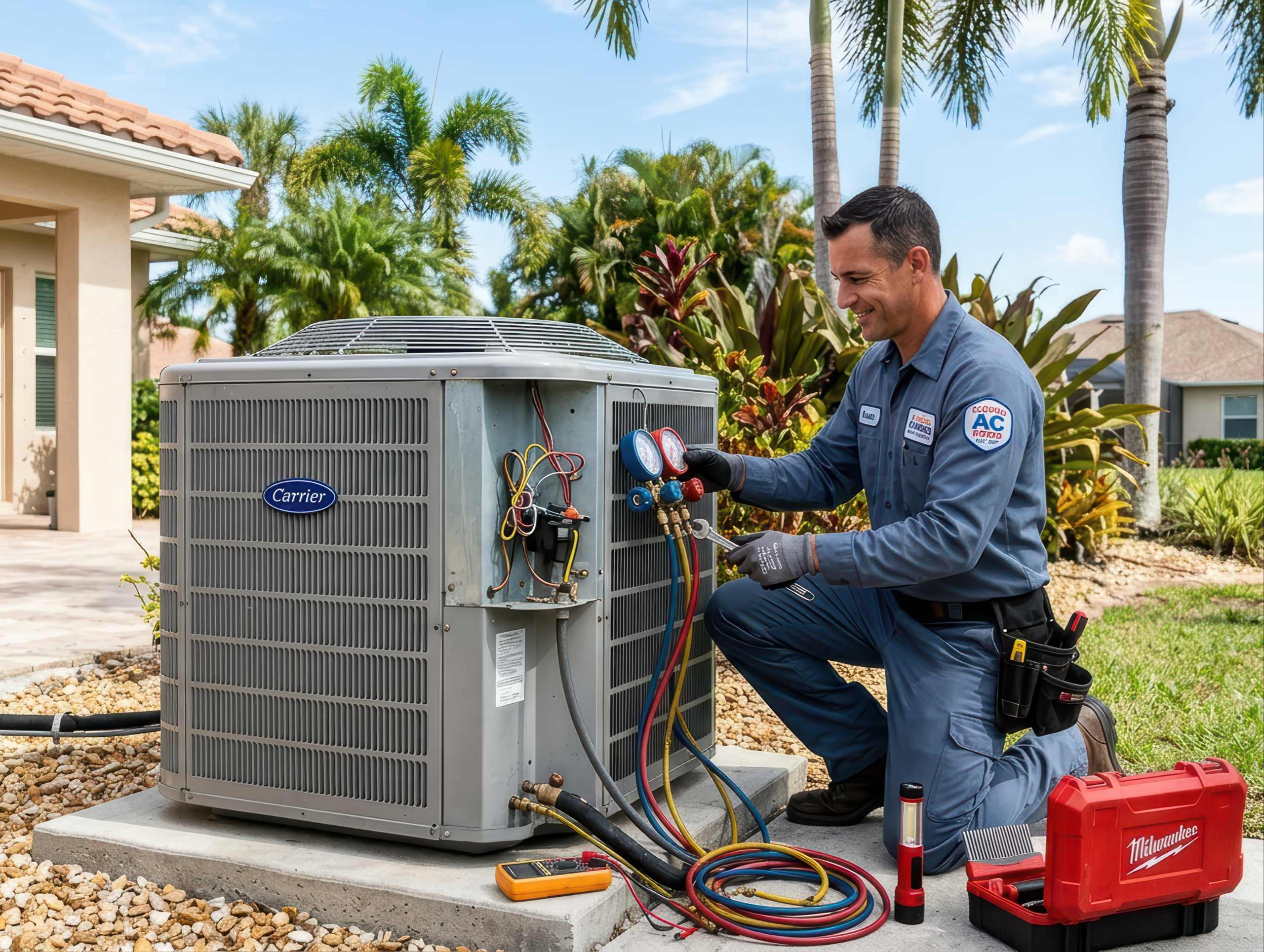
The performance of any AC system depends not only on the brand and type of air conditioner but also on the installation and the frequency of AC maintenance.
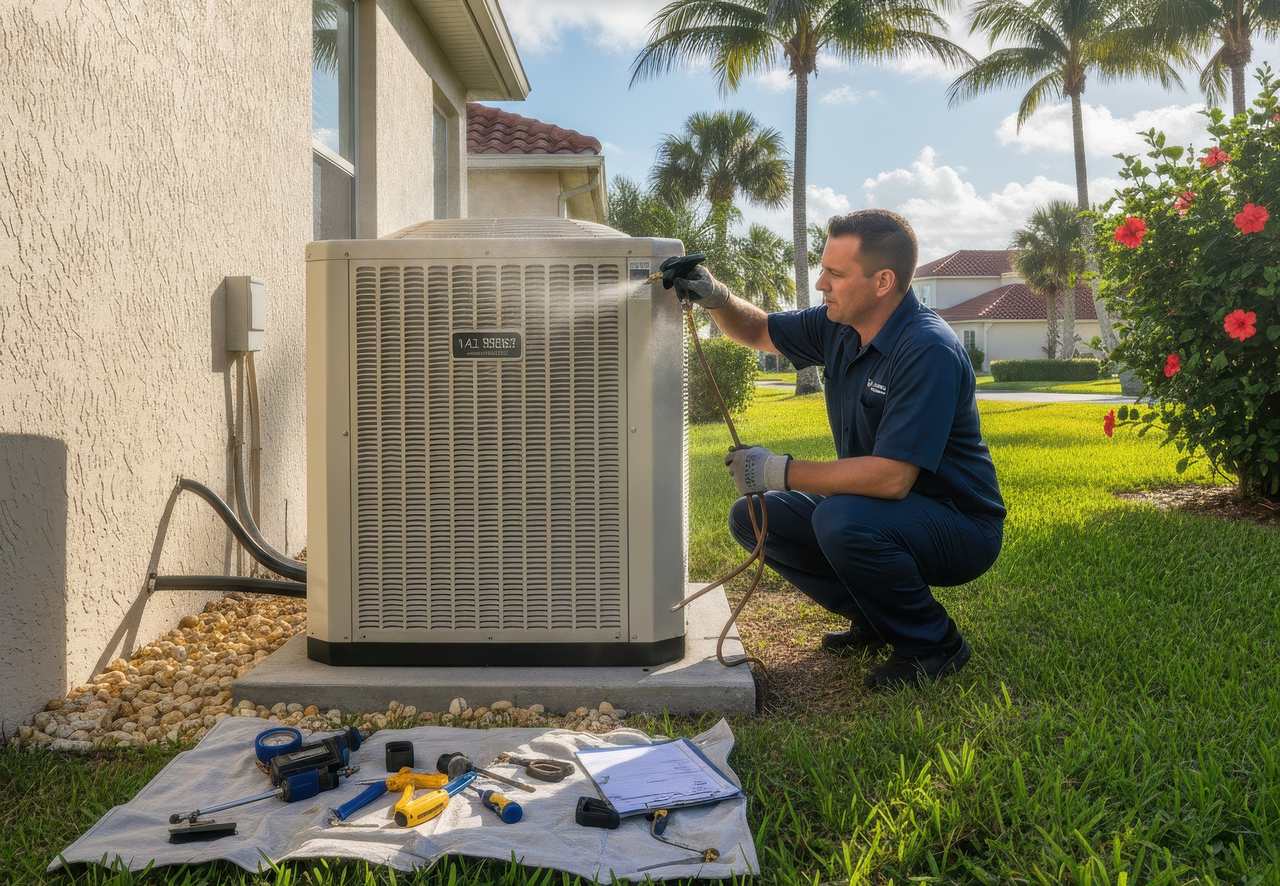
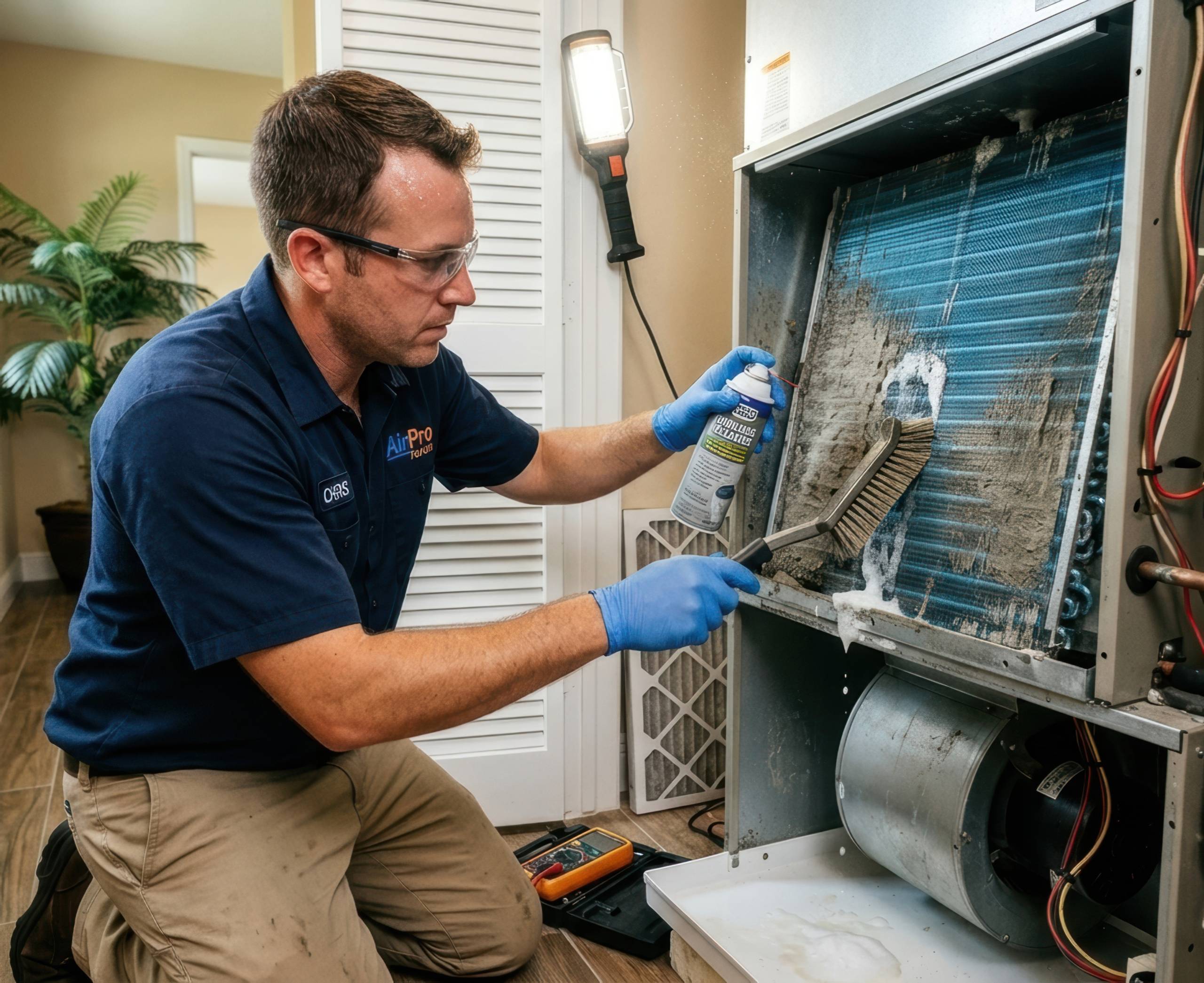
Even the best AC brands will fail if the refrigerant charge is off, the AC filter isn’t changed regularly, or the coils aren’t cleaned.
MANUAL J LOAD CALCULATIONS
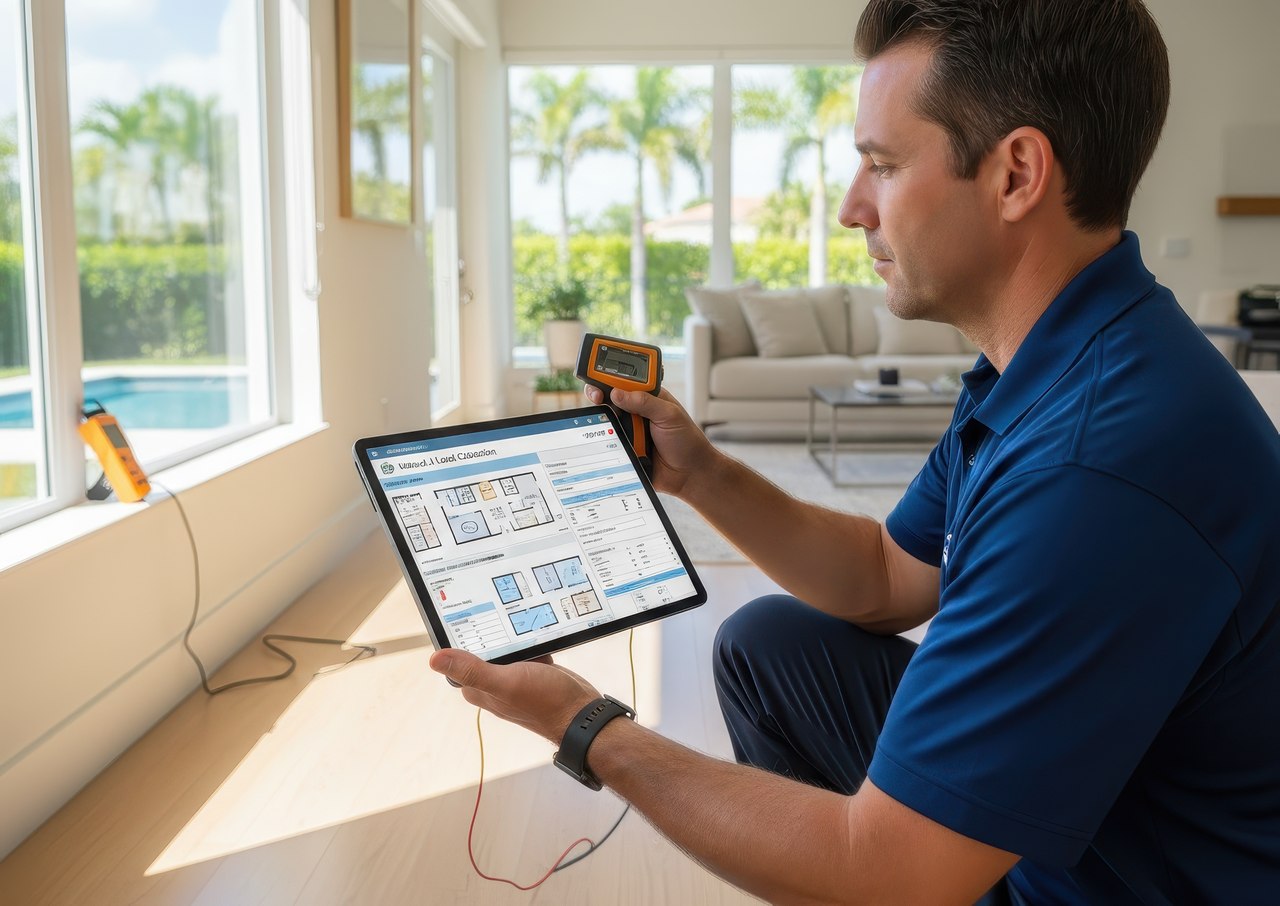
Avoid AC dealers that base your AC size requirements simply on the square footage of your home.
A true assessment of your home’s cooling needs requires a Manual J Load Calculation by a qualified HVAC professional. This will tell you precisely the size of the air conditioner you need before you install it!
CONTROLLING HUMIDITY
The right unit installed properly also ensures that the system runs long enough to pull adequate moisture out of the indoor air, helping to lower house humidity and increase comfort.
HOW TO SPOT A QUALITY AC SYSTEM: A BUYER’S CHECKLIST
The leading brands all offer reliable and high-performance AC units ideal for the Florida climate.
Here’s a quick checklist of features to tick off before committing, to help you identify a high-quality unit suitable for your home….
EFFICIENCY & COMPLIANCE
HUMIDITY & AIRFLOW CONTROL

FLORIDA-GRADE DURABILITY
SYSTEM PROTECTION & SAFETY
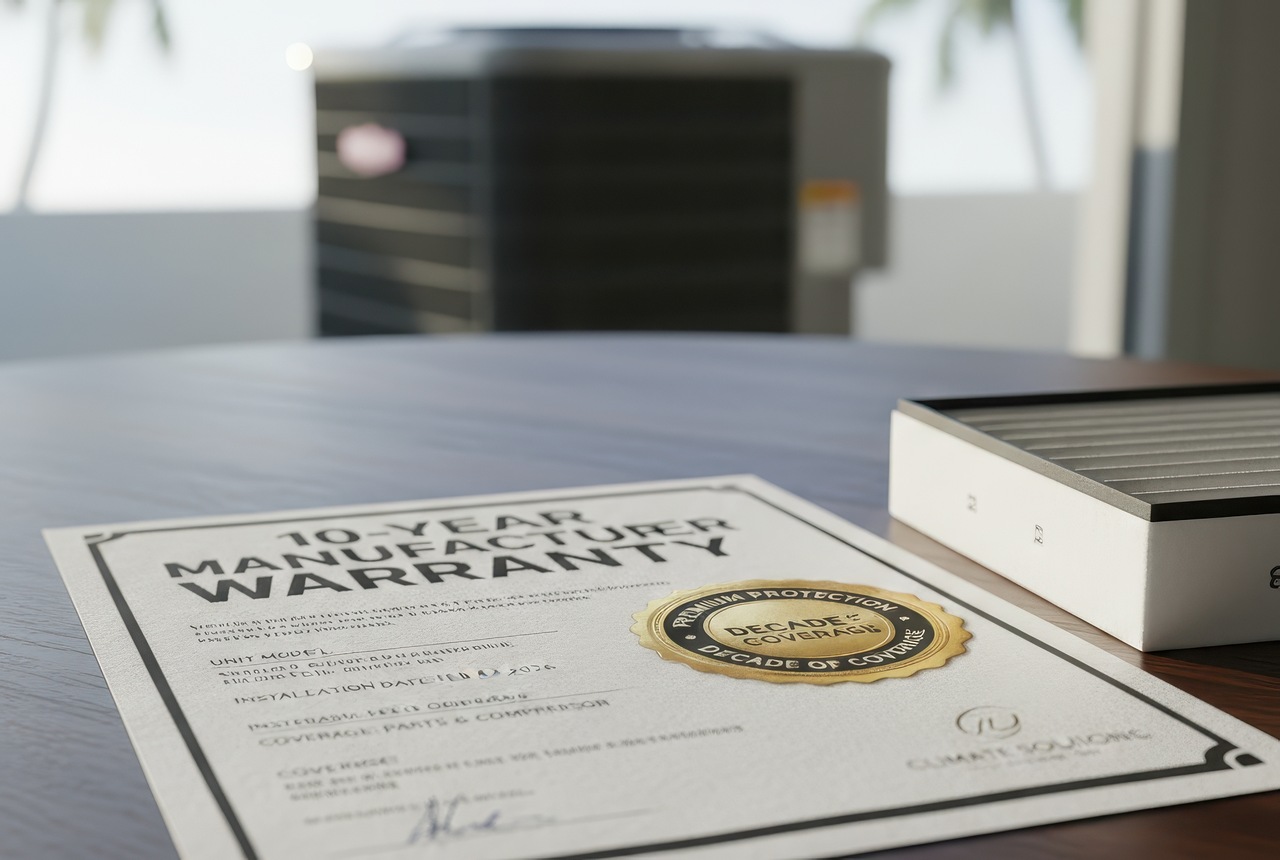
INSTALLATION & WARRANTY
PROFESSIONAL INSTALLATION FOR THE BEST AC UNITS IN FLORIDA…
Rather than comparing AC brands, Florida homeowners would do better to check:
You can then make an informed decision about the unit you choose AND the HVAC team who installs it (which is equally as important).
A carefully selected, professionally installed, and well-maintained AC system should last at least 8-14 years in Florida.
As a reliable and trusted local AC company based in Southwest Florida, we know what works and what doesn’t with AC installations in our climate.
Don’t get stuck with a unit that can’t handle the conditions!
For reliable advice on choosing an AC unit, speak to the One Way Air team. We cover AC installation, repairs, and annual maintenance services across Florida using our local knowledge and experience over two decades. Contact us today.