Is It Safe to Run Your AC During a Hurricane?
As the end of the hurricane season in Florida approaches, we thought we’d answer a common question asked over the past few months: Should I turn off my air conditioner during a hurricane?
SWFL’s frequent encounters with tropical storms, hurricanes, and other severe weather—coupled with the relentless heat and high use of air conditioning—make this an important question for homeowners.
Here’s what you need to know about preparing your HVAC system when a storm approaches, along with a few tips on maintaining your AC unit before, during, and after a hurricane…
SHOULD I TURN OFF MY AIR CONDITIONER DURING A HURRICANE?
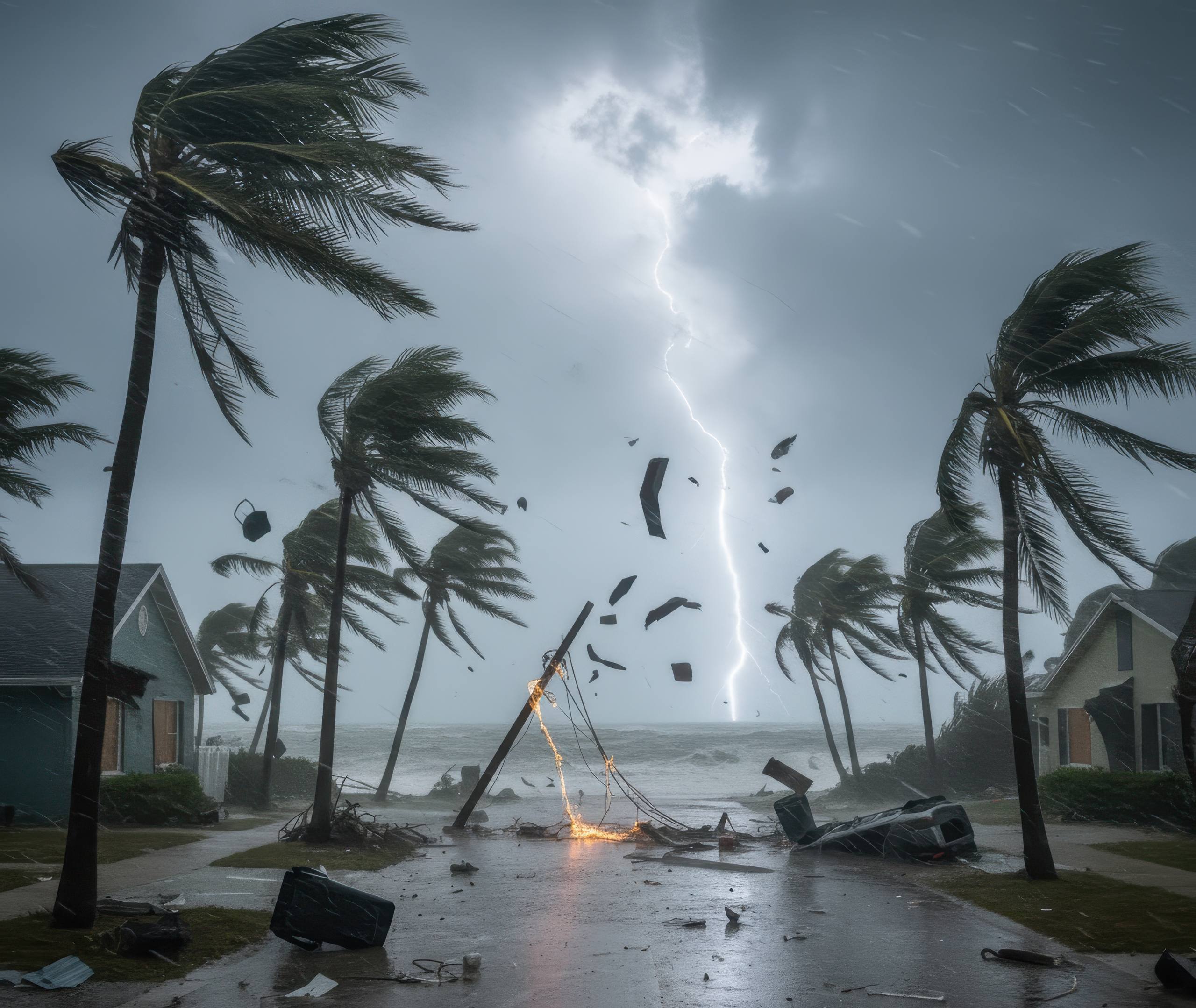
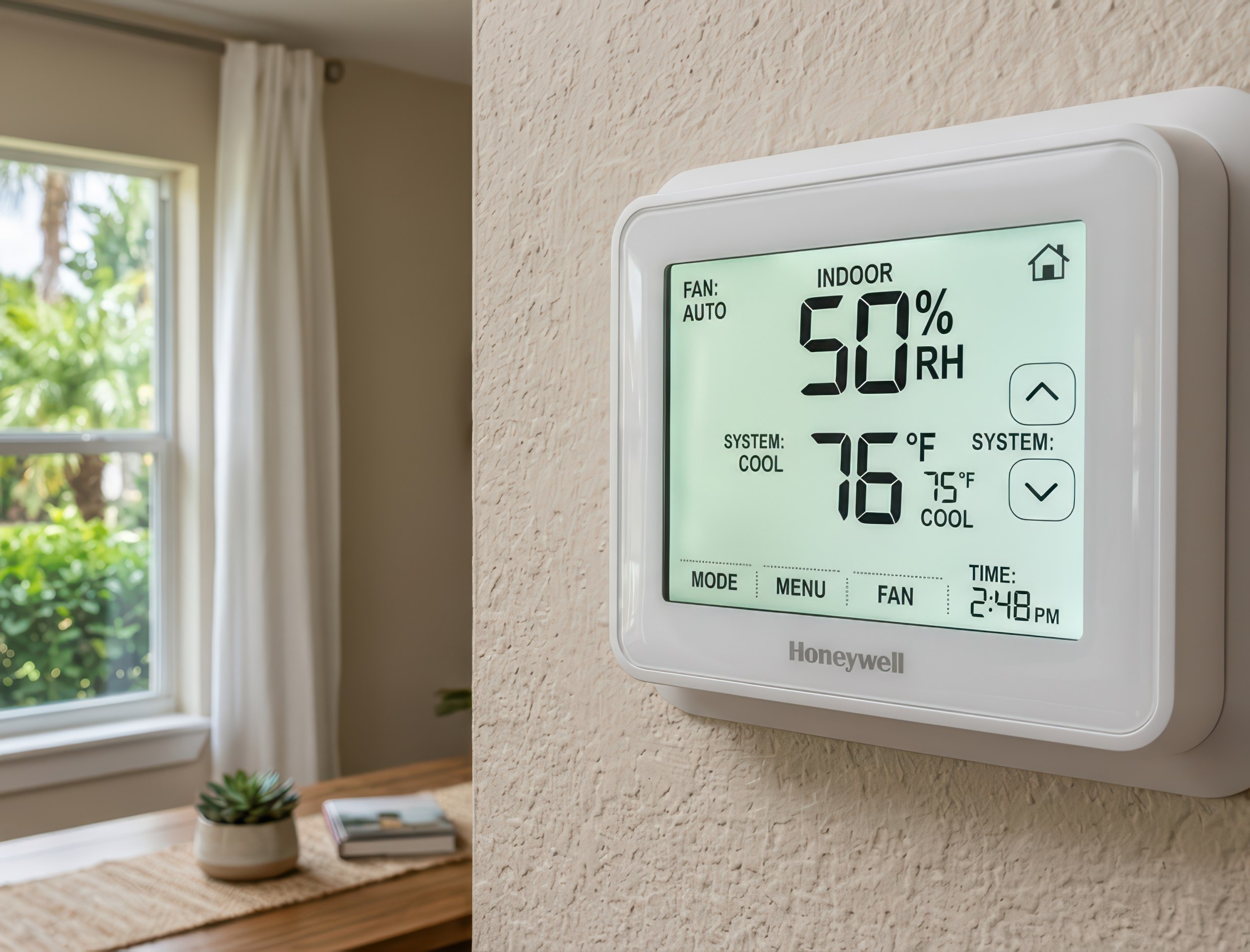
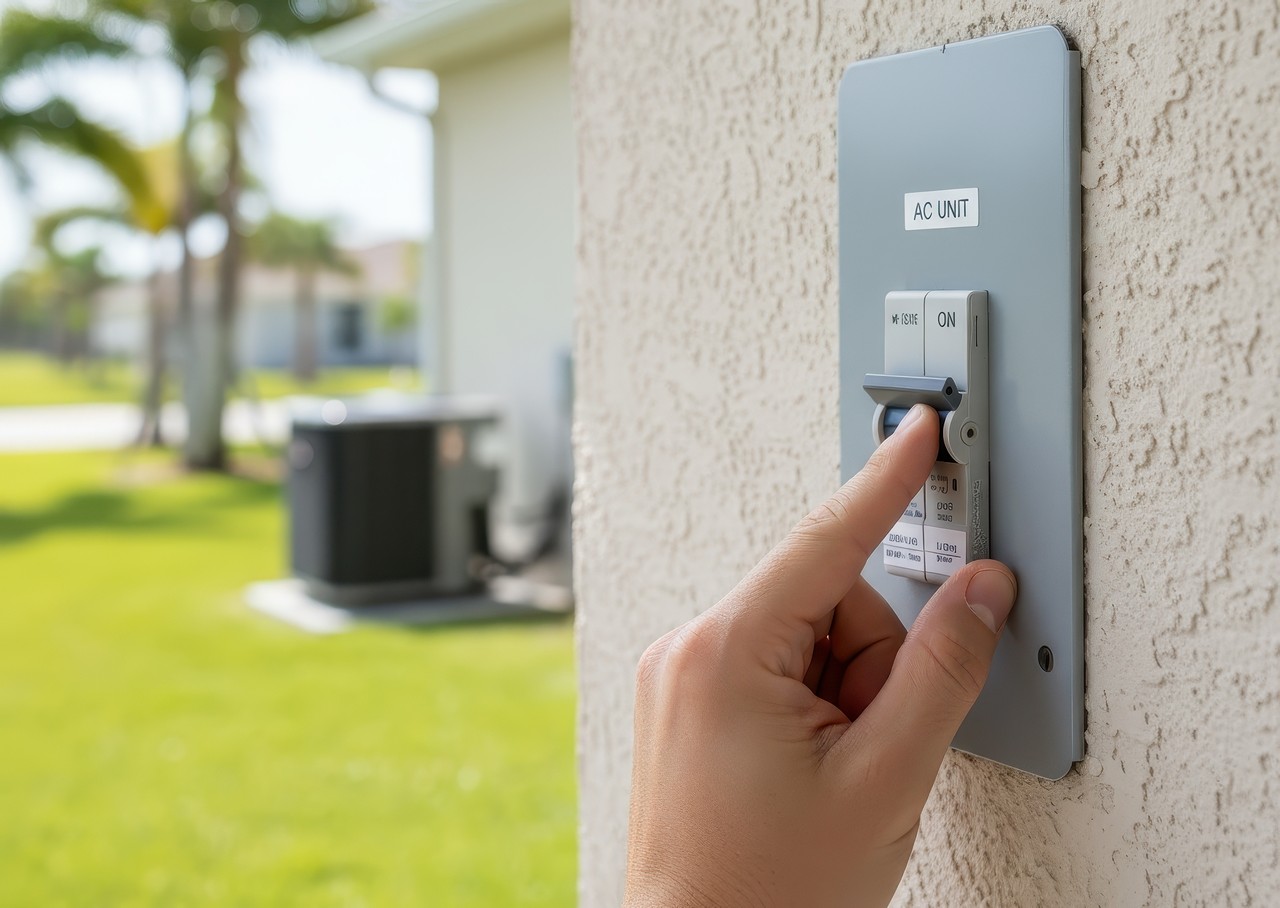
Yes, shutting off the AC at the thermostat and the breaker prevents damage from power surges during a hurricane. This also keeps the unit from cycling as voltage fluctuates and protects internal electronics from issues related to the storm. Never run your air conditioner during a hurricane or other major storm.
Let’s look deeper at the risks posed to HVAC systems during hurricanes and how to reduce these risks before, during, and after the storm.
STAY COOL ALL YEAR ROUND WITH ONE WAY AIR…
The team at One Way Air installs, services, and repairs all types of air conditioning systems in Southwest Florida. Get in touch with us here for a quote or call 239-233-4356 in emergencies.
WHAT RISKS DO HURRICANES POSE FOR AIR CONDITIONING SYSTEMS?
Fort Myers is “brushed or hit” by a hurricane about every 2.35 years. Hurricanes with wind speeds over 111 mph (i.e., very strong storms) passing within 100 miles of Fort Myers occur around every five years. Hurricane Ian, which made landfall in 2022 near Punta Gorda, is still fresh in the memory.
Hurricanes and tropical storms can pose the following types of risks to air conditioners:
POWER SURGES & OUTAGES
Florida’s electrical grid becomes volatile during storms and this often leads to power surges or outages in homes. That can spell bad news for any electrical equipment, often causing severe damage to any plugged-in (rather than hardwired) devices. Surges can essentially “fry” the internal electronics, including the AC’s electric panel.
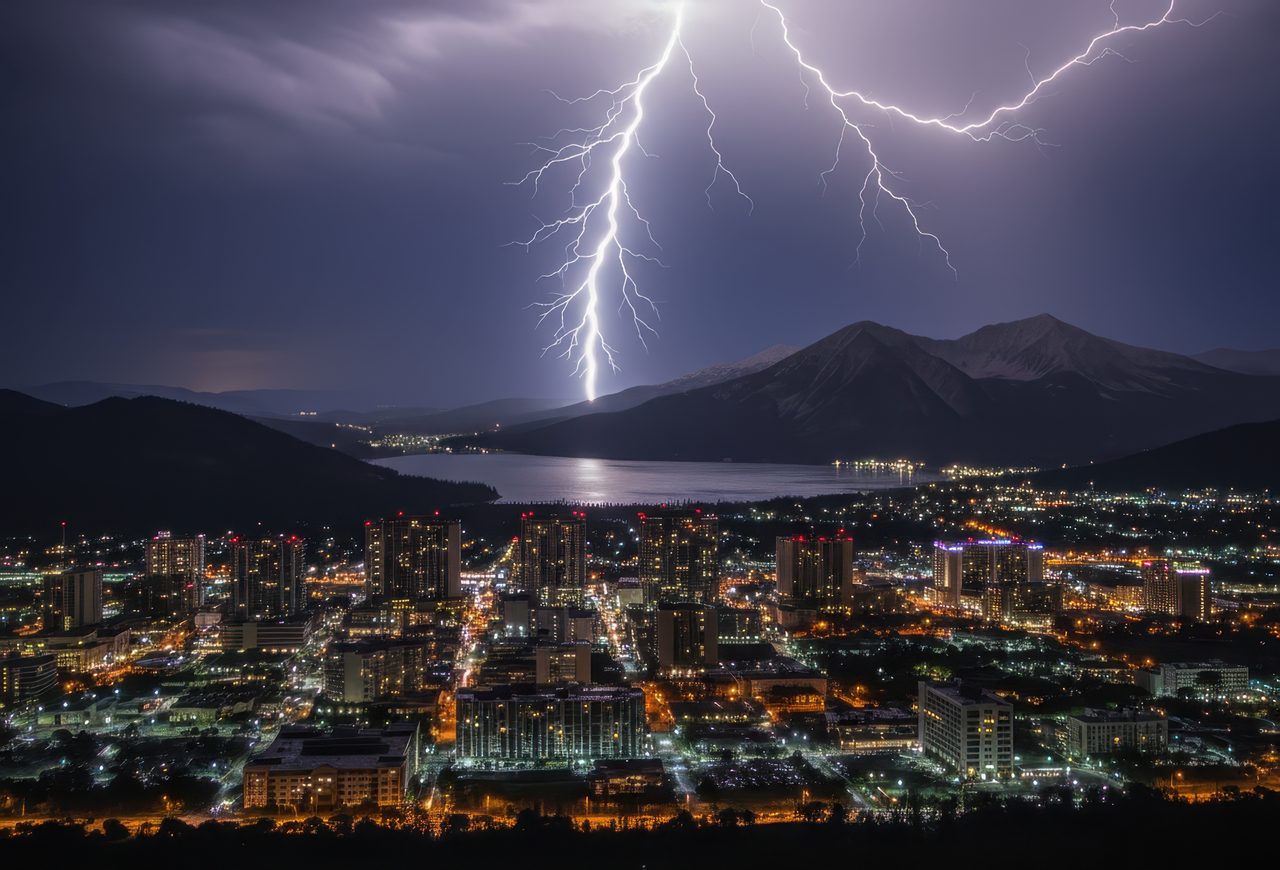
Lightning strikes and grid instability can also damage compressors and capacitors—both essential components of air conditioners. Compressor problems generally incur high AC repair costs.
FLOODING & WIND-DRIVEN RAINFALL
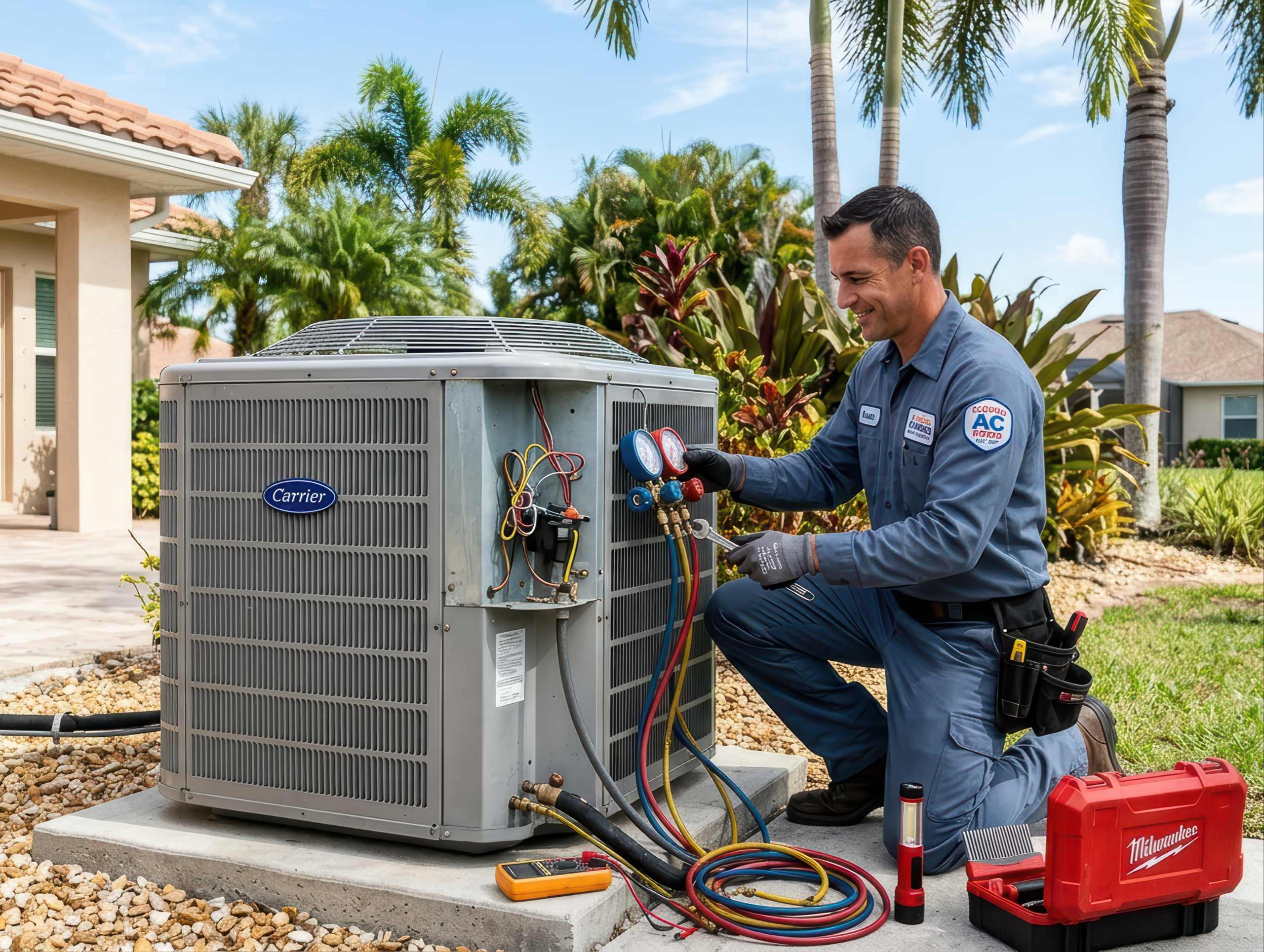
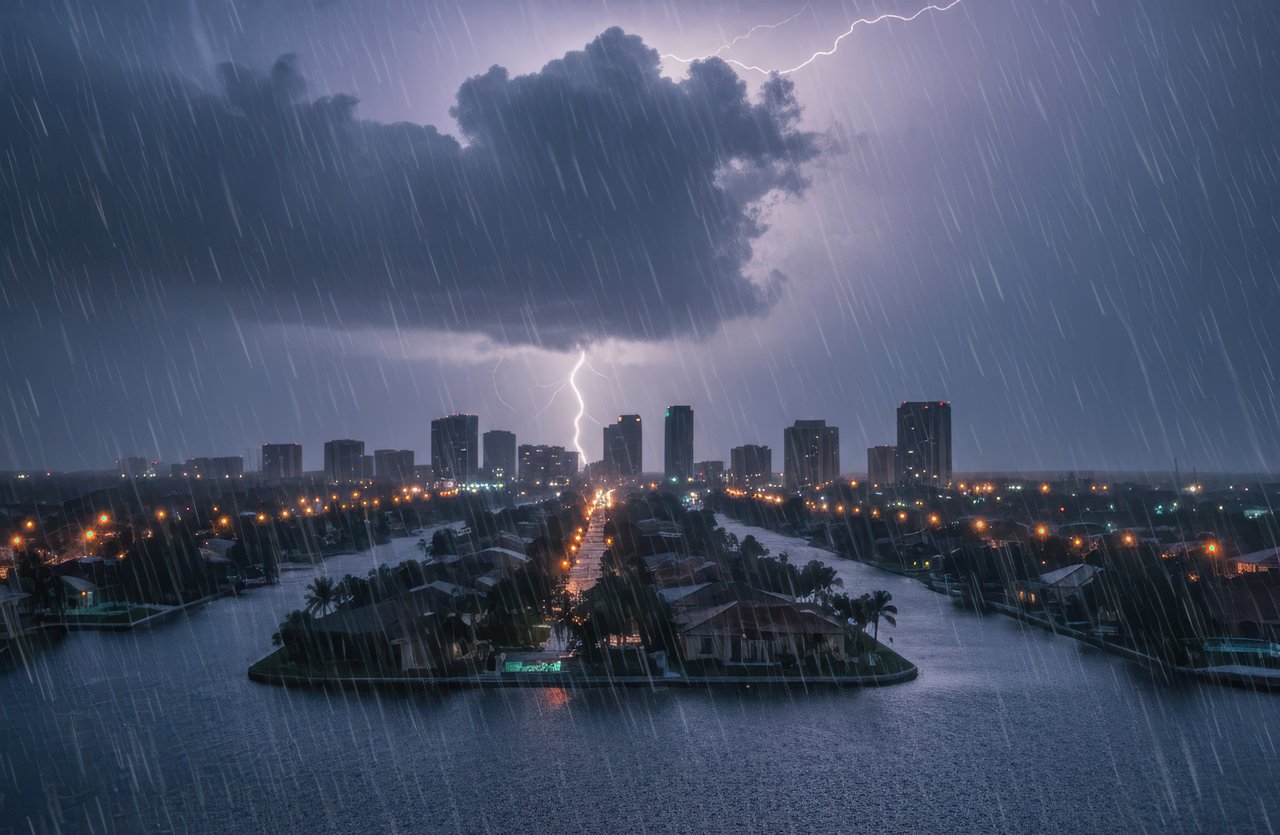
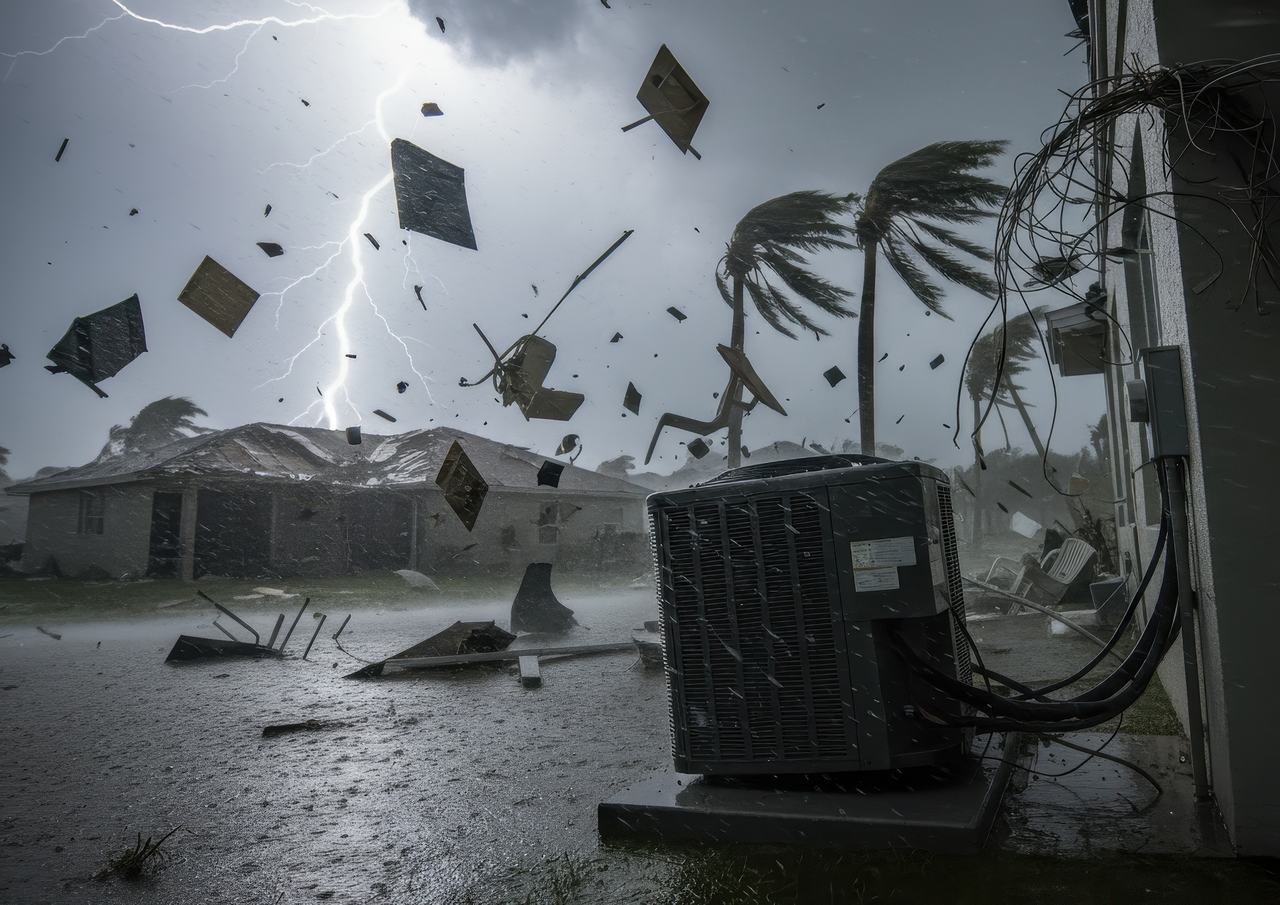
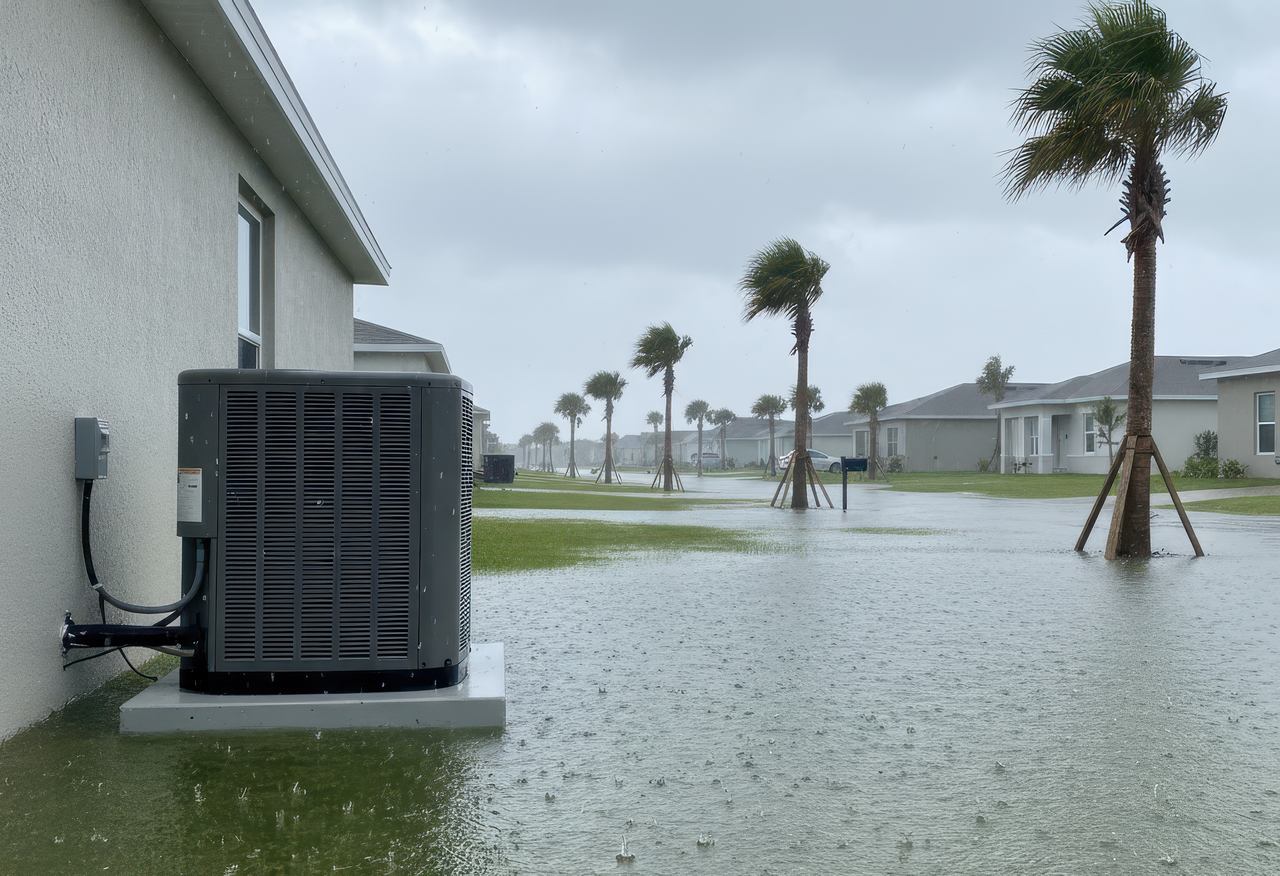
The outside air conditioner, which houses the compressor, is exposed to the elements. For most of the year, this is manageable, but during large storms, the unit risks becoming partially submerged in water.
This can lead to corrosion and short-circuit hazards, especially in coastal areas like Fort Myers, Marco Island, Naples, and Cape Coral.
FLYING DEBRIS & HIGH WINDS
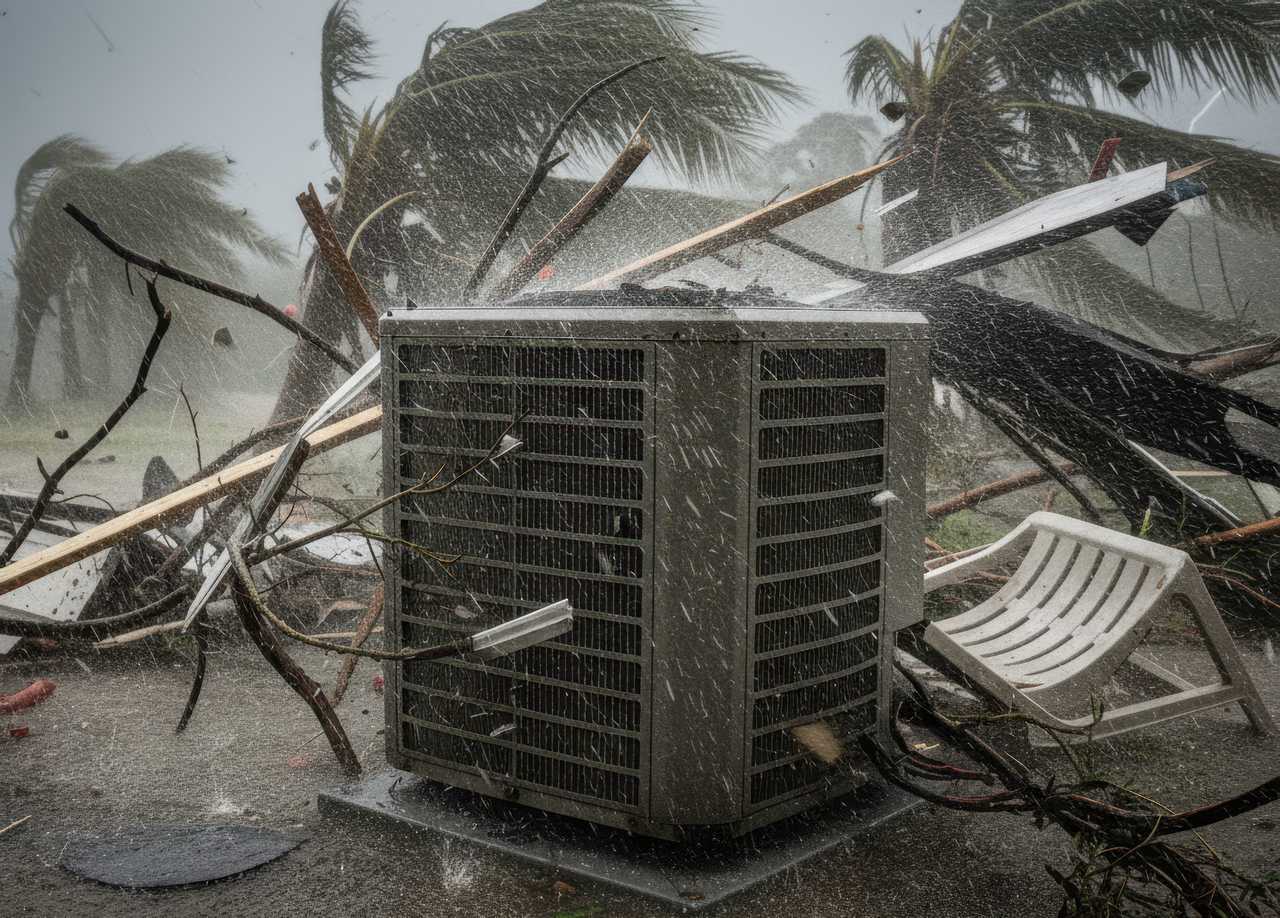
The high winds in tropical storms and hurricanes are hazardous due to flying debris. Most obviously, this can be dangerous for humans but it can also pose risks to air conditioning units.
Condenser coils and fan blades in the outdoor air conditioner can be damaged, which is why it’s important to pay attention to the tips below about preparing your AC unit and securing it before and during a big storm.
WHEN SHOULD YOU TURN THE AC OFF?
Turn the AC off at the thermostat and the breaker just before the hurricane-force winds arrive. Most homeowners will realize that the winds are coming via the hurricane warning issued by authorities. This usually provides ample time to prepare.
You may even have time to plan well ahead and book an AC tune-up to check in advance for any problems that a storm could exacerbate.
It is not necessary to switch off the AC before every rainstorm but Florida homeowners know better than most about the damage a severe storm can cause. The risk of hurricanes from June through November is an annual one in SW Florida.
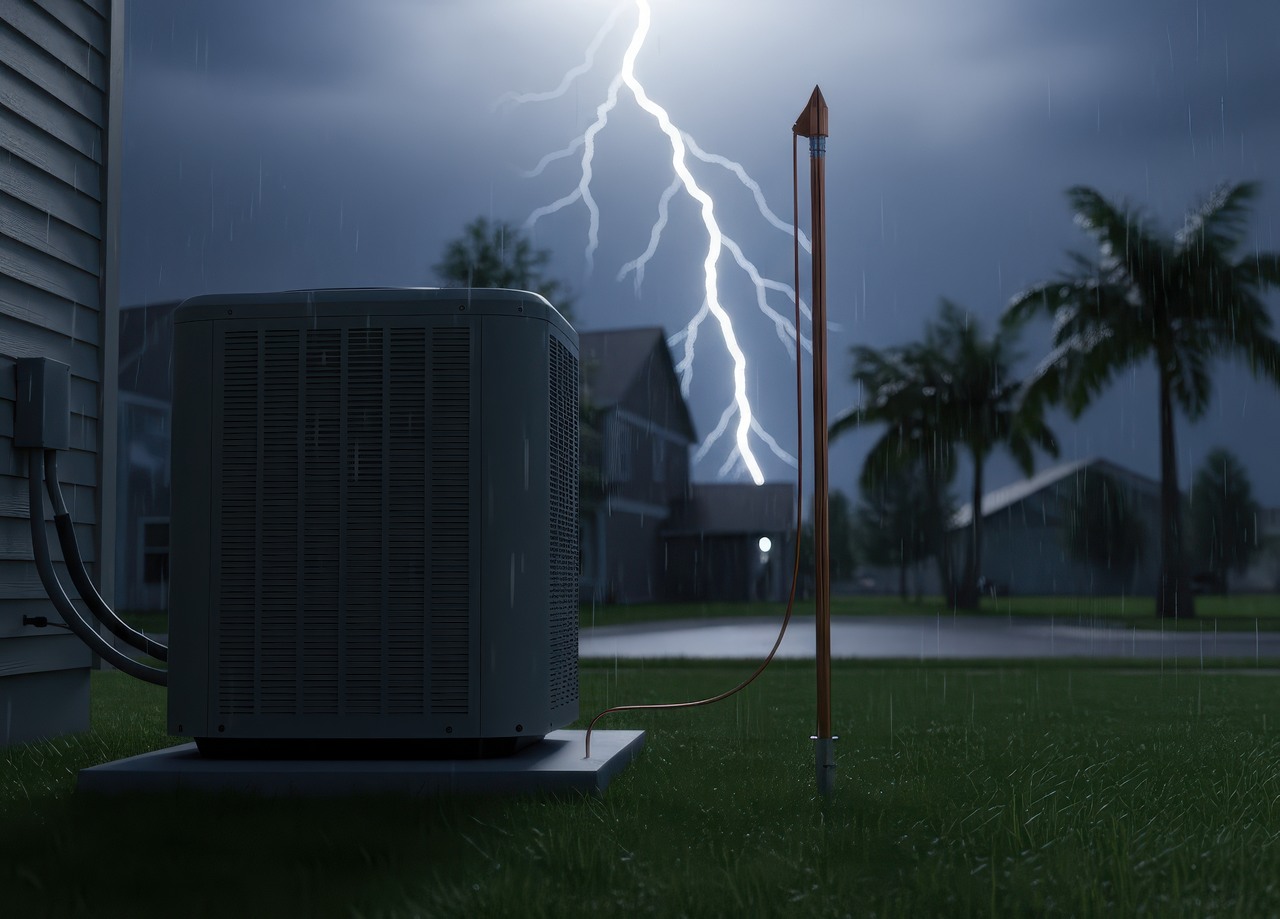
Lightning storms are another risk for AC units. Florida leads the nation in lightning strikes. Although AC refrigerant is non-flammable, the control systems of HVAC units can be damaged by lightning. This applies to all AC units, from central air conditioning to window units—so taking precautions against lightning is essential in SWFL (more about this below).
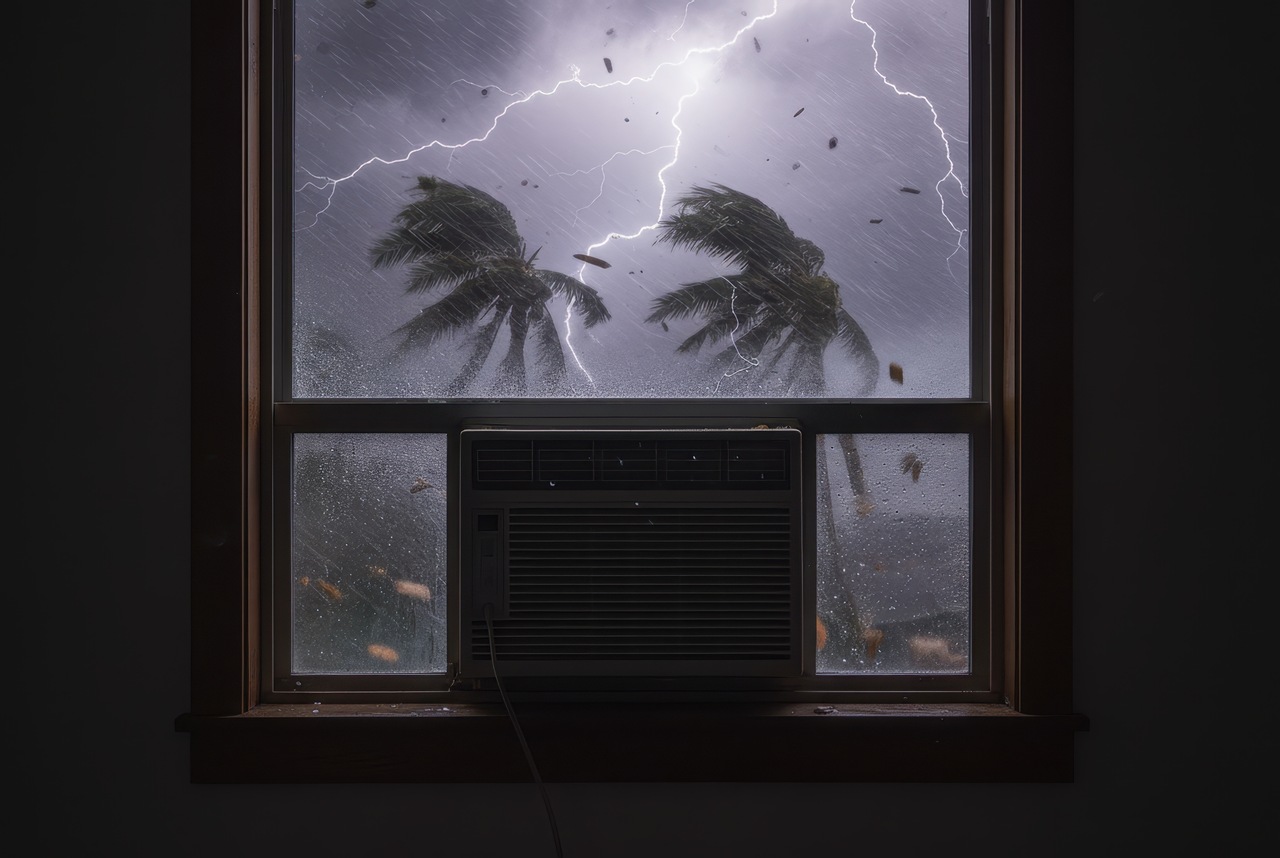
Tropical storms that never reach hurricane status also often affect the area. Coastal flooding is a common risk for SWFL, especially in low-lying and barrier island areas. In worst-case scenarios, homeowners are asked to evacuate—it’s obvious in those situations that the AC must be turned off before leaving!
Never wait until the power starts flickering during a storm before turning it off at the breaker. To make sure the house is already cool when the storm strikes, lower the temperature beforehand to give your household time to ride out the storm in relative comfort and not worry too much about the heat.
Remember, during a hurricane, never go outside to check the AC unit. An air conditioner can be replaced but you can’t!
WHAT ELSE SHOULD YOU DO TO PROTECT YOUR AC SYSTEM?
Besides turning your AC off when the storm is approaching, the following steps will also protect your home’s HVAC setup.
SECURE THE OUTDOOR UNIT
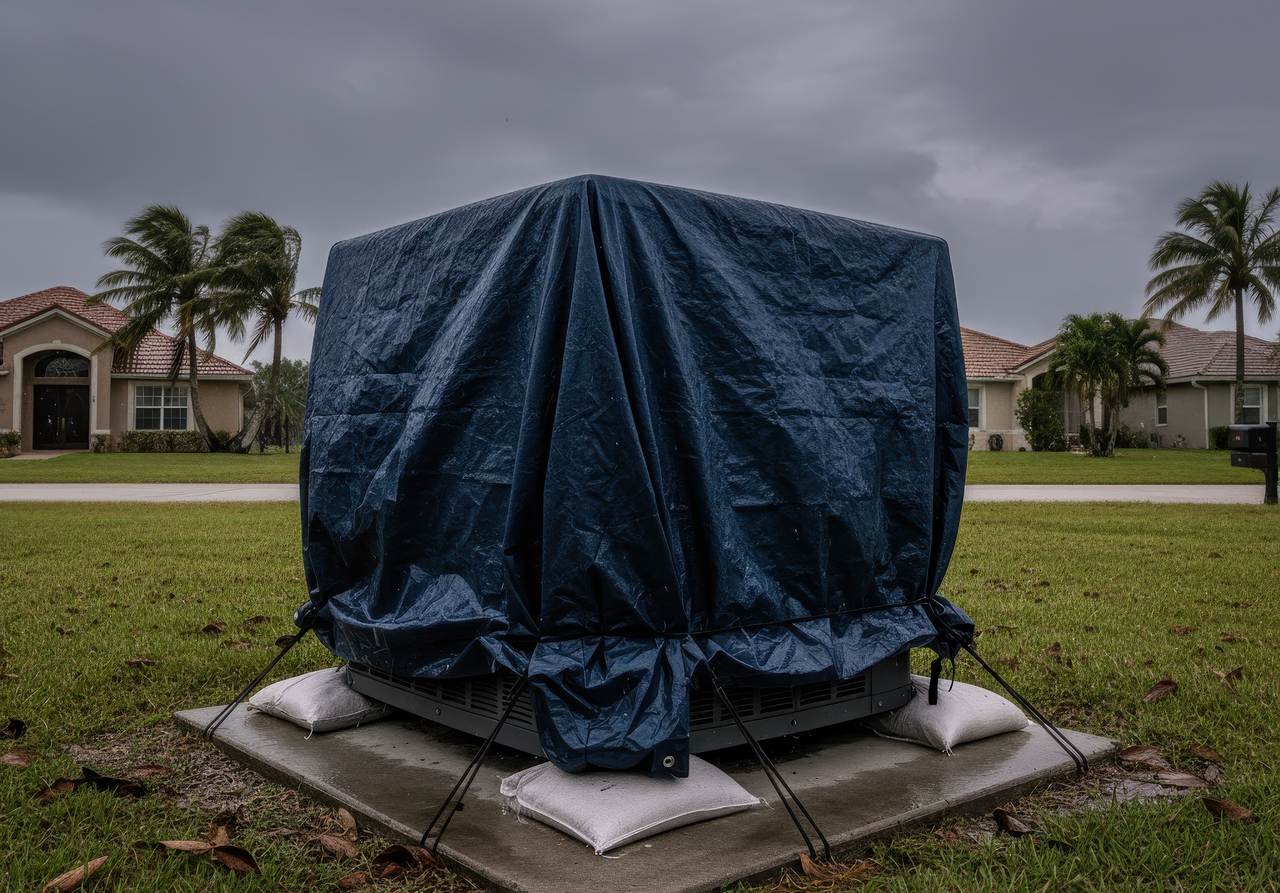
The outdoor unit is exposed and at particular risk during a storm. Use hurricane straps or manufacturer-approved tie-downs to secure it.
It’s a good idea to keep the area around the outside unit clear of debris and vegetation at all times but it’s especially important to clear any loose items around the unit before the winds arrive, as they could become projectiles.
INSTALL A SURGE PROTECTOR
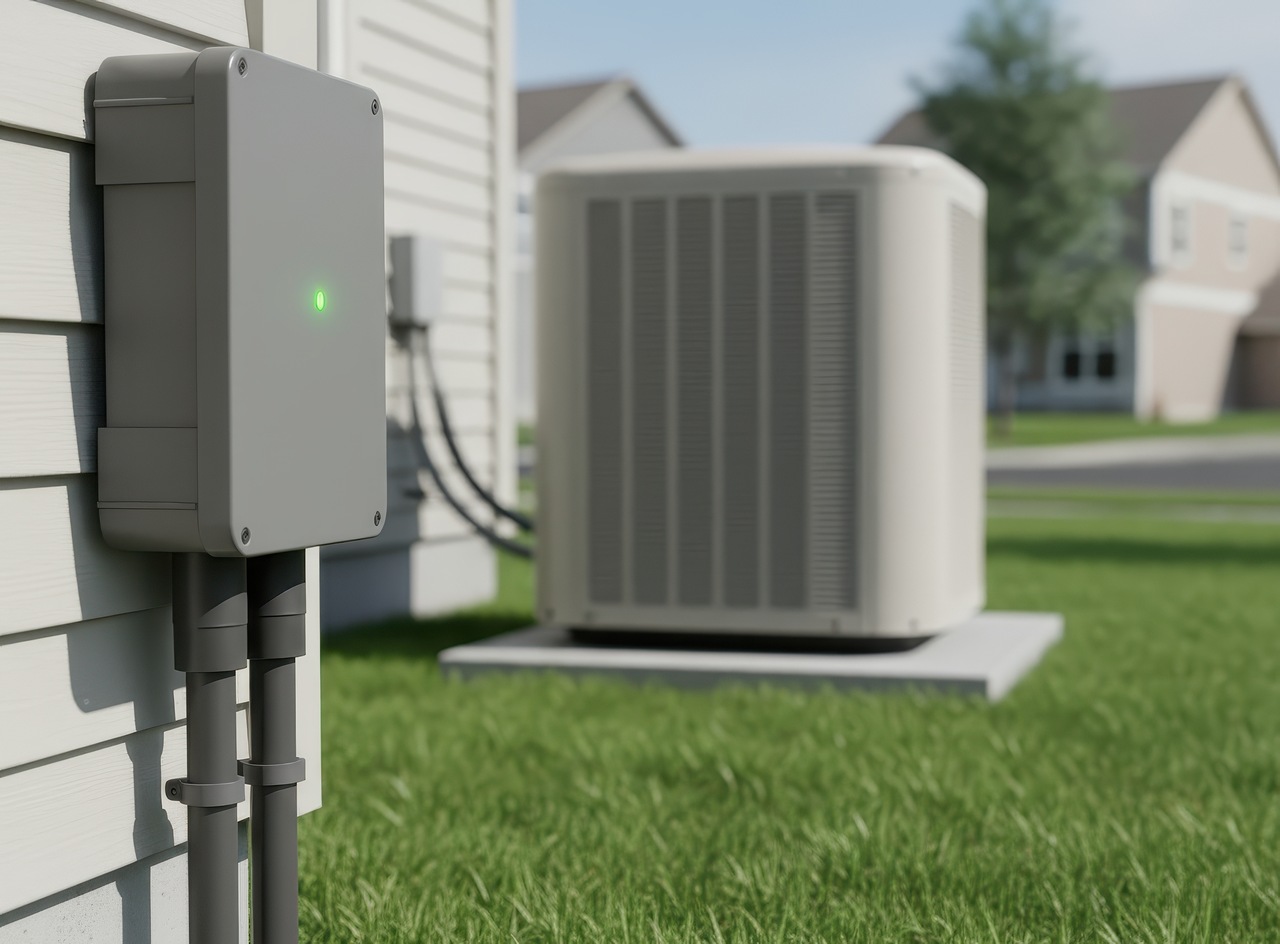
Surge protection is essential to prevent damage to the AC unit’s electronics. Ideally, you already have a whole-home or dedicated HVAC surge protector installed. If not, it’s a good idea to get this done well in advance of the next storm.
Surge protection will help prevent damage to your air conditioning system but it’s not infallible. For instance, it will not guarantee protection from a lightning strike and the surge protection may blow during very large surges, like from a very close or direct lightning strike.
INSTALL LIGHTNING PROTECTION
Lightning protection is recommended for homes in SWFL due to the high lightning risk in the entire region. Speak with your electrician or HVAC professional about installing lightning rods and a grounding system.
Remember that turning off your AC completely with the approach of a major storm is considered the safest protection against both lightning and power surges when the electricity comes back.
ELEVATE THE UNIT & PROTECT AGAINST FLOODING
Flooding is also a risk for SWFL homeowners during tropical storms, cyclones, and hurricanes.
Make sure your AC unit is mounted at the proper height and, in neighborhoods particularly prone to flooding, consider a custom protective cage or platform. This is a job for an AC professional so that refrigerant lines are not damaged, which can be an expensive AC repair cost.
COVER THE UNIT AFTER IT’S TURNED OFF
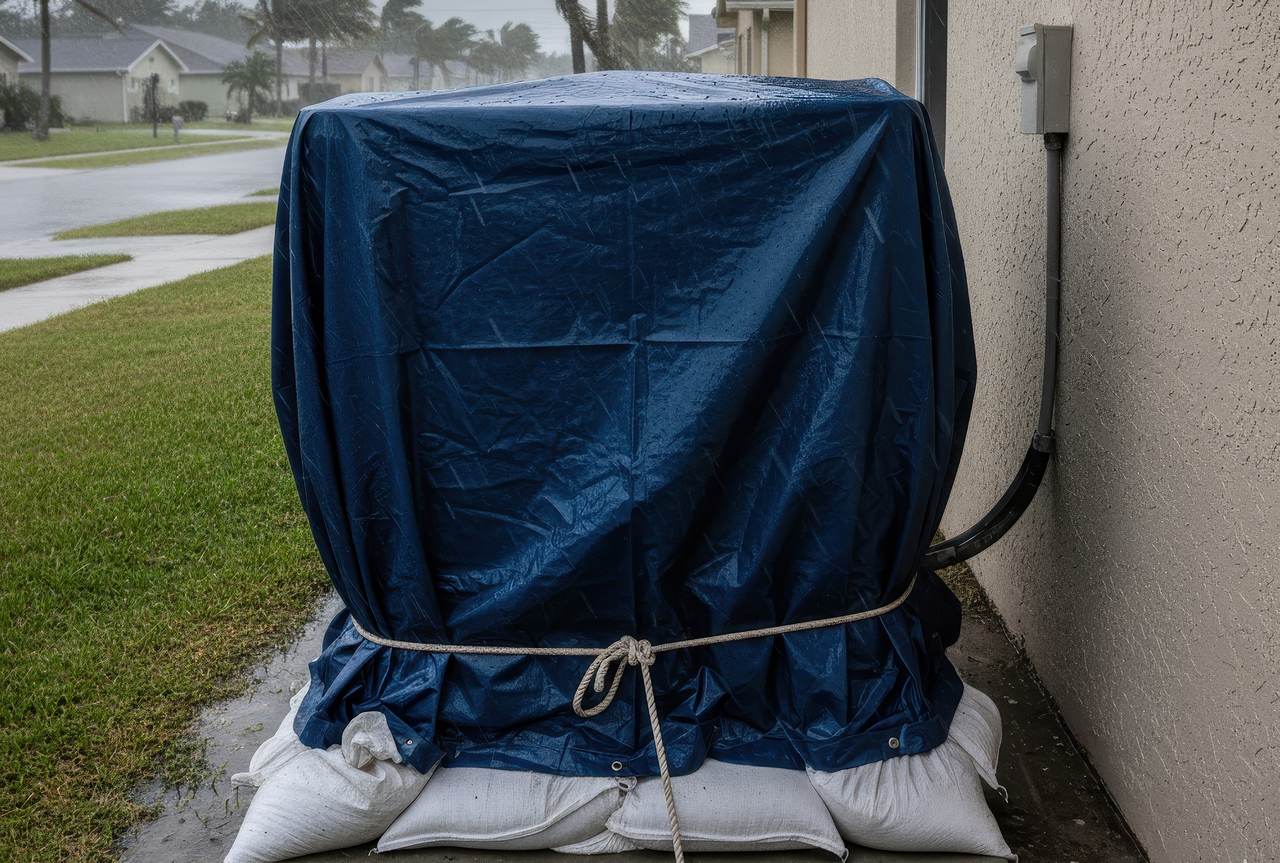
Consider covering your outside AC unit with a breathable tarp or plywood cover to protect it against airborne debris and intense rainfall. Take photos for insurance purposes, in case the storm causes damage.
IMPORTANT: Remember to remove the cover as soon as the storm has passed to avoid moisture buildup—and never turn on your air conditioner while the cover is still on.
WHEN IS IT SAFE TO TURN YOUR AC BACK ON?
Turning off power to your AC is the best safety measure during hurricanes but when is it safe to switch it back on?
Generally, once the hurricane has fully passed and power has stabilized in the area, it is safe to turn on the breaker and the thermostat again.
WHAT SHOULD YOU DO WHEN YOU TURN THE AC BACK ON AFTER A STORM?
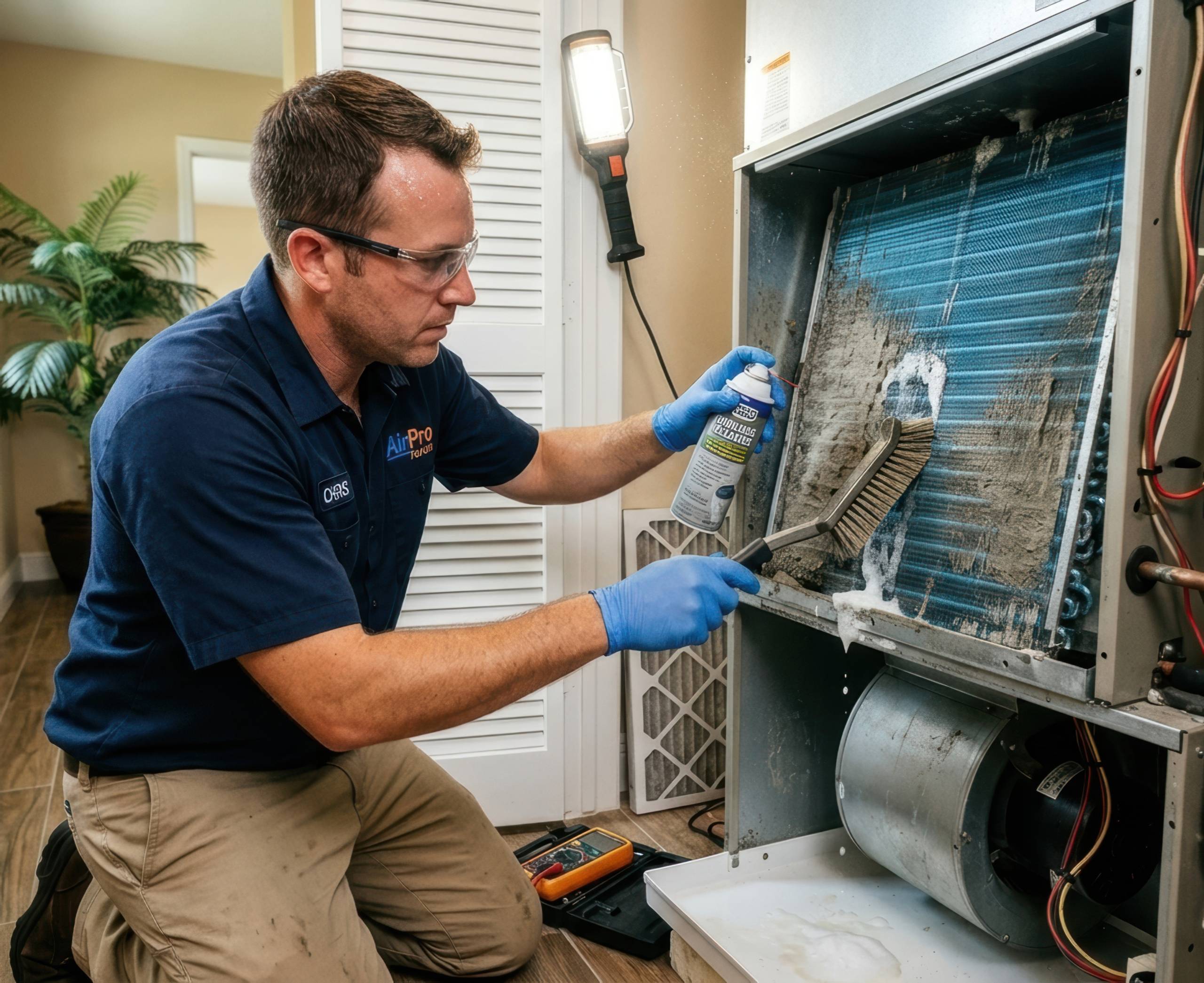
First, inspect the area around the outdoor unit. Check for debris that may have blown around during the storm and any visible damage to your air conditioner. You will likely need to tidy up the outside area.
Check for any standing water, especially if it’s dangerously close to the level of the outside unit. If you suspect damage or are in any doubt, get a professional assessment from an HVAC professional before turning your AC back on.
WHAT SHOULD YOU DO IF YOUR AC WON’T TURN BACK ON AFTER A HURRICANE?
If your AC won’t turn back on after a hurricane, don’t panic. It may simply be a breaker issue, blown capacitor or other relatively simple electrical issue that your AC repair professional can fix.
Some electrical issues, water damage, coil issues, or compressor problems can be more serious and require more extensive repairs.
Regardless of the issue, troubleshoot your AC with the help of a professional and do not try to fix any problems yourself. A post-storm inspection may be the best idea, especially if your unit is due for a service.
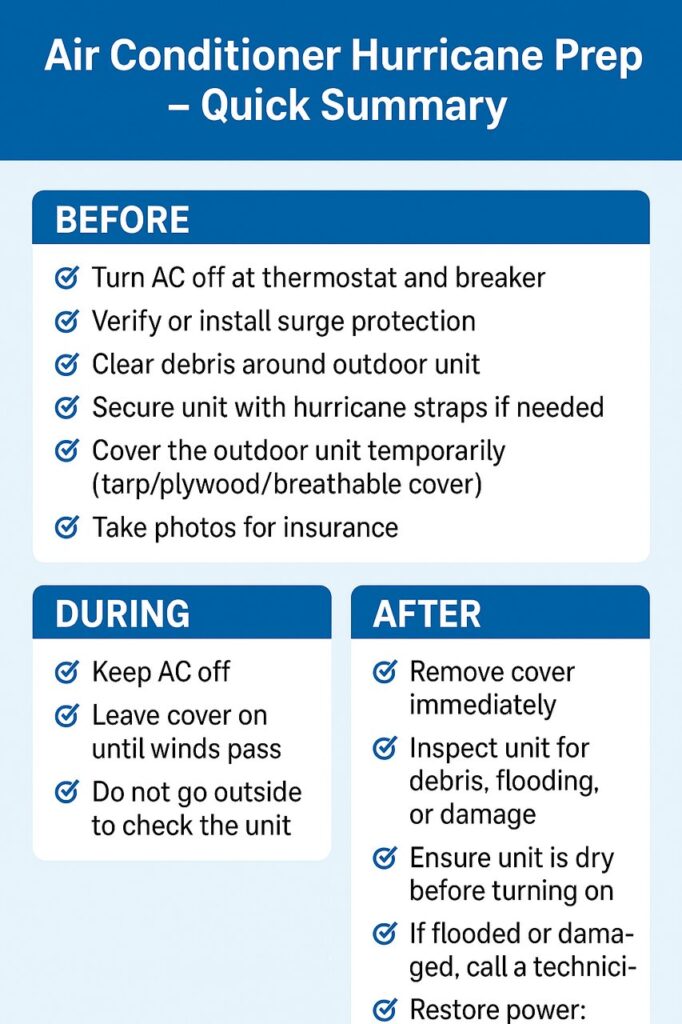
CHECKLIST: WHAT TO DO WITH YOUR AC BEFORE, DURING & AFTER A HURRICANE
Here’s a good summary of the main actions to take with your AC before, during, and after a hurricane:
FAQs
PROTECT YOUR AC DURING ANY STORM OR HURRICANE…
The cost of AC in Florida is high. So, you should do everything to protect your substantial investment. No homeowner wants unnecessary repair or replacement costs on top of what they’ve already spent.
If a hurricane is approaching, prepare early by following the steps outlined above and turning off the AC. Florida homeowners should take some general preventative steps to combat potential storm damage at any time of year.
Whether you need help with storm preparation or emergency AC repairs after a storm, the One Way Air team can help. We provide personalized advice on keeping your home cool and protected in Florida’s volatile climate—contact one of our AC professionals today.