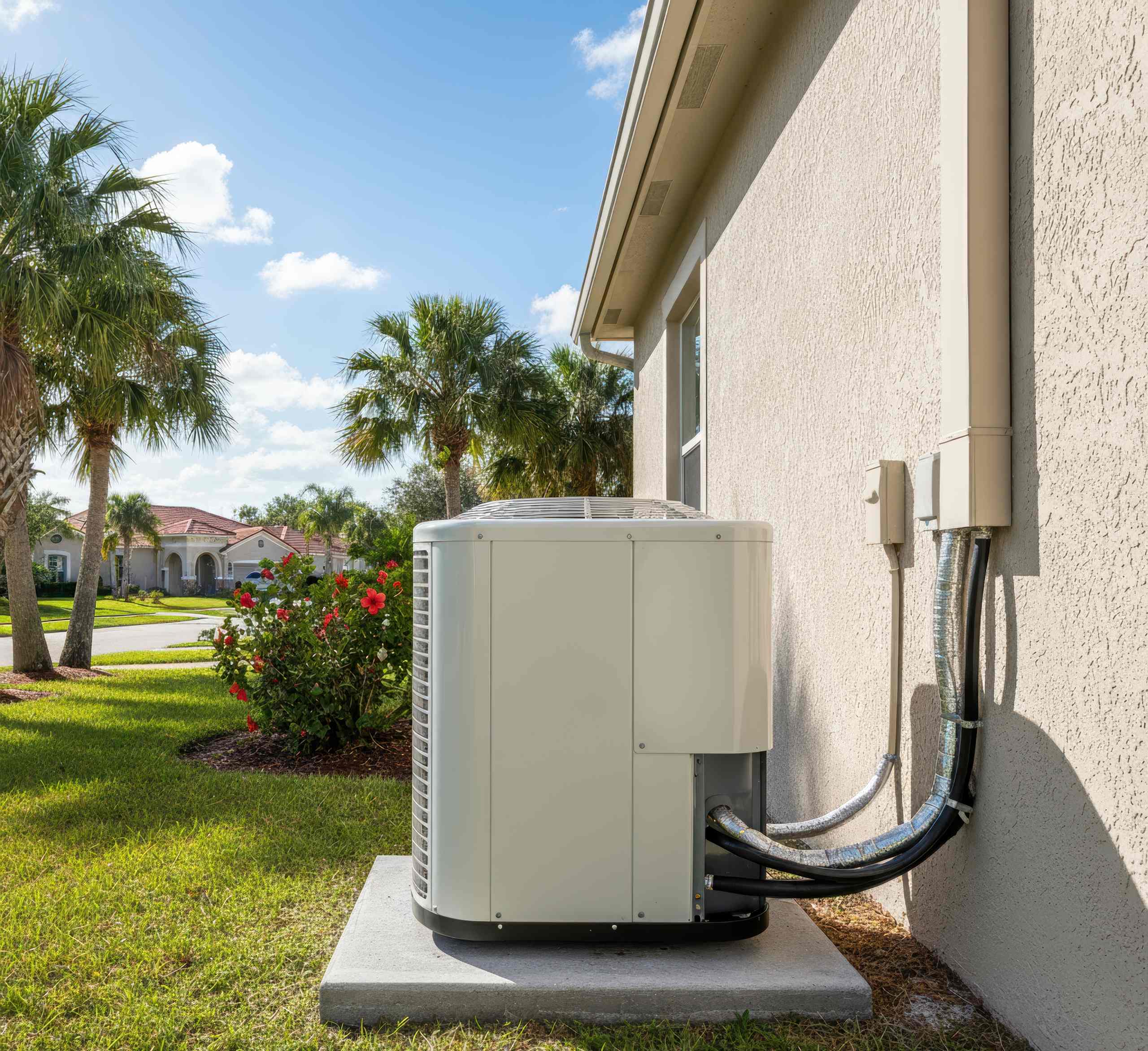
You may have heard that the Florida Public Service Commission recently approved significant energy price increases for Florida Power & Light (FPL) customers, starting in 2026 and extending through 2029.
So, with energy costs set to rise again, homeowners might want to start considering how to save on energy costs in the year ahead. We can’t do much about the heat, humidity, and need for efficient air conditioning in SW Florida—nor would we want to—but we can take a few steps to reduce energy usage and monthly energy bills.
Let’s get straight into the best energy-saving tips for your home so that you can minimize the impact of energy price increases in 2026.
TOP ENERGY-SAVING TIPS: HOW TO SAVE MONEY ON ENERGY IN 2026

Most of the best energy-saving tips center on home cooling, as that is the single biggest user of energy in Florida homes. Tips include upgrading to a higher-efficiency AC unit, improving home insulation, reducing heat gain from outside, increasing fan usage, installing a whole-home dehumidifier, and servicing your AC unit regularly.
Let’s go into the tips in more detail…
STAY COOL ALL YEAR ROUND WITH ONE WAY AIR…
The team at One Way Air installs, services, and repairs all types of air conditioning systems in Southwest Florida. Get in touch with us here for a quote or call 239-233-4356 in emergencies.
WHY FOCUS ON AC TO REDUCE ENERGY COSTS?
In Southwest Florida, AC usage dominates electricity bills, often making up 40-60% of monthly energy bills but spiking even higher during the hottest summer months, when air conditioners can run almost all day.
Though this varies slightly from home to home, depending on AC efficiency, home insulation, and user preferences, the excessive heat and humidity in SW Florida make home cooling the obvious place to start when looking for energy-saving tips.
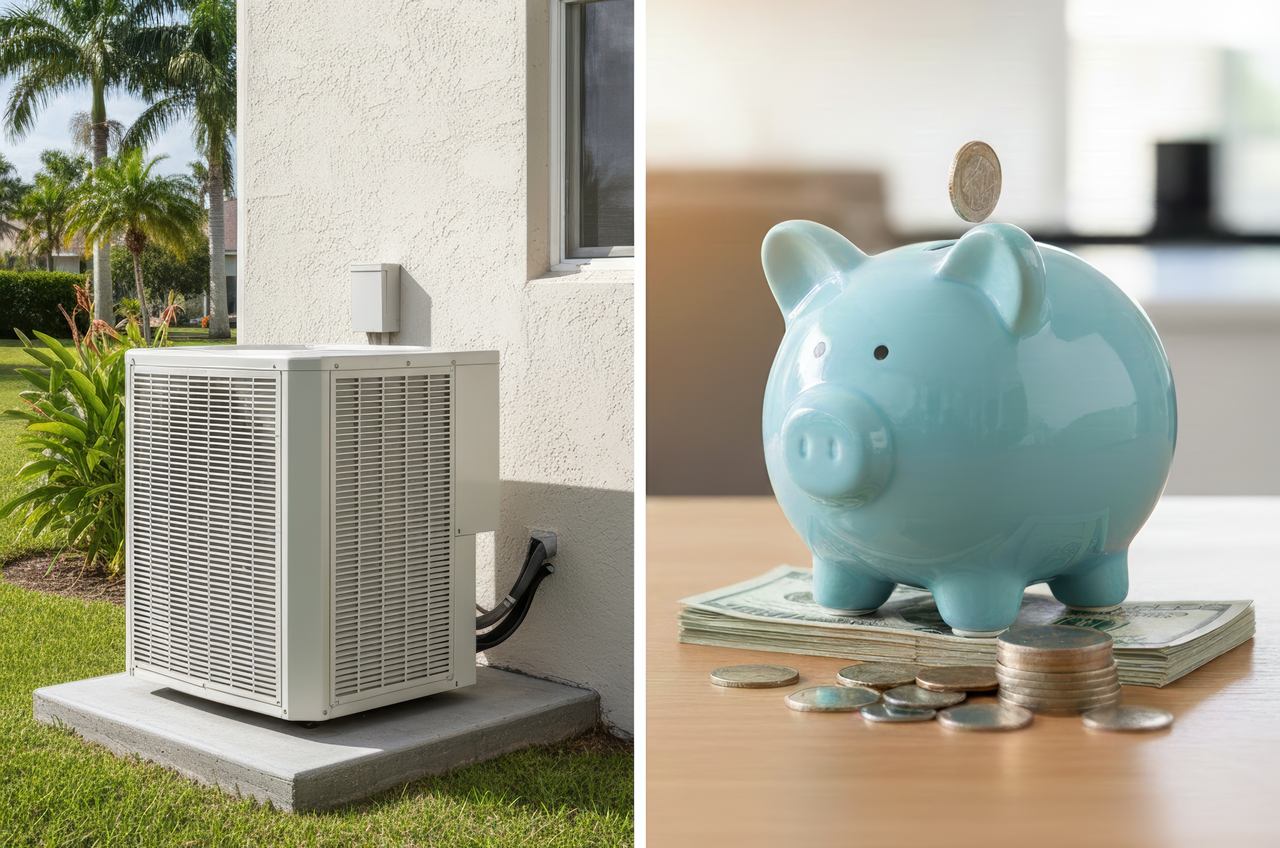
Almost all the best energy-saving tips focus on this “big ticket item” because that is usually where the biggest savings can be made in Florida homes.
TIP 1: UPGRADE TO A HIGH-EFFICIENCY AC SYSTEM
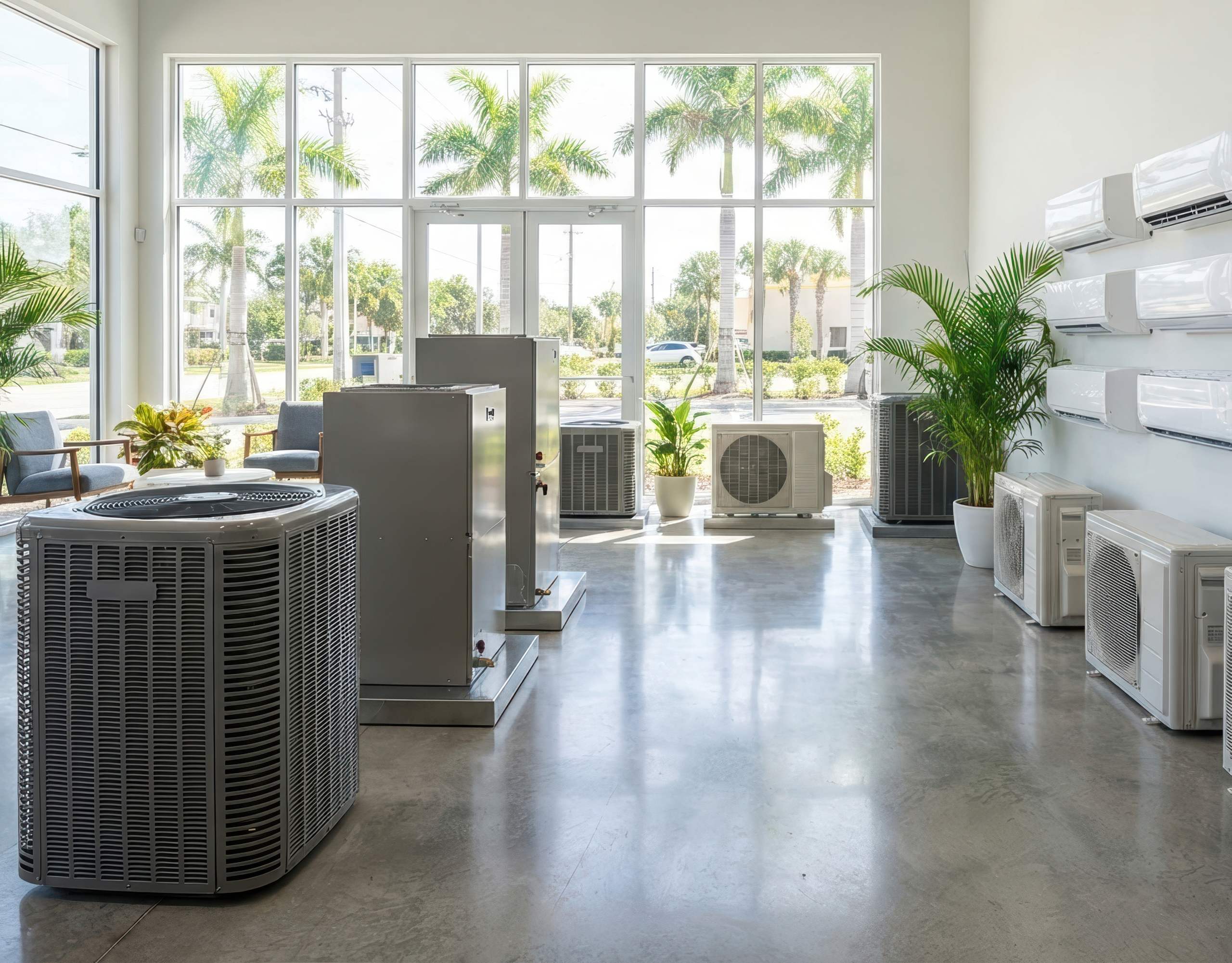
If your AC is older than 10-12 years, the first energy-saving tip to consider is an upgrade to a more efficient cooling system.
AC replacement costs in Florida are a major investment, but upgrading to a higher-efficiency model leads to cost savings over the months and years ahead. These savings will pay back the investment.
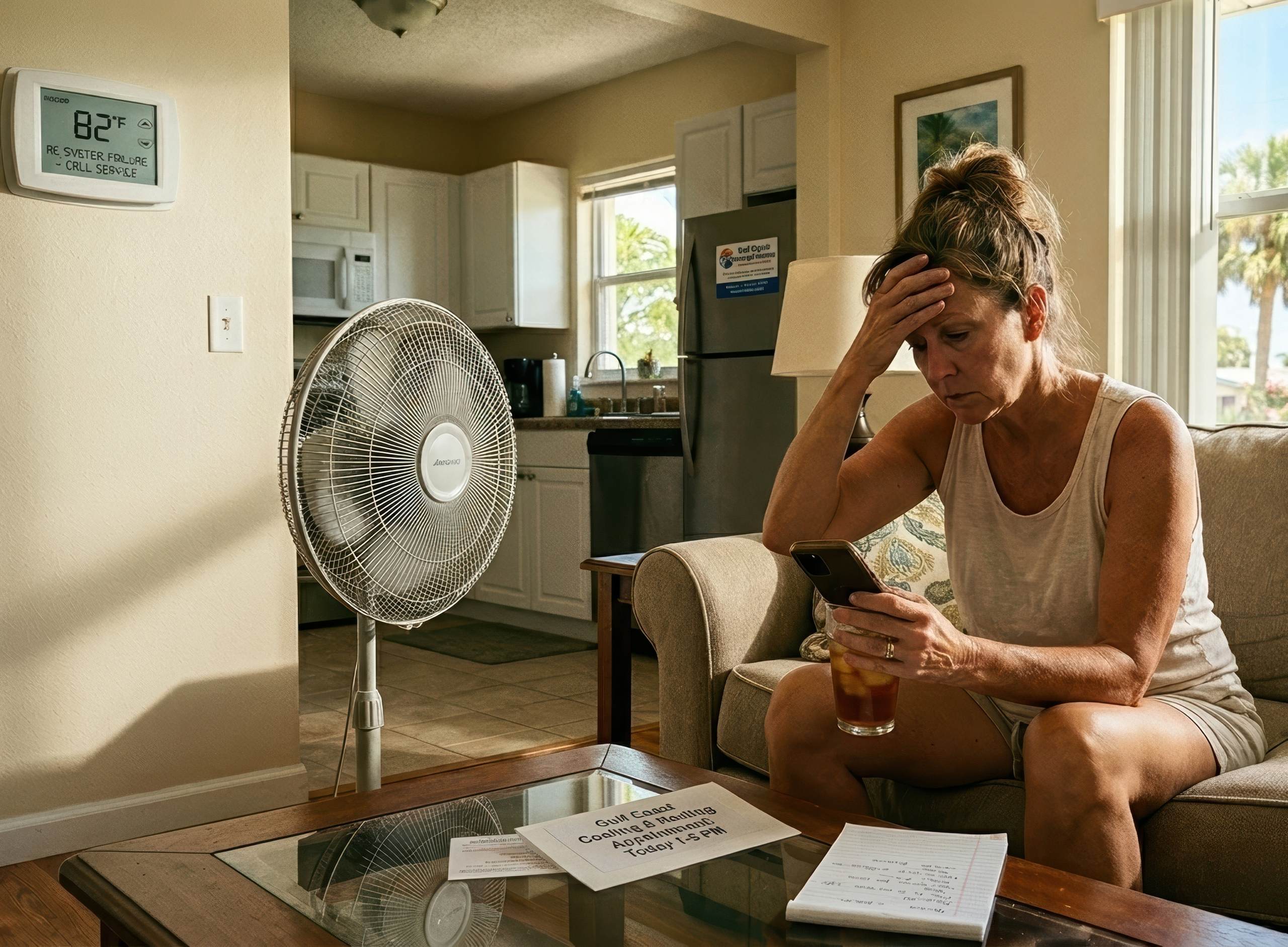
Older air conditioners can struggle to keep up in Florida’s legendary heat and humidity. That increases energy usage, costing homeowners more than they may imagine.
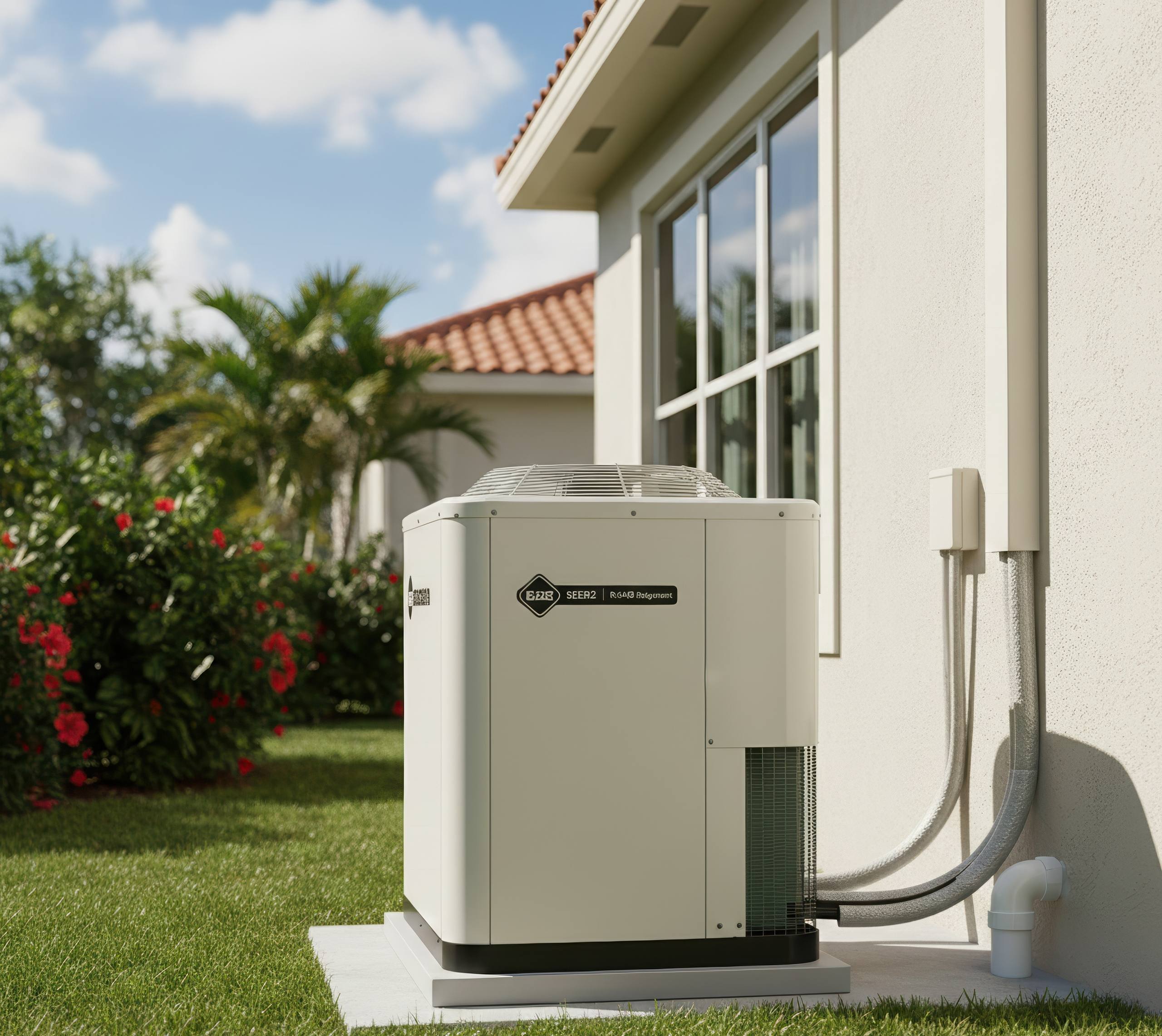
A new energy-efficient unit (look for an Energy Star label and high SEER rating) will solve that problem.
Variable-speed or two-stage air conditioners operate at different speeds and adjust automatically to the home’s cooling requirements, which is better for both comfort and the pocket. They run for longer at lower speeds, help to reduce humidity, and maintain a comfortable indoor temperature.
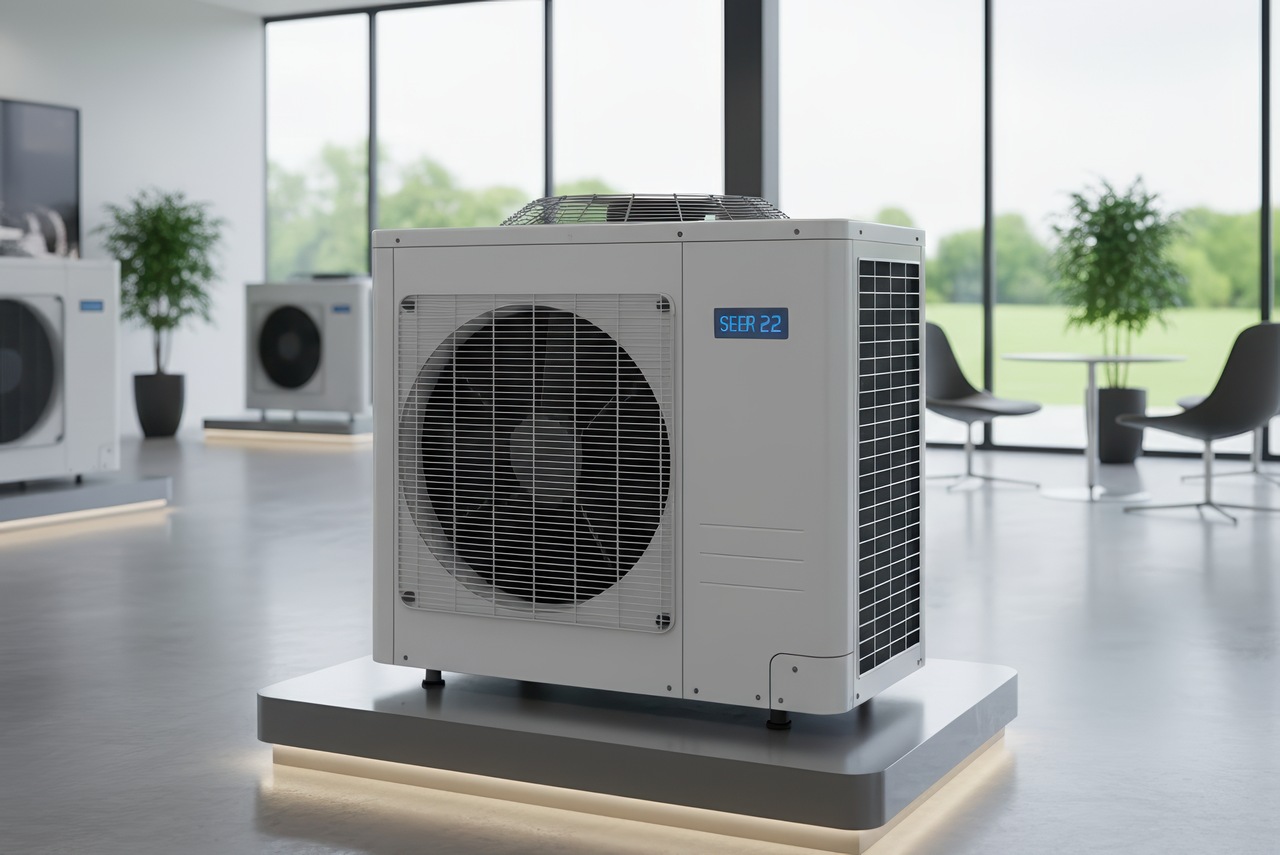
Under Florida’s energy regulations, all new central AC installations must have SEER ratings of at least 15 SEER (or 14.3 SEER2). Compare that with most 15-year-old systems, which will have a SEER rating of 12-13.
How much can you save?
By upgrading from a 15-year-old AC unit to a new two-stage air conditioner in SW Florida, you can typically save 20-40% on annual cooling costs.
TIP 2: UPGRADE TO A SMART THERMOSTAT
If you’re not ready to replace your AC but want to manage cooling costs more effectively, upgrading to a smart thermostat is a relatively cheap and quick energy-saving tip to consider.
As opposed to traditional thermostats, which need manual adjustments, smart thermostats automatically adjust temperature according to pre-set schedules, the weather conditions, humidity levels, usage patterns, etc.
Using a smart thermostat allows you to:
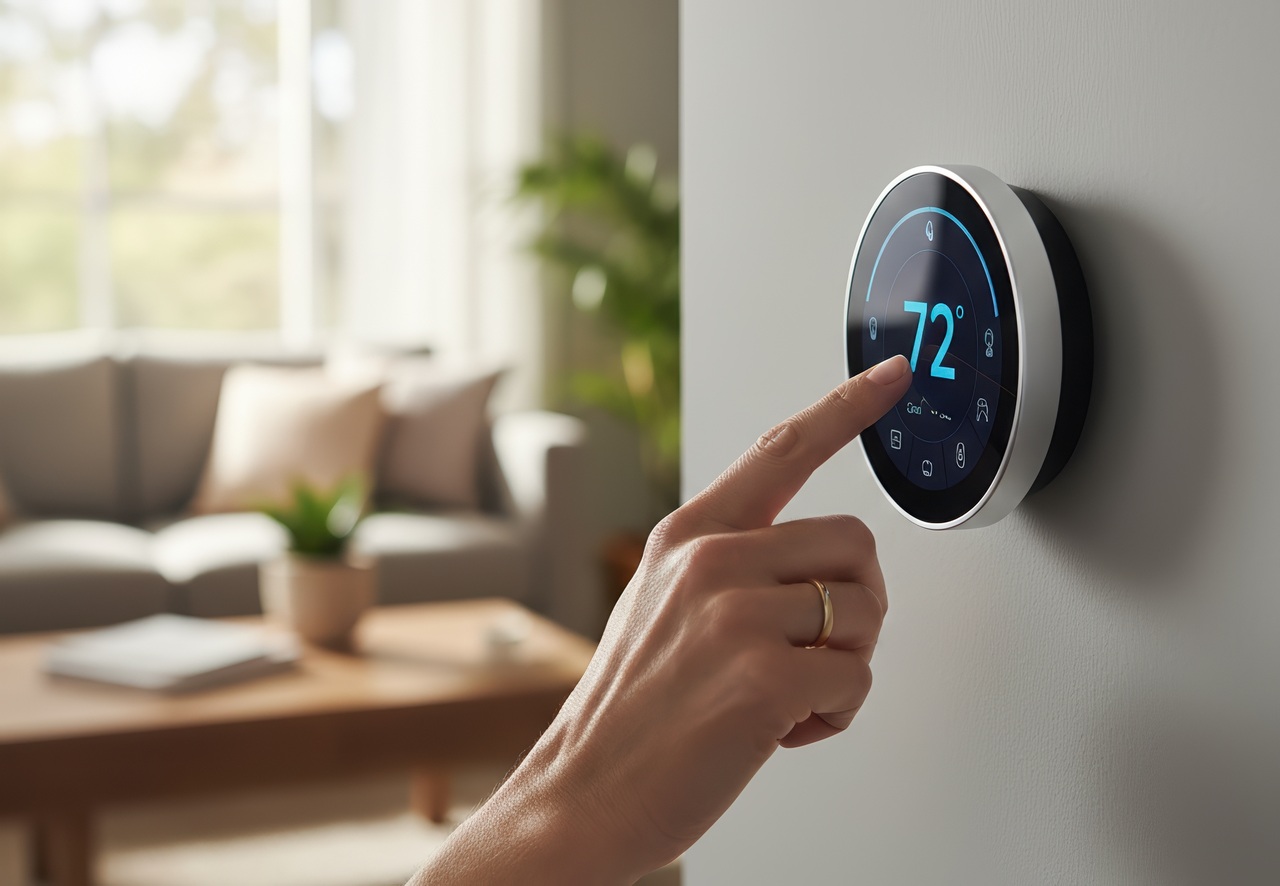
For seasonal residents of Florida, of which there are around one million, the ability to control cooling remotely is a major benefit for scheduling, when it comes to comfort and energy costs.
Pairing a high-efficiency AC system with a smart thermostat is an unbeatable combination for saving energy and electricity costs in Florida.
How much can you save?
By upgrading your thermostat to a cooling system that can adapt to household usage patterns, you can save 10% on cooling costs.
TIP 3: SEAL AIR LEAKS AND IMPROVE HOME INSULATION
This energy-saving tip looks beyond the cooling system to address some potential weaknesses in the home’s construction and insulation.
Many older homes, and even some newer constructions in Florida, have poorly sealed attics, ductwork, doors, and windows. This means that cool air (that you’ve paid for) is escaping from your home, causing the air conditioning to work harder and sending money down the drain every month.
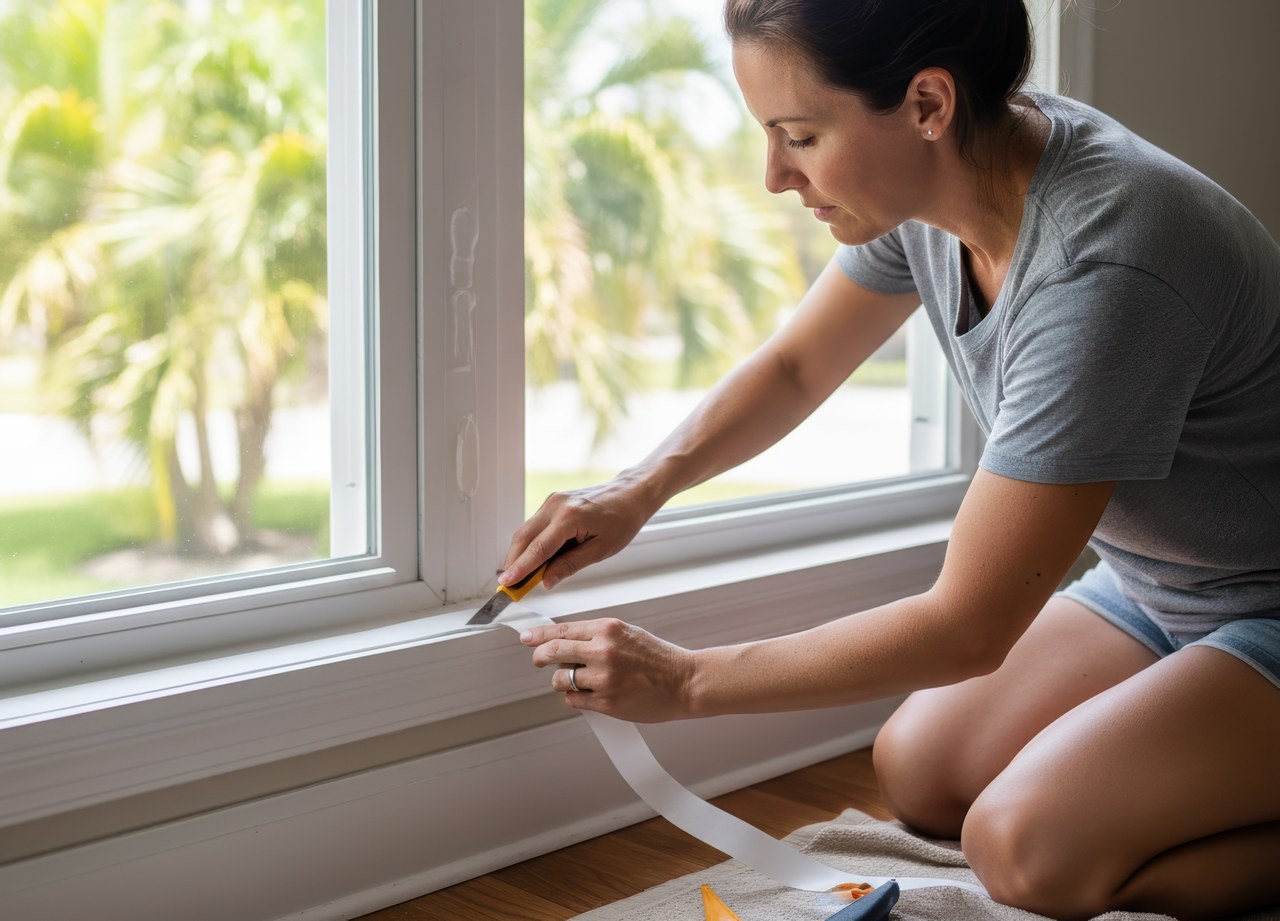
You can address this by weatherstripping or caulking windows and doors in your home, and getting ductwork inspected and properly insulated and sealed if necessary.
How much can you save?
By improving insulation in your home, you can save between 15 and 20% on cooling energy use—even more if combined with duct sealing.
TIP 4: BOOK REGULAR AC MAINTENANCE
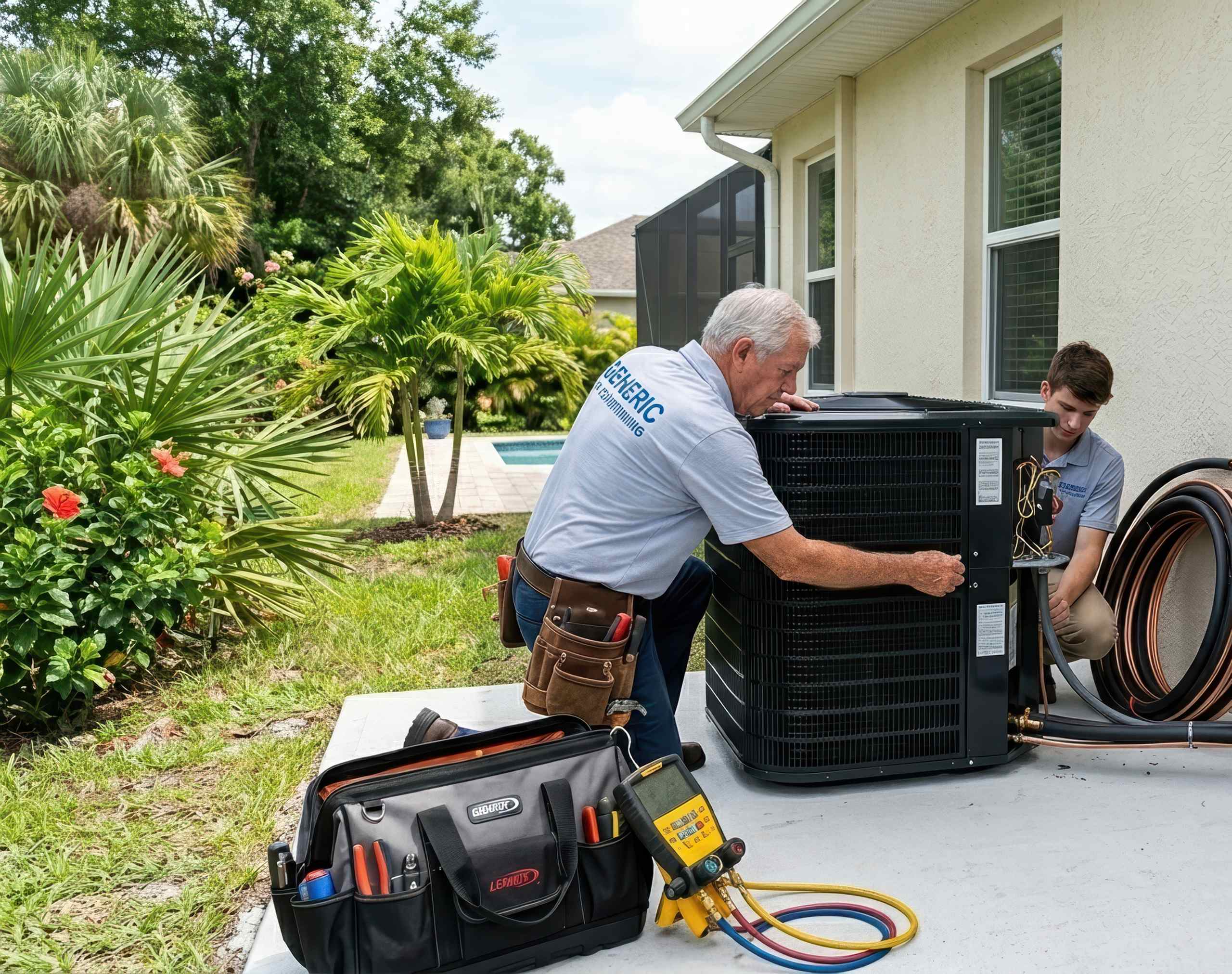
A professional air conditioner service at least once a year is a great way to save energy and extend the life of your HVAC system.
Preventative maintenance catches cooling problems early, reducing the chance of running up high AC repair costs in the near future, while also helping to maintain efficient performance from your unit.
If you can only service your AC once a year, get it done before the summer. Twice per year is ideal with the extra heat and humidity in SW Florida—in the spring and fall are good times for tune-ups.
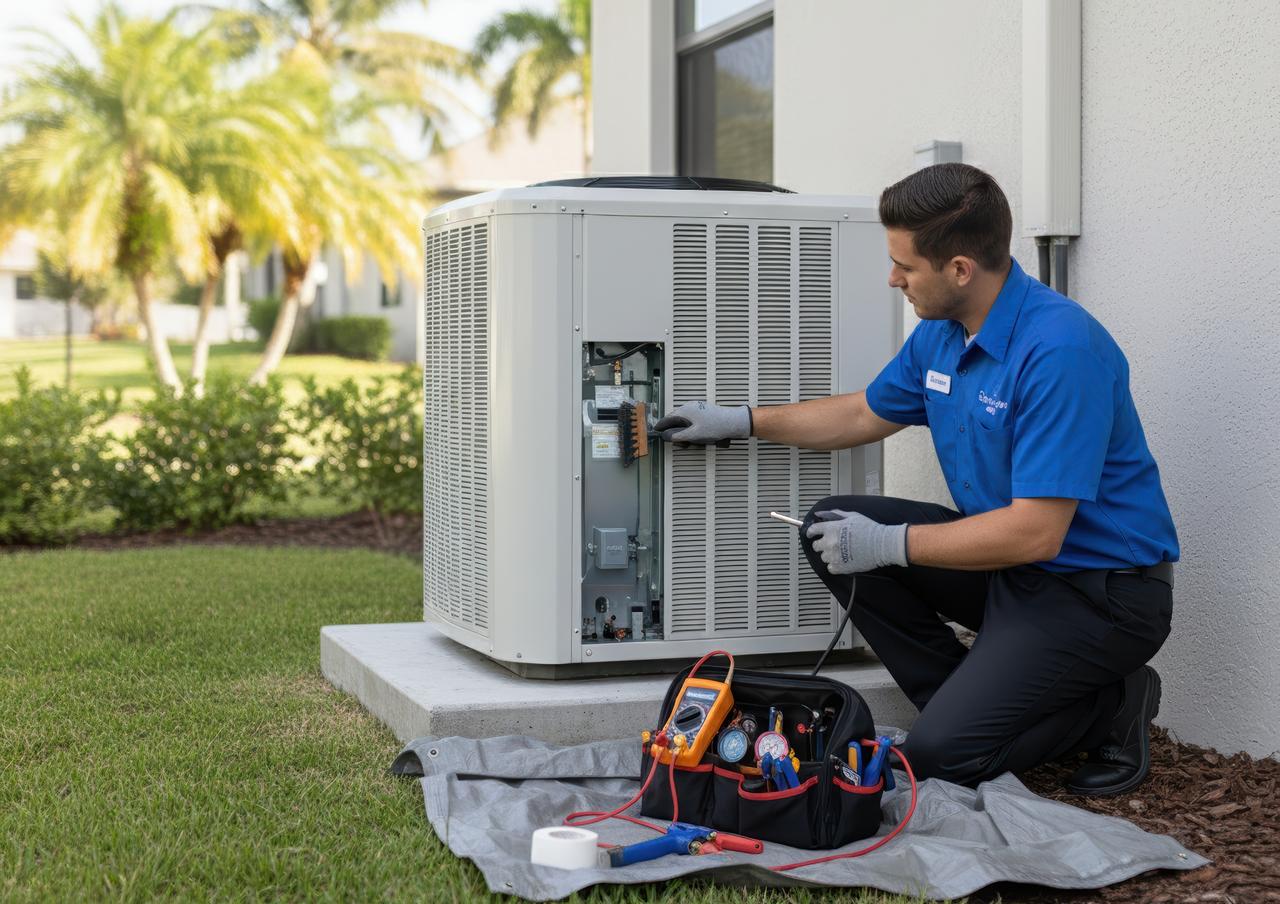
Routine maintenance ensures the system is properly calibrated. It solves any airflow issues, cleans and lubricates essential parts (like evaporator/condenser coils, blower motor, and compressor), and checks refrigerant levels.
Check out your AC company’s maintenance plans for an ongoing commitment to maintenance, efficiency, and reducing energy usage.
DIY MAINTENANCE TIPS
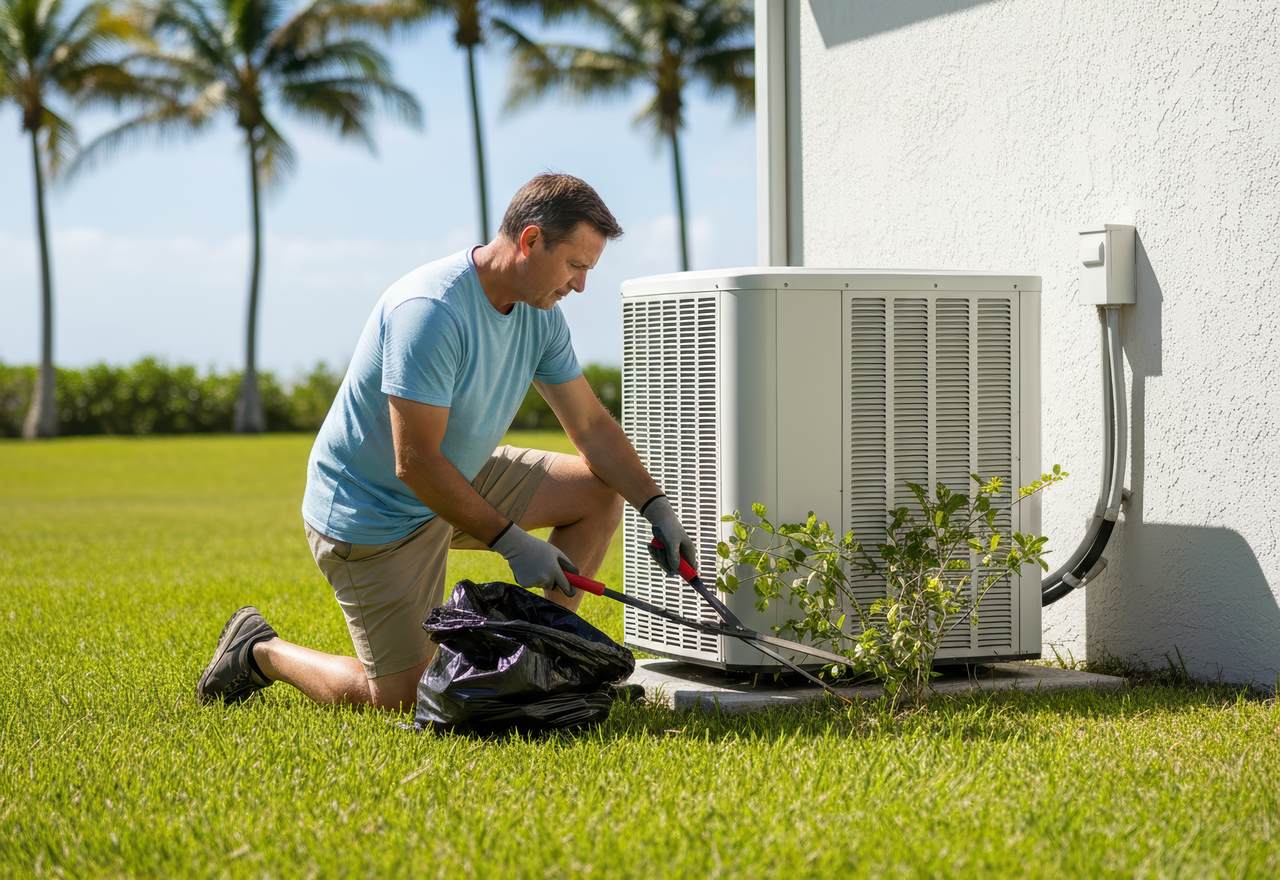
In addition to professional maintenance, Florida homeowners should perform a few regular tasks with their cooling system to maintain good airflow and performance year-round:
How much can you save?
Most estimates suggest that regular AC maintenance in Florida can improve energy efficiency by 5-15%.
TIP 5: REDUCE HEAT GAIN INSIDE THE HOME
You can also save on cooling energy costs by reducing the amount of heat that enters the home from outside.
The intense sunlight, high temperatures, and humidity exploit every weakness in a home’s structure or interior design. To help save energy, start by weatherproofing or caulking the windows and doors (this also prevents cool air from escaping, as mentioned above).
You can also use high-quality blinds, drapes, or curtains to keep the sun out, install energy-efficient windows or films, install an insulated exterior door (many homes still have hollow, energy-unfriendly doors), and upgrade the attic insulation.

Small changes can make a big difference in energy efficiency and monthly bills.
How much can you save?
The Department of Energy estimates that window coverings can reduce heat gain by 33-77% depending on type, translating to energy savings every month.
TIP 6: USE CEILING FANS TO SUPPLEMENT THE AC
Don’t neglect your ceiling fans just because you have a new high-efficiency air conditioner installed.
Ceiling fans are a lot more cost-efficient to run than AC. In combination with a variable-speed or two-stage AC unit, fans can help to reduce energy usage without sacrificing home comfort.
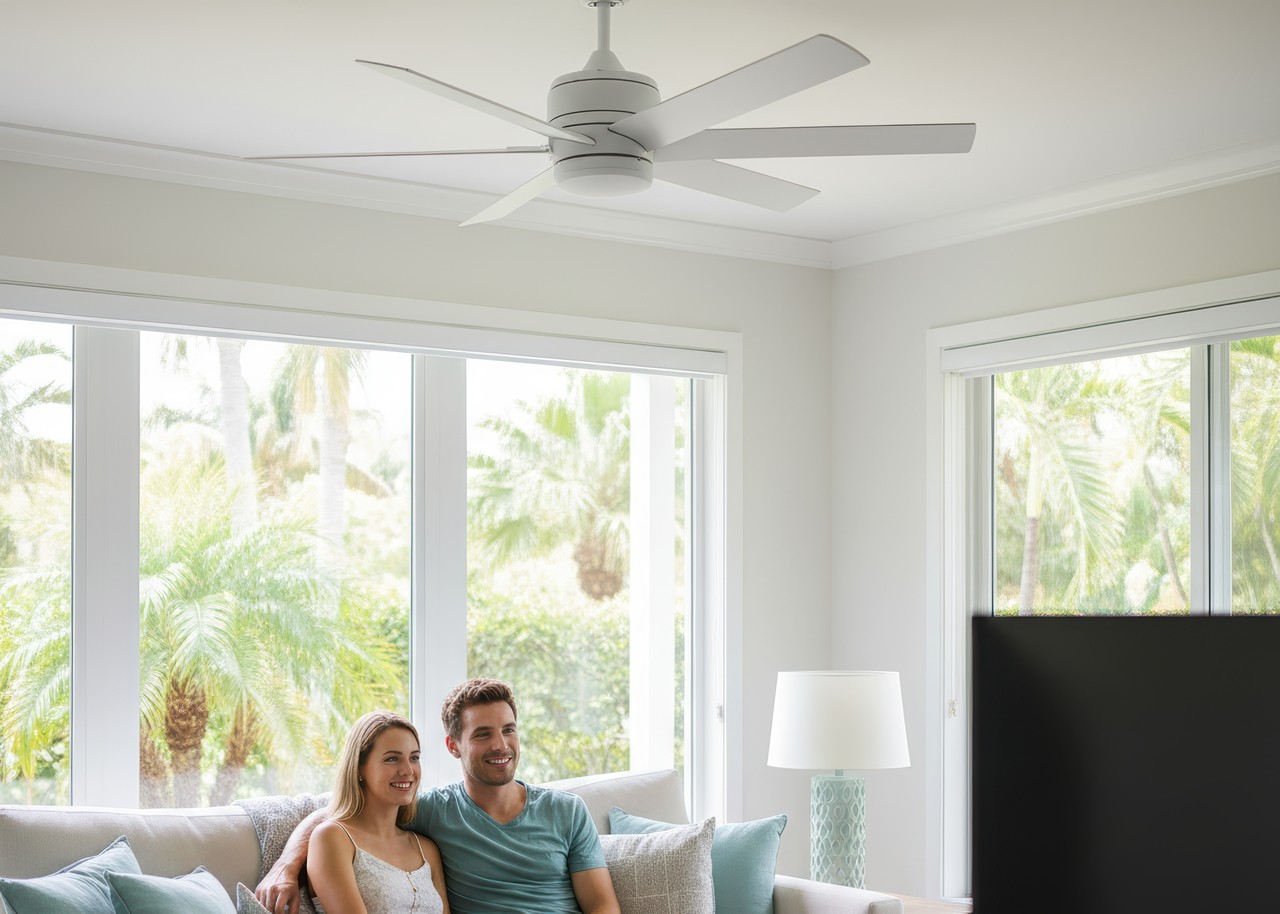
Ceiling fans don’t cool rooms but circulate indoor air to make it feel up to 4°F cooler, allowing you to raise the thermostat a few degrees while maintaining comfort.
Note that ceiling fans should run counterclockwise in summer for maximum cooling effect.
How much can you save?
Fans use just 50-100 watts versus thousands for AC, so cost savings on cooling energy can amount to 5-15% per year if you use them in combination.
TIP 7: INSTALL A DEHUMIDIFIER
Although new AC systems usually offer improved humidity control, the sub-tropical climate in Florida means extra help may be required to combat the humidity, which can make homes feel much hotter.
Rather than turning down the thermostat to keep the AC running for longer, it may make more sense to install a whole-home dehumidifier.
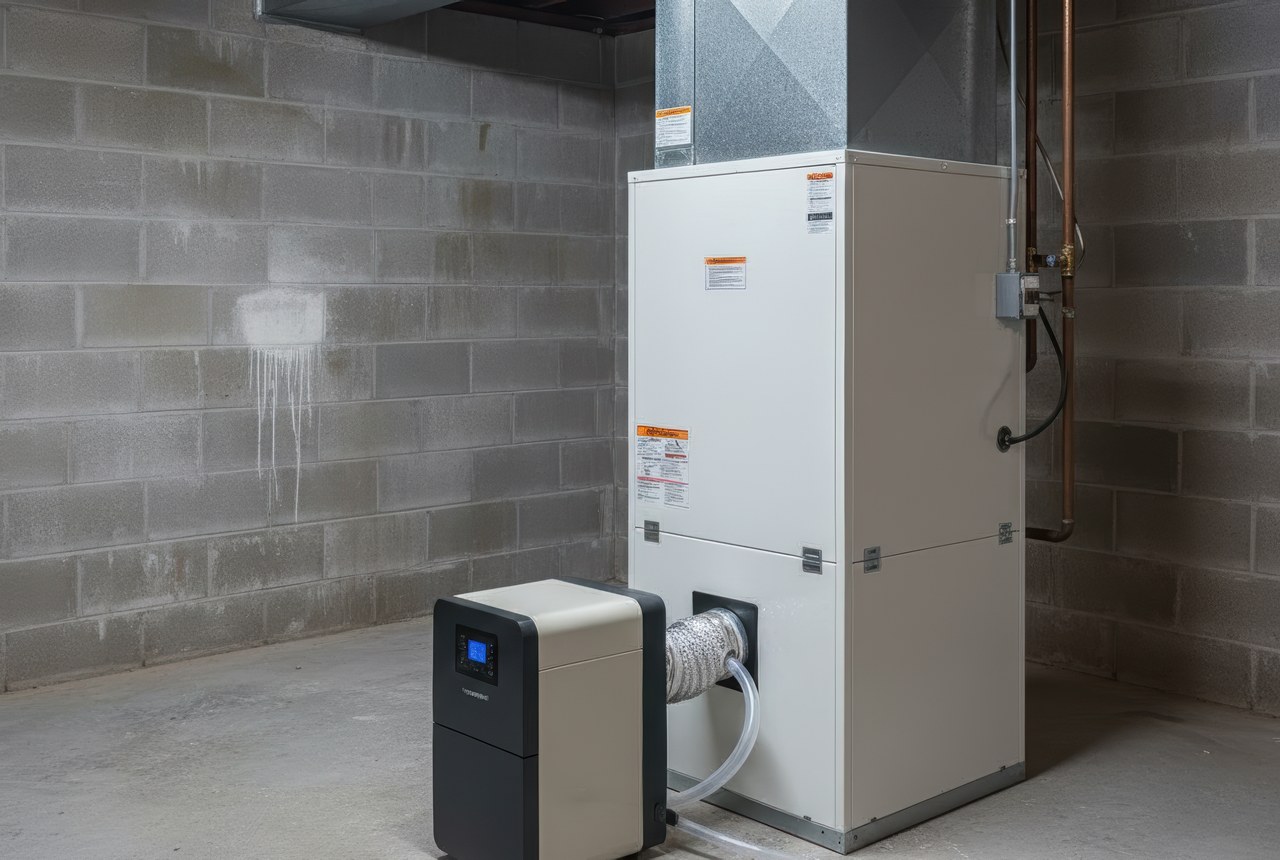
Other measures you can consider to reduce in-home humidity are:
How much can you save?
Installing a whole-home dehumidifier can save 10-30% on cooling energy by controlling humidity and allowing higher thermostat settings without discomfort.
REDUCE BILLS WITHOUT SACRIFICING COMFORT
You shouldn’t have to worry about the cost every time you switch on your AC, or sacrifice home comfort to keep monthly energy bills manageable.
There’s plenty you can do to keep energy usage down, from upgrading your AC and/or thermostat to regular HVAC maintenance, improving insulation, using ceiling fans, and installing a dehumidifier.
If you decide on a new AC unit, ask our team about potential incentives and rebates available for upgrading your home’s cooling system to a higher efficiency model. These can help you save on installation costs.
The One Way Air team provides personalized advice on keeping your home cool—contact one of our AC professionals today.