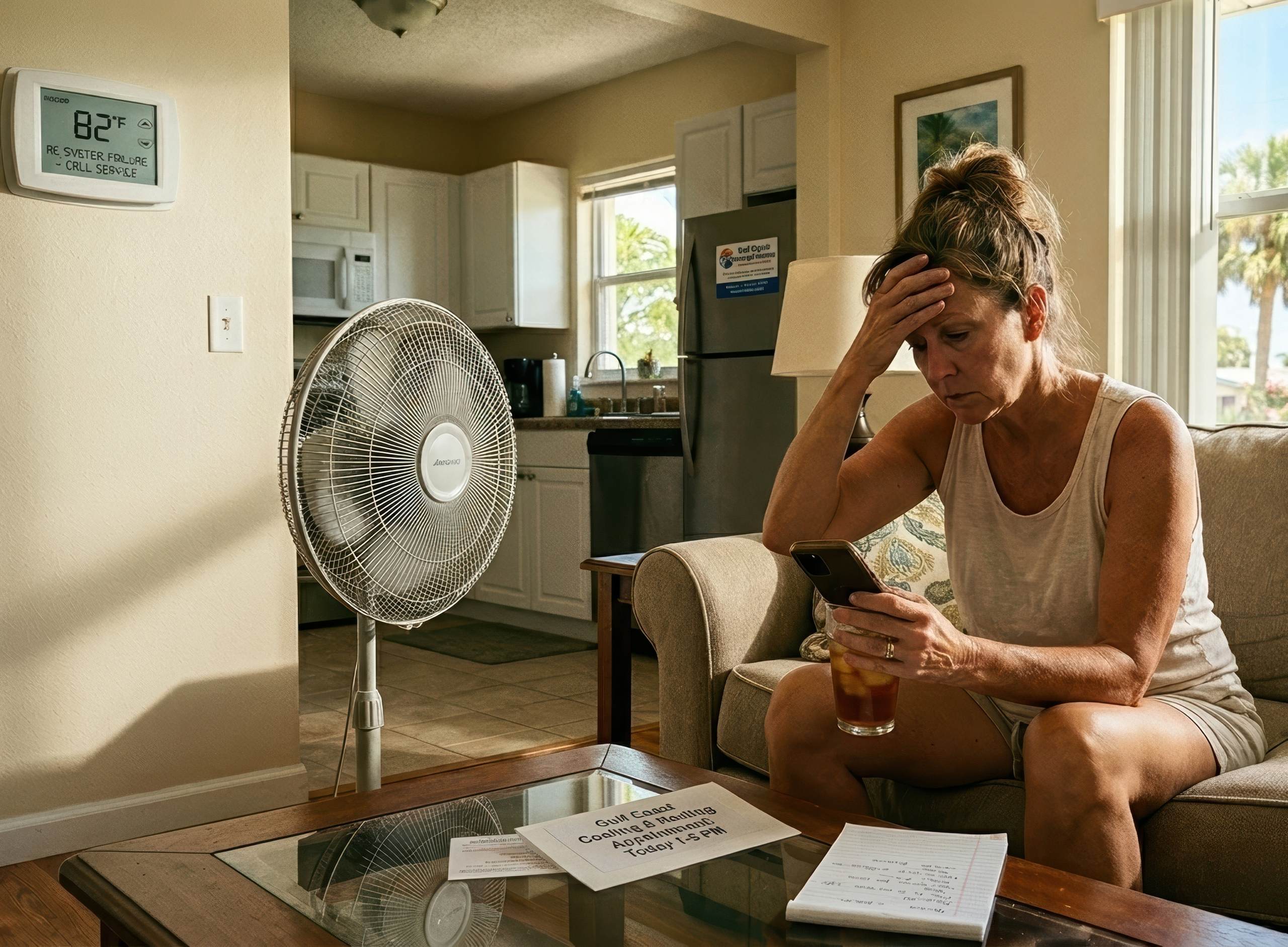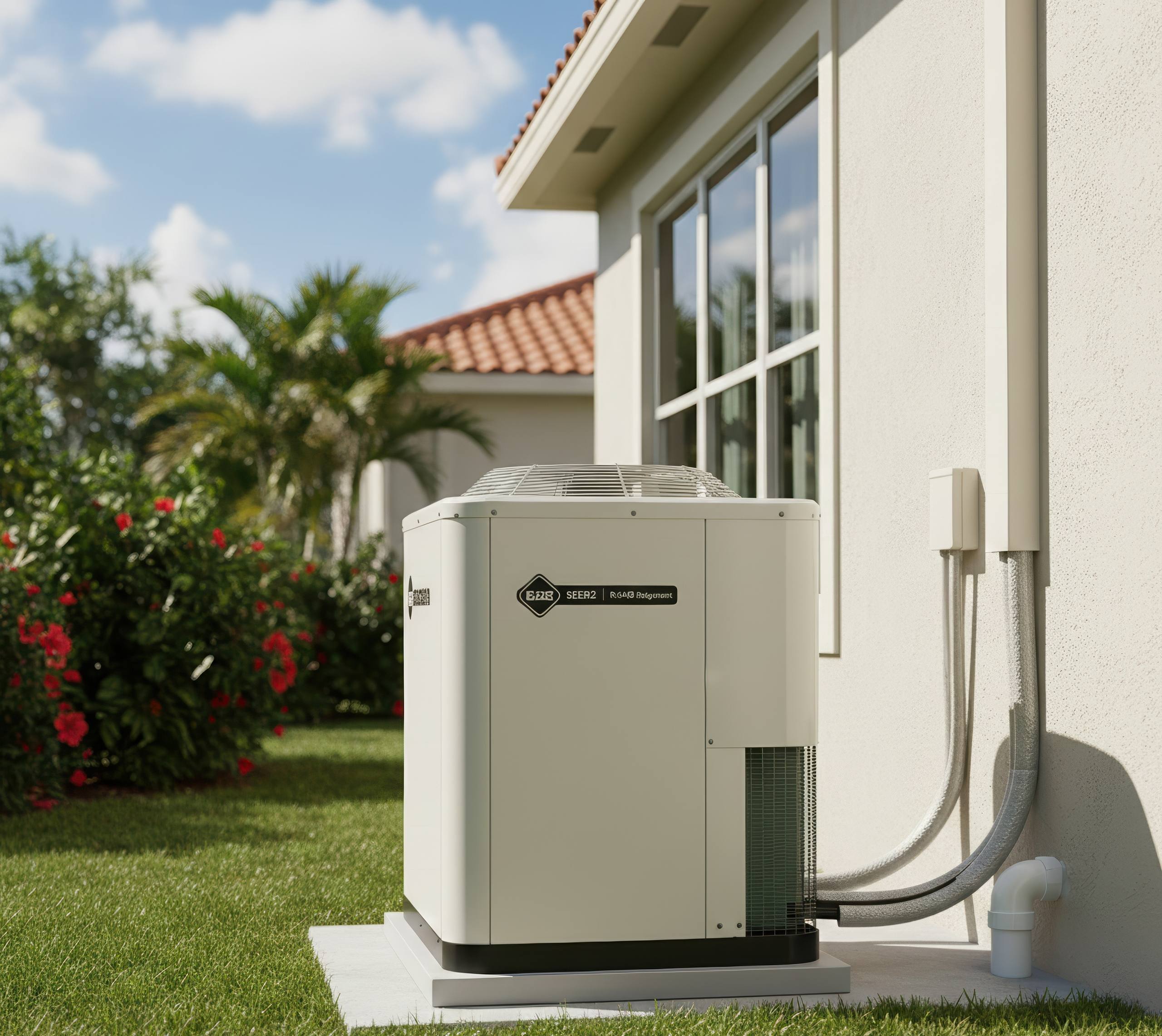
No Floridian needs reminding about the humidity here. We love our sunshine but the heat and humidity can be intense, and nobody loves a sticky or clammy home.
Florida is one of the most humid states in the nation. Maintaining the ideal indoor humidity level in Florida usually requires a balance of several components:
Anything above 60% relative humidity will feel stifling in our high temperatures.
So, if humidity levels are too high, what can you do about it?
Your HVAC setup greatly impacts humidity levels and indoor air quality. Let’s learn more about this, relative humidity, and how you can reduce high humidity in your Florida home…
WHAT’S THE IDEAL HUMIDITY FOR A HOME IN FLORIDA?
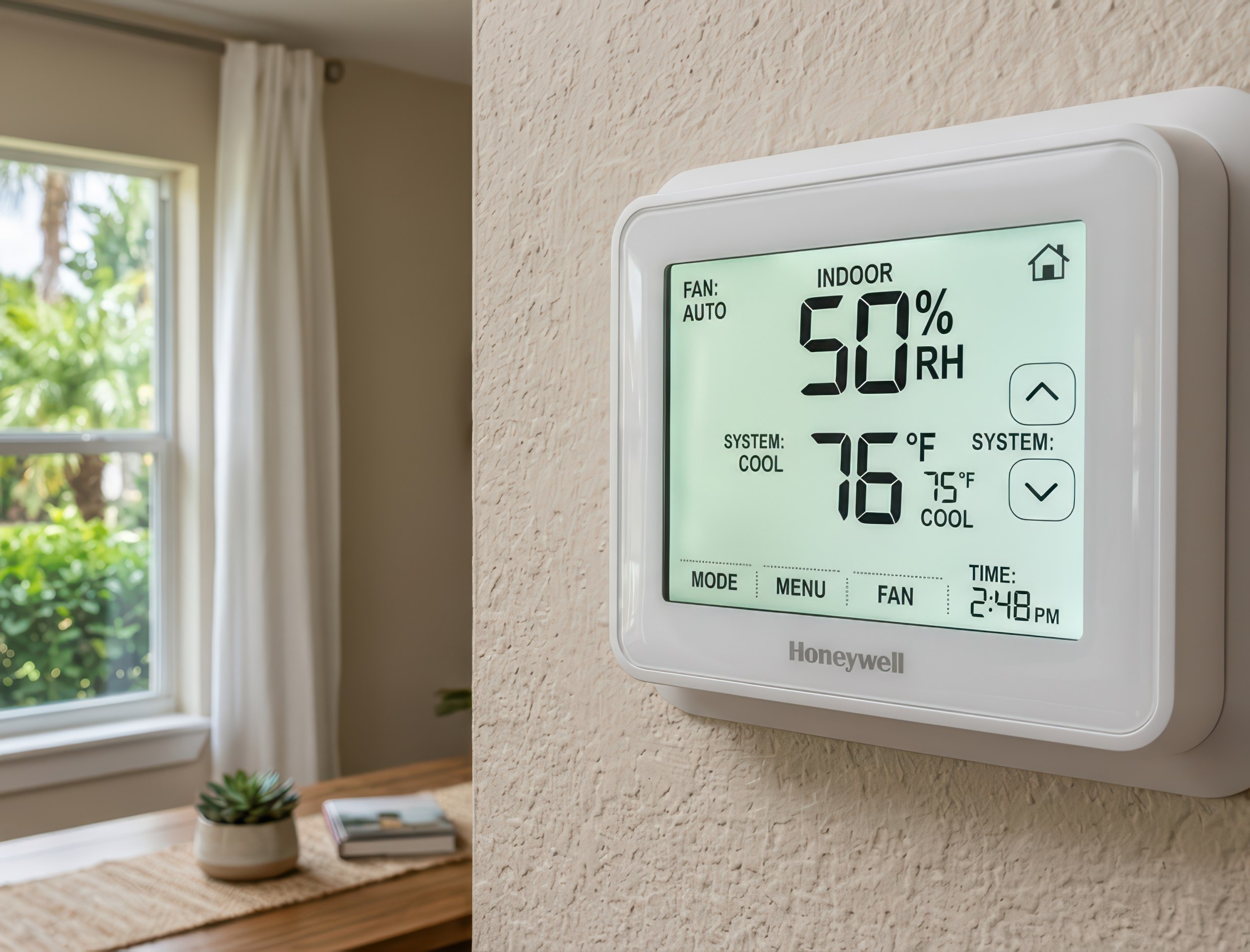
Homes in Florida should aim for an indoor relative humidity of between 45% and 55%. This ensures you:
45 to 55% RH is a practical, energy-efficient, and comfortable target that will help keep your home cool even during the hottest and wettest times of year.
HUMIDITY VS. RELATIVE HUMIDITY
It’s important to understand what relative humidity is. That’s what we’re usually referring to when we talk about humidity.
Both the air temperature and the air’s moisture content affect how comfortable it feels.
If the relative humidity is 70 to 75% (the average in Florida), the air holds 70 to 75% of the moisture it could hold at the current temperature.
The higher the air temperature, the more water it can hold. With Florida surrounded by oceans, the potential amount of moisture in the air is high. This can lead to relative humidity levels much higher than are comfortable (60 to 80% or even higher).
High temperatures + high relative humidity = oppressive conditions
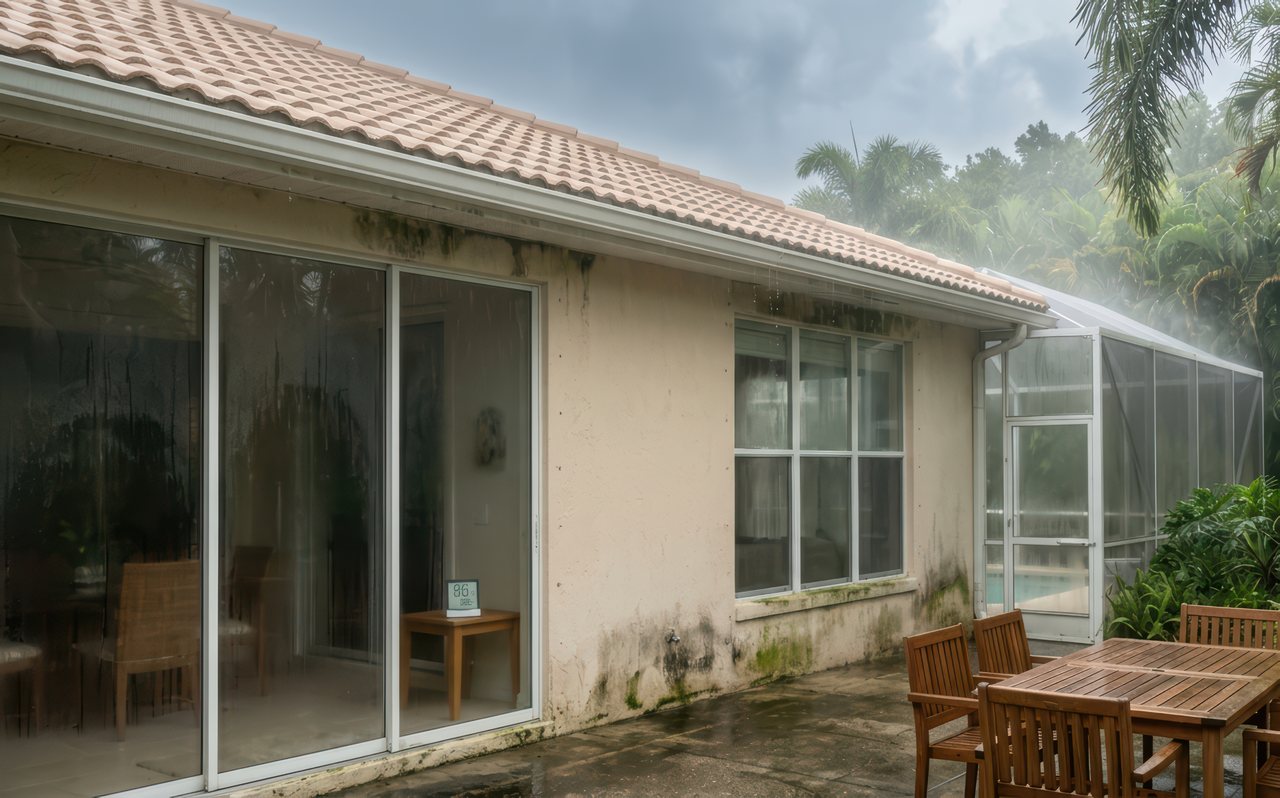
If the humidity is high, the moisture sits on your skin and cannot evaporate. So, it feels hotter. Sweating may fail to cool you down enough, making you feel uncomfortable and sticky, and even posing health risks, such as heat stroke.
FLORIDA VS ALASKA
Alaska is the only state with a higher annual average relative humidity than Florida. This surprises some people because “Alaska’s so cold!”
Here’s the thing: lower temperatures require less moisture for a high relative humidity level. So, in Alaska, although the RH is higher than in Florida, homes don’t feel sticky or clammy. Instead, you need warm clothes and heating to combat the cold.
To summarize:
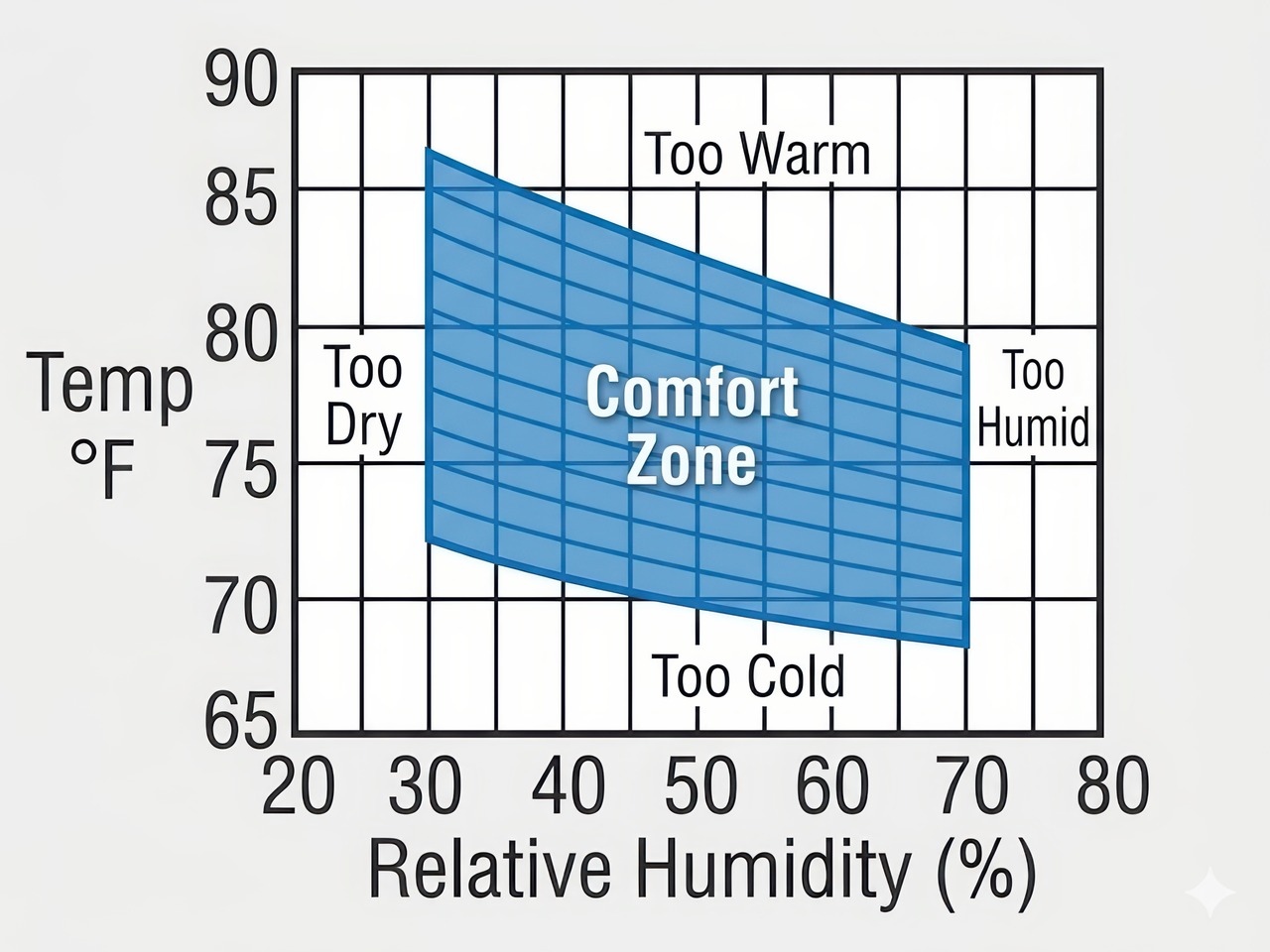
If you’re facing humidity problems and need professional indoor air quality advice, contact the One Way Air team today.
WHY IS HIGH HUMIDITY BAD FOR FLORIDA HOMES?
Your home should be a sanctuary of coolness, providing escape from the elements. If the humidity is too high, you face:
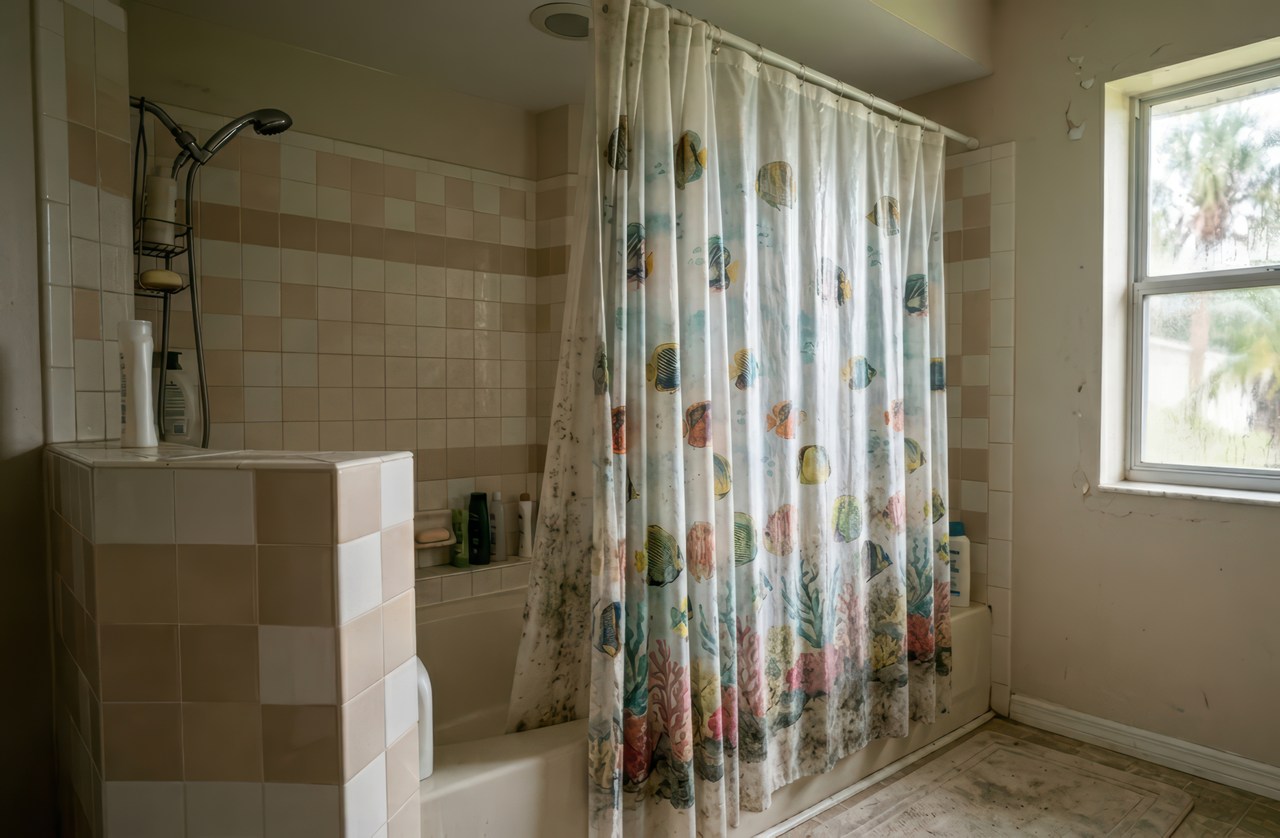
THE HEALTH DANGERS OF HIGH HUMIDITY WITH HIGH HEAT
According to the National Weather Service’s Heat Index:
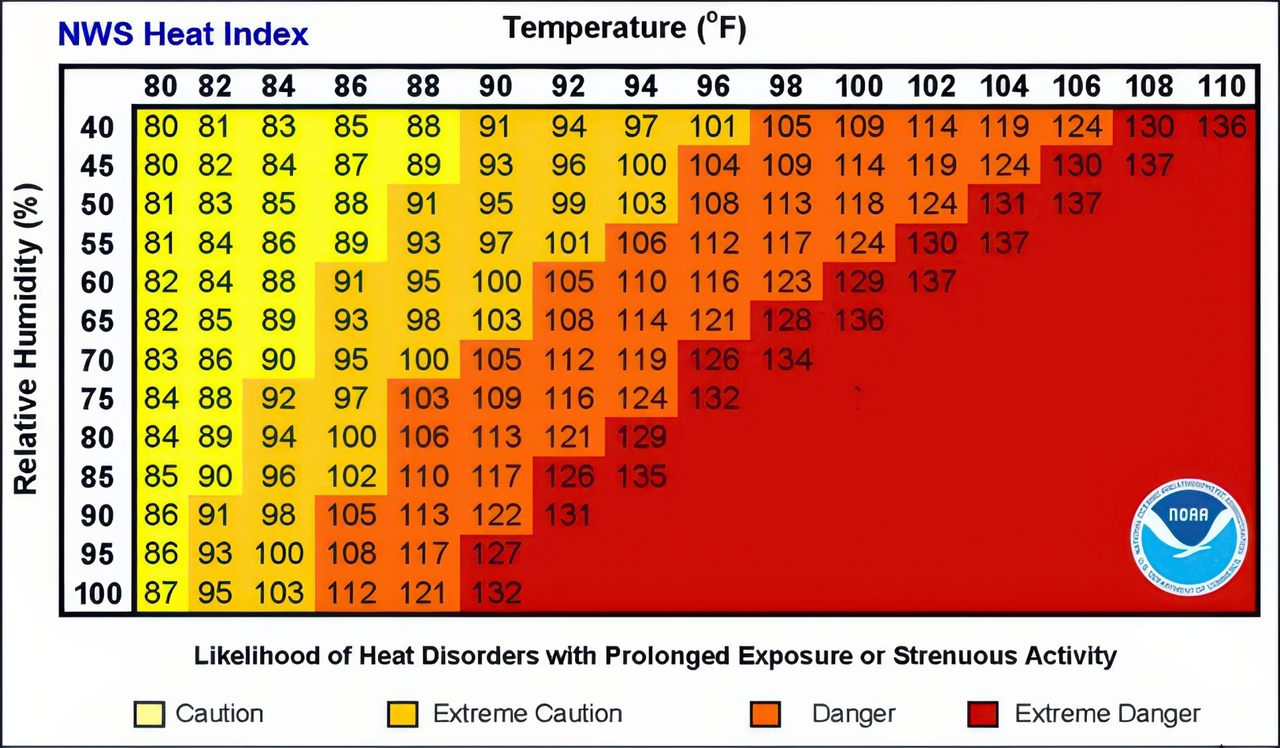
With prolonged exposure or physical activity, the orange or red zones can lead to health problems, such as:
THE DANGERS OF MOLD AND MILDEW
Moldy odors in the home, musty smells coming from the air conditioning, white/gray patches on leather items, and dark patches on bathroom tile grouting or shower curtains are all caused by mold and mildew.
Mold is a destroyer that can also penetrate deeper into building materials.
In humid homes, unsightly problems can extend beyond the bathroom and lead to damage to:
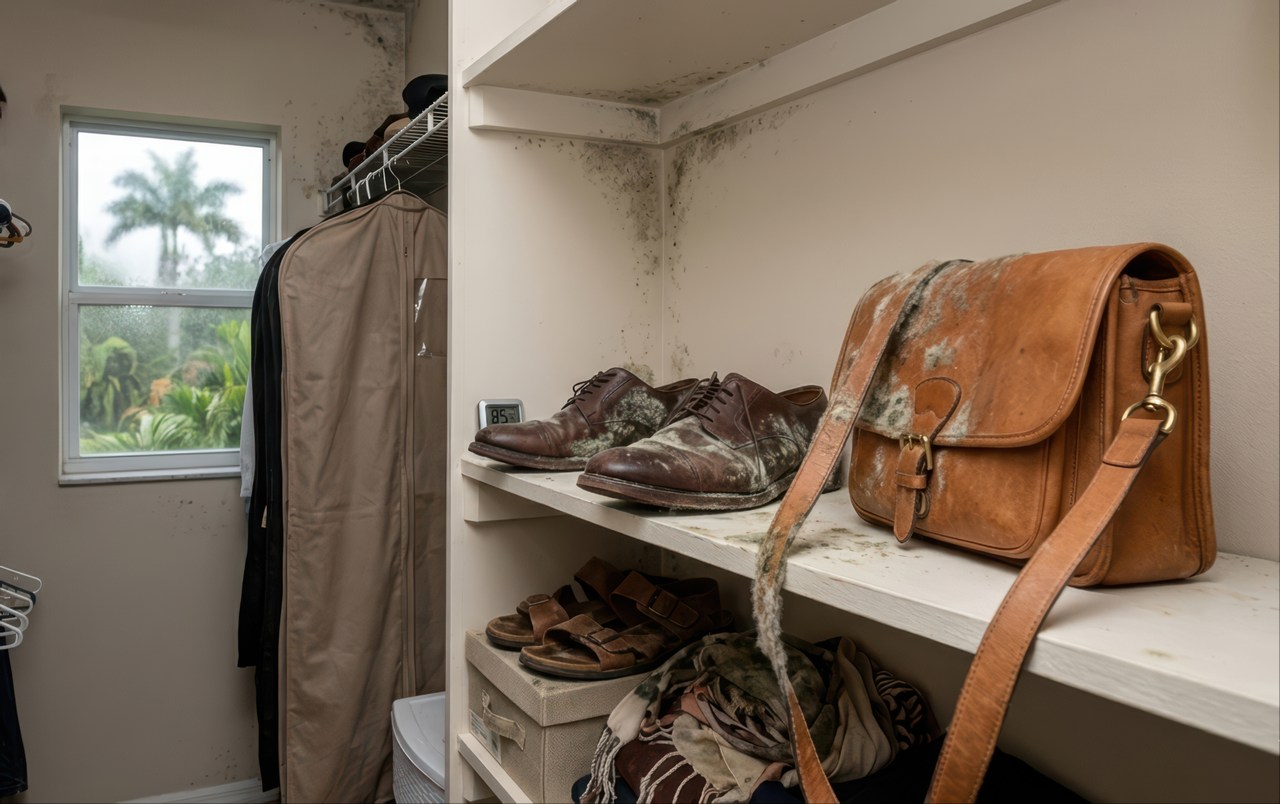
Maintaining 45 to 55% relative humidity in your home will help prevent these issues, along with the associated allergic reactions and health problems.
WHAT ARE THE MAIN CAUSES OF HIGH INDOOR HUMIDITY IN FLORIDA HOMES?
The climate is the most obvious cause of high humidity in Florida homes but other causes are covered in the table below.
|
CATEGORY |
SPECIFIC CAUSE |
WHY IT HAPPENS |
|
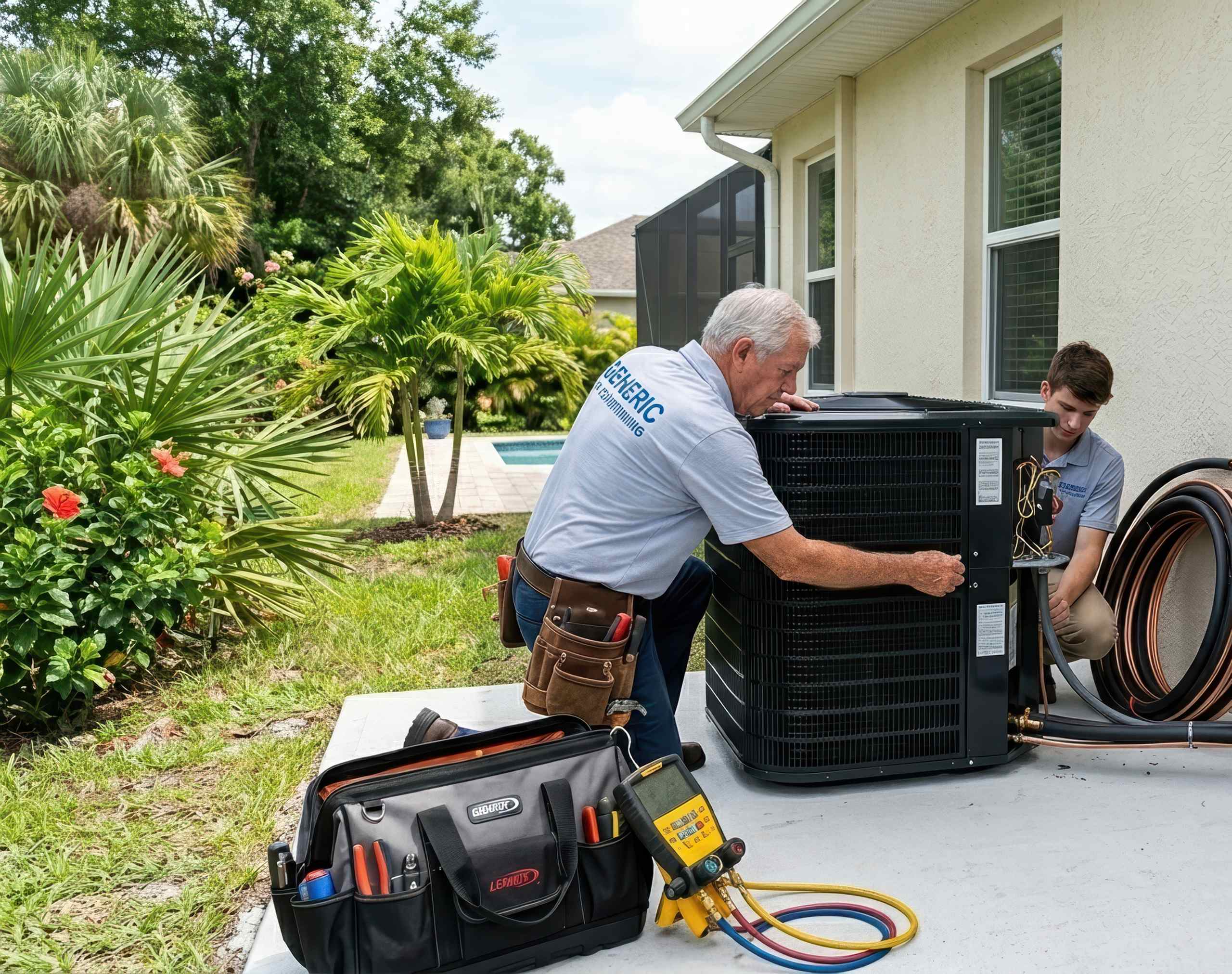
Oversized Units |
Large systems short cycle, reaching the temperature goal so quickly that they don’t run long enough to pull moisture out of the air. |
|
|
Lack of AC Maintenance |
Dirty Evaporator Coils |
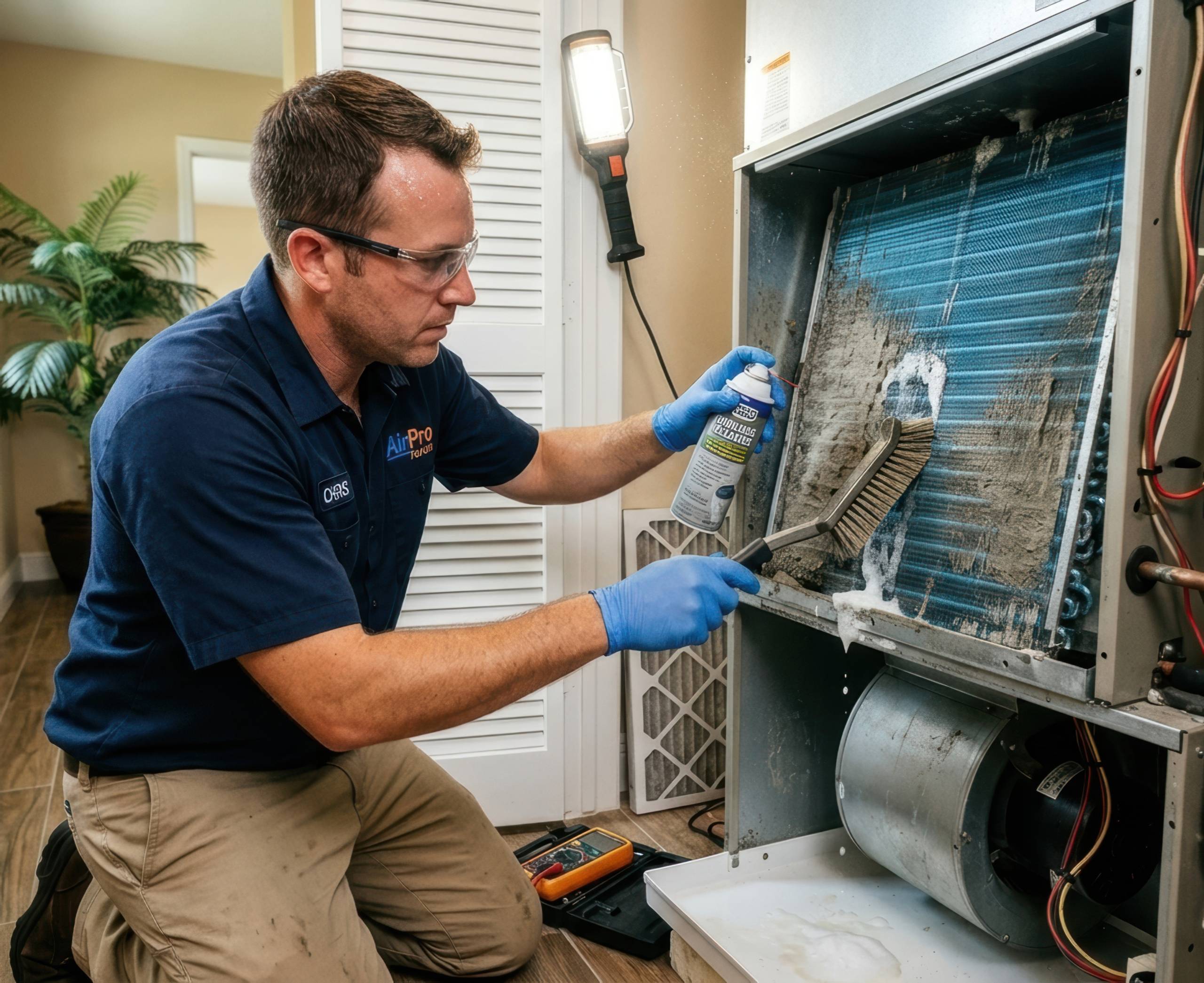
Dirt and grime insulate the AC coils, making it harder for the refrigerant to absorb heat and condense water vapor. |
|
Constant Fan Operation |
Setting the fan to ON instead of AUTO can blow moisture sitting in the drain pan back into the home. |
|
|
Ventilation |
Blocked Airflow |
Rugs, furniture, or curtains blocking supply or return vents prevent the system from cycling and dehumidifying air. |
|
Spot Humidity |
Lack of Exhaust Fans |
Cooking, showering, and laundry create localized steam. Without fans, this moisture spreads to the rest of the house. |
|
Daily Habits |
Indoor Air-Drying |
Drying clothes on a rack indoors releases gallons of water directly into the air, bypassing the dryer’s exhaust vent. |
|
Home Sealing |
Structural Leaks |
Worn weatherstripping or gaps around windows and doors allow Florida’s high-moisture outdoor air to infiltrate the home. |
|
Outdoor Environment |
Vapor Pressure |
Florida’s natural climate creates a constant pressure for moisture to move from the humid outdoors to the drier indoors. |
HOW CAN YOU MEASURE AND MONITOR HUMIDITY IN YOUR HOME?
Most people know if the humidity levels are too high by:
However, telling whether discomfort is caused by heat, humidity, or both can sometimes be difficult.
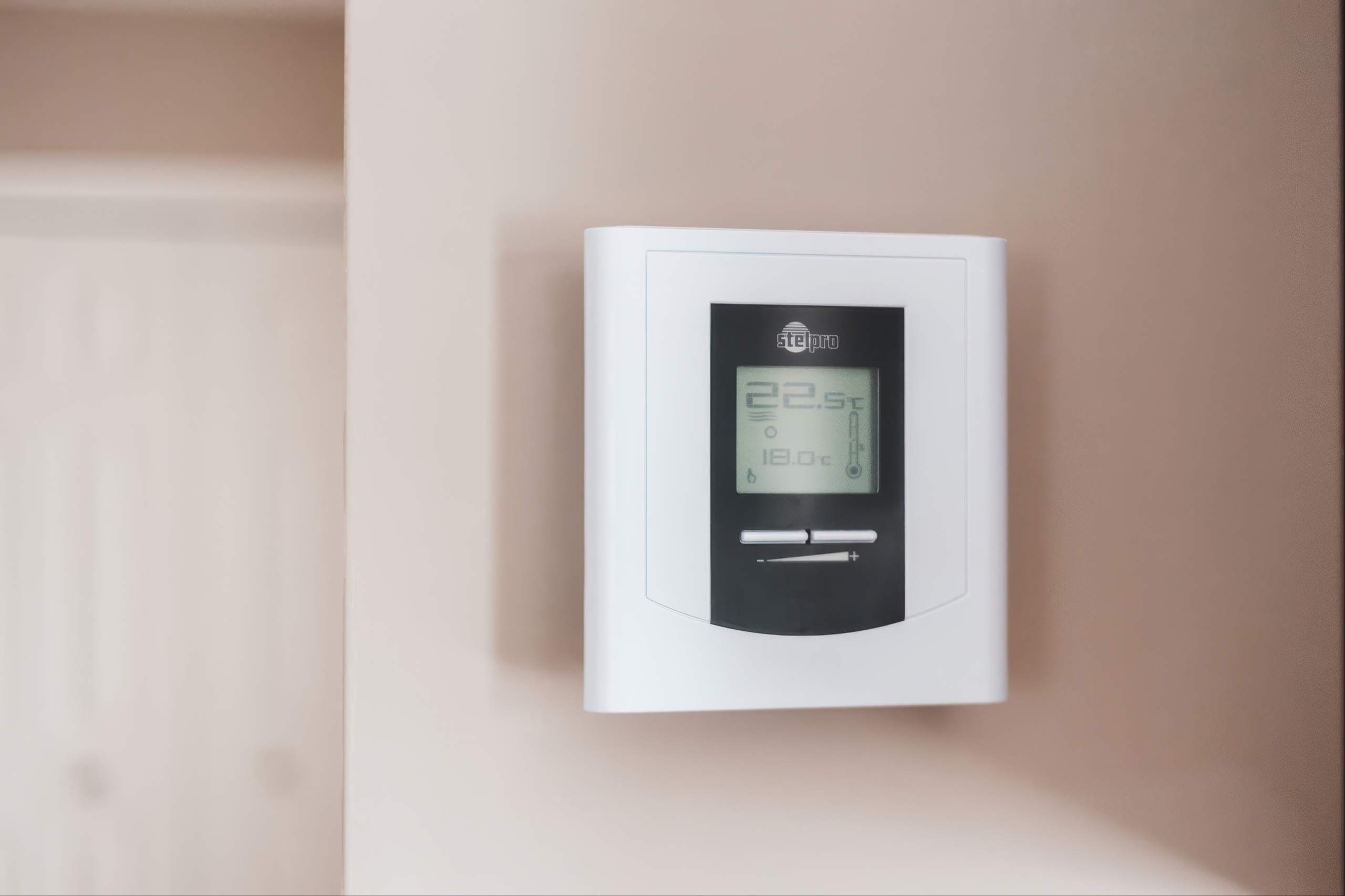
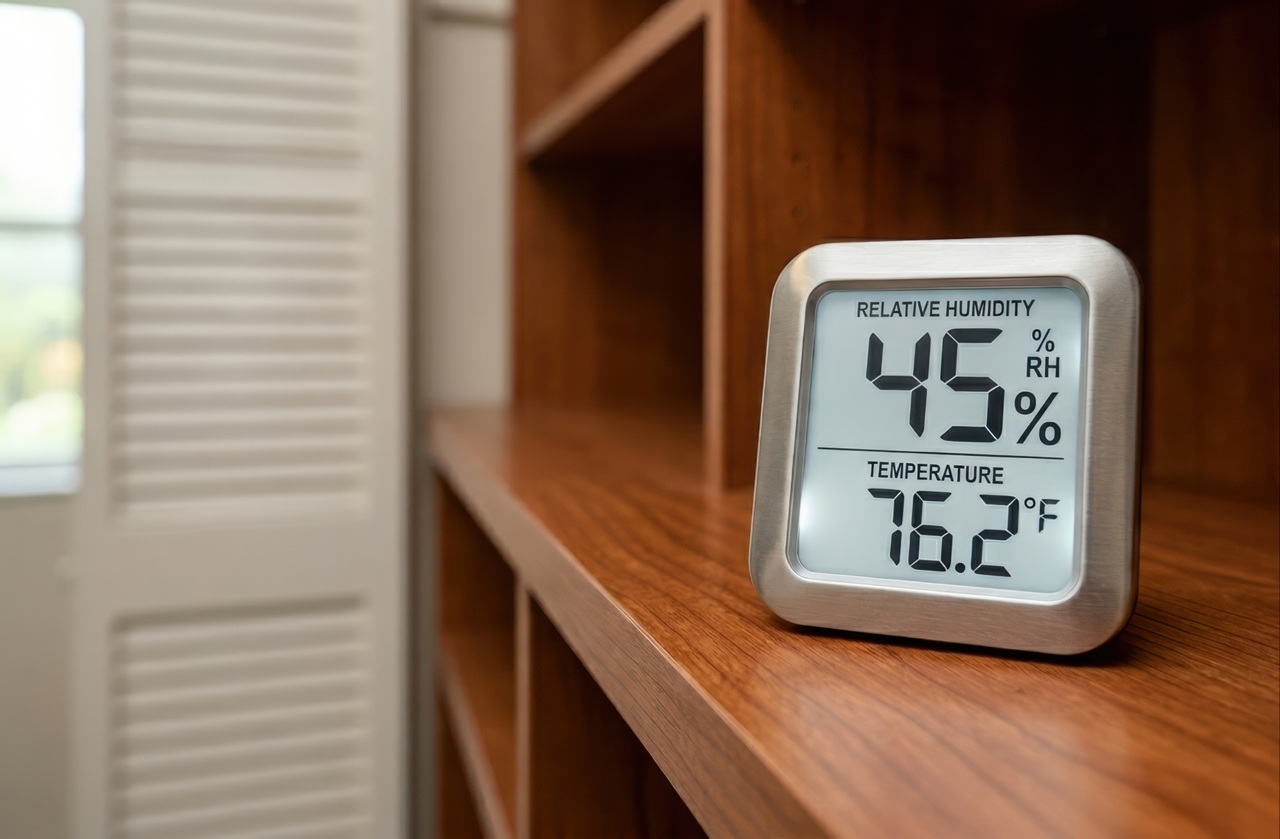
The easiest way to measure indoor humidity is with a hygrometer. This is a humidity sensor device that measures the amount of water vapor in the air relative to the maximum it can hold (the RH).
Hygrometers can be picked up for as little as $12 to $15 from your local hardware store or online.
Our AC professionals can help you measure and address humidity issues. Contact usto schedule an air quality inspection from a certified HVAC professional.
HOW CAN YOU LOWER HUMIDITY IN YOUR FLORIDA HOME?
If you’re experiencing high home humidity, here are some ways to reduce the humidity and raise comfort levels:
|
Strategy |
Tip |
How it Helps |
|
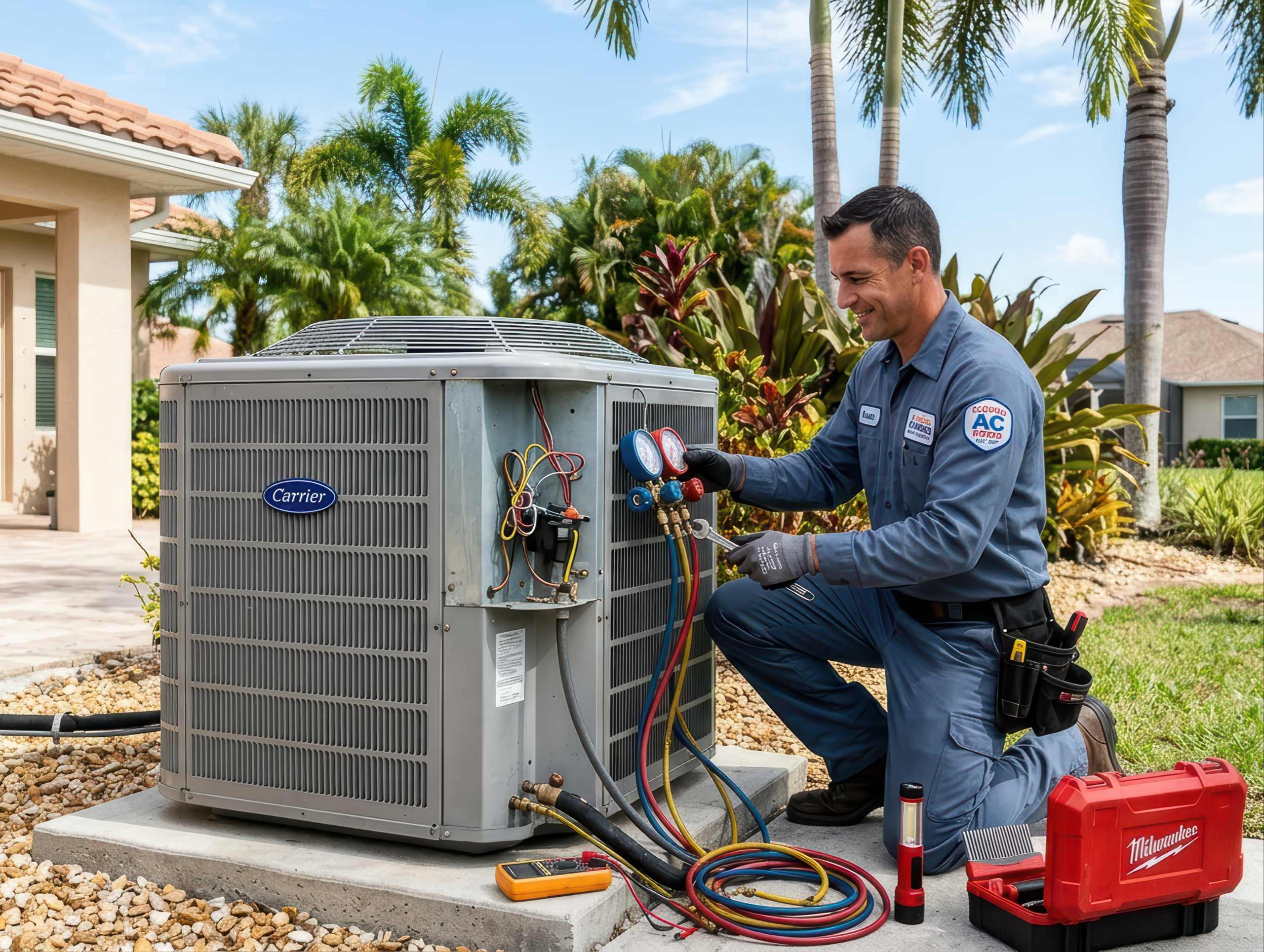
Professional AC Care |
Schedule Bi-Annual Tune-Ups |
HVAC pros ensure the system is mechanically sound, maintaining the airflow needed to strip moisture from the air. |
|
Coil Maintenance |
Clean Evaporator Coils (Included in Tune-Ups) |
Removing dirt from coils allows the refrigerant to efficiently condense water vapor into liquid to be drained away. |
|
Airflow Management |
Unblock Vents |
Ensures furniture or rugs aren’t stopping the AC from ‘pulling’ humid air out of the room for processing. |
|
Dedicated Control |
Install a Dehumidifier |
A whole-home or portable unit removes moisture independently of the AC, which is vital when it’s humid but not hot enough for the AC to run. |
|
Active Ventilation |
Use Extractor Fans |
Running fans in kitchens and bathrooms vents steam directly outside before it can settle into the drywall. |
|
Structural Integrity |
Seal Roof & Walls |
Repairing storm damage or cracks prevents rainwater from seeping in and evaporating inside your home. |
|
Moisture Barriers |
Improve Insulation |
Creates a tighter ‘envelope’ that makes it harder for high-pressure outdoor humidity to infiltrate your living space (as recommended by the Department of Energy). |
|
Exterior Drainage |
Clear Gutters & Runoff |
Prevents standing water near the foundation, which can seep into the air through the floor or crawlspace. |
|
Smart Laundry |
Use the Clothes Dryer |
Avoid air-drying clothes indoors; a vented dryer channels the moisture safely outside. |
|
Entry Control |
Keep Windows Closed |
Unlike drier climates, opening windows in Florida often invites more moisture in, defeating the AC’s hard work. |
FAQs
IDEAL HUMIDITY AND TEMPERATURES ALL YEAR ROUND…
Don’t leave humidity issues until they start destroying your home, your health, or your comfort.
Our AC service agreements cover bi-annual inspections and tune-ups that ensure that all parts of your AC system are functioning as they should for the right temperature, airflow, and humidity level.
Licensed professionals from One Way Air will troubleshoot issues and can discuss the installation of a dehumidifier, if necessary. Contact ustoday to solve your air quality issues.