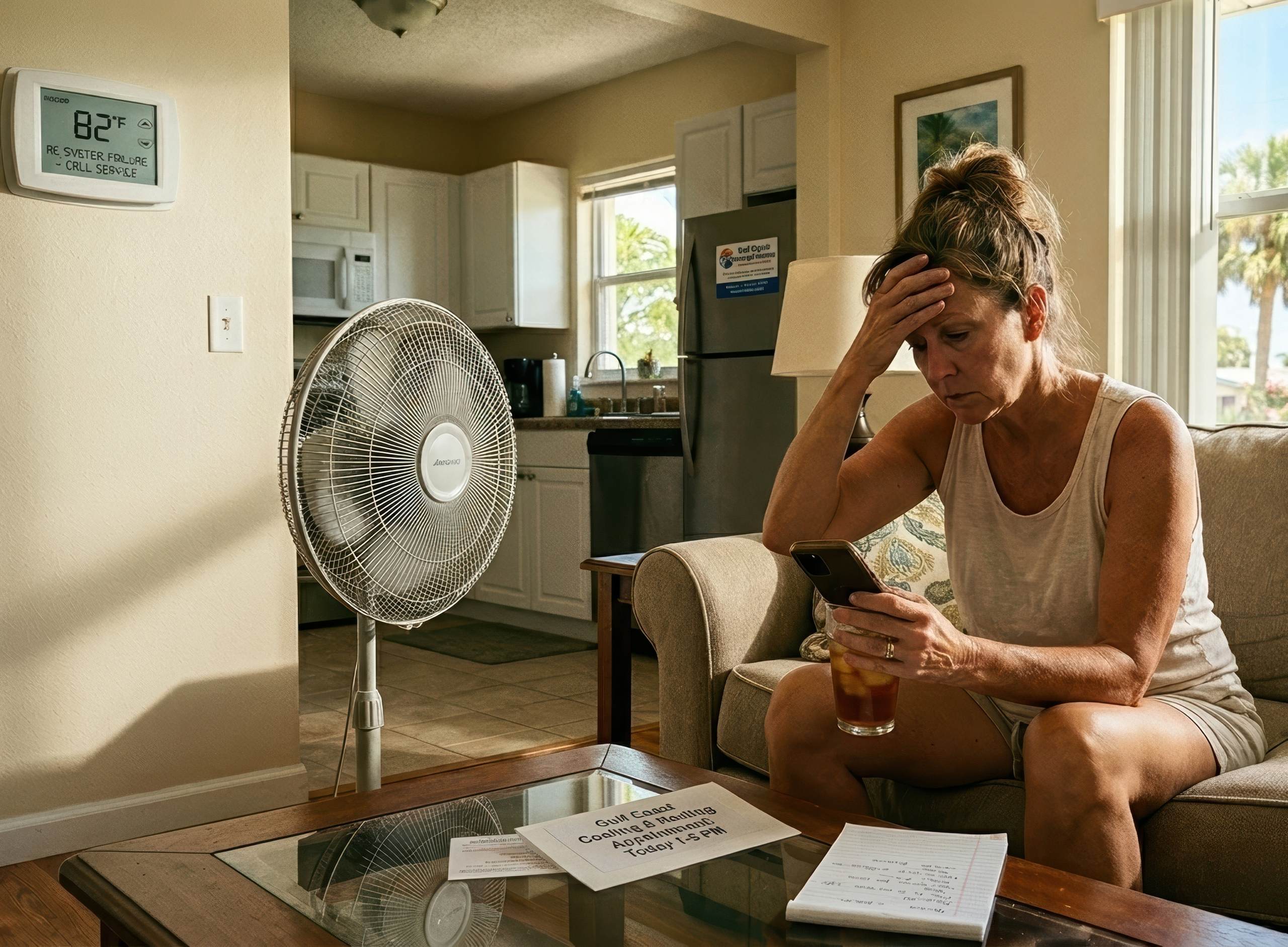
No Florida homeowner needs reminding about the heat and humidity here but if you walk into your home expecting a cool rush of air and the sweat starts pouring as you are blasted with 85°F heat, where do you start troubleshooting?
If your air conditioning is not cooling your house, what do you do?
Cooling issues can start from many places, some more obvious than others. In this guide, we’ll take you through the immediate steps to check whether you need professional HVAC help:
If you want to learn how to nip problems in the bud and save money on expensive repairs, let’s get started…
AC TROUBLESHOOTING: WHAT TO DO IF YOUR AC IS NOT COOLING YOUR HOME
If your AC is not cooling your house, start with a few possible quick fixes. Check the following:
If none of these reveal the problem, check the inside unit:
Then, check the outside unit:
Let’s take a deeper look at each of these troubleshooting steps and find out when you should call a professional.
STAY COOL ALL YEAR ROUND WITH ONE WAY AIR…
The team at One Way Air installs, services, and repairs all types of air conditioning systems in Southwest Florida. Get in touch with us here for a quote or call 239-233-4356 in emergencies.
STEP 1: CHECK THE “OBVIOUS” CULPRITS (THE QUICK FIXES)
Whether it’s the middle of the night or the hottest part of the day, one thing’s almost certain when your central AC packs up: it’ll happen at the time of year when you need your air conditioning the most.
Air conditioners work hard in Florida for much of the year. The 80-90°F temperatures are one thing but the high humidity in summer makes your unit work doubly hard for a few months of the year. That’s when problems are most likely to strike and emergency AC repairs are required.
Some AC problems can be hazardous. However, before you call the professionals, there are a few simple, safe checks and fixes that can save you from forking out unnecessarily.
CHECK THE THERMOSTAT SETTINGS
Key questions and fixes:
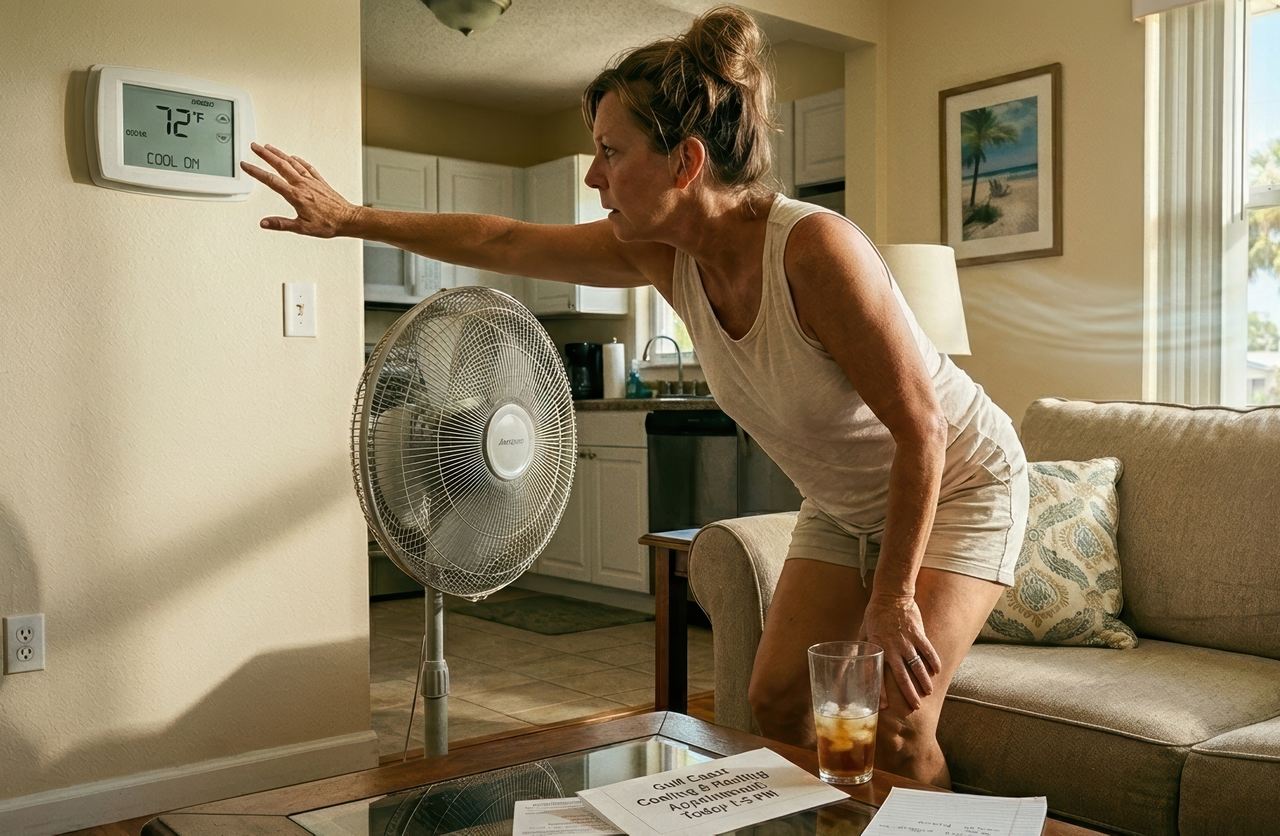
Is the thermostat set to “COOL”?
If not, adjust the setting back to COOL, as someone may have accidentally changed it. Wait a few minutes and see if cold air blows from the registers.
Is the temperature setting correct?
If someone adjusted the temperature out of the normal range, change it back to a few degrees below the current room temperature and test whether that gets cool air blowing.
Is the fan set to “AUTO” or “ON”?
Ideally, use the AUTO setting, which will operate the fan when needed and help reduce humidity in the home. The ON setting will blow air around your home constantly, whether the air has been cooled or not.
Are the batteries working?
If the thermostat screen is blank or unresponsive, change the batteries and see if that fixes the problem.
CHECK THE STATE OF THE AC FILTER
Key questions and fixes:
Is the air filter clogged?
Central air conditioning has an AC filter to trap pollutants and prevent them from circulating around your home. The filter is often located in or around the indoor air handler unit.
A clogged, dirty filter is the number one cause of AC cooling problems and inefficiency, due to the restricted airflow it causes.
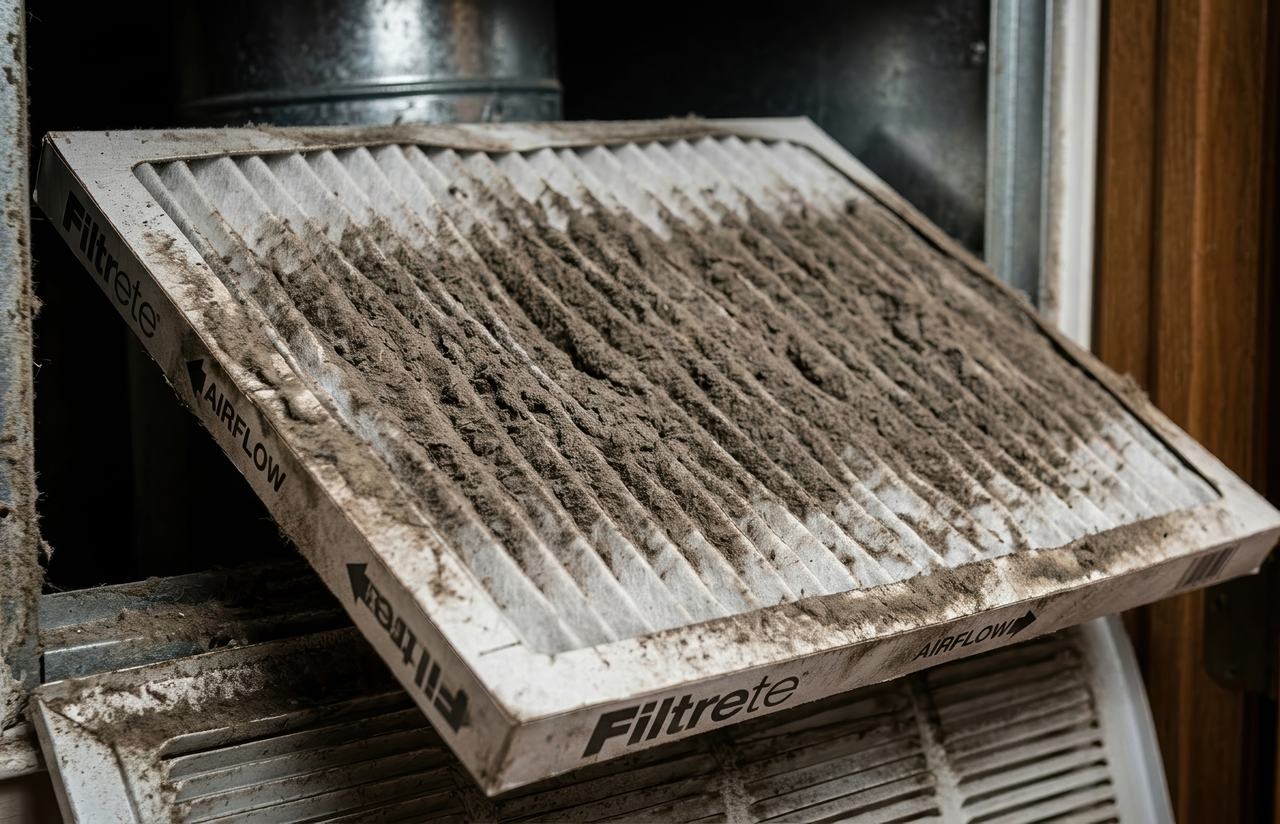
If you haven’t changed your AC filter in several months, notice a “gray blanket” of dust covering it, or experience weak airflow from the vents, clean (if reusable) or replace the filter (more likely). That may fix the problem instantly.
CHECK THE BREAKER BOX
Key questions and fixes:
Did the AC circuit breaker trip?
If a summer afternoon thunderstorm tripped the circuit breaker, as is quite common, you’ll need to flip the breaker switch back to on.
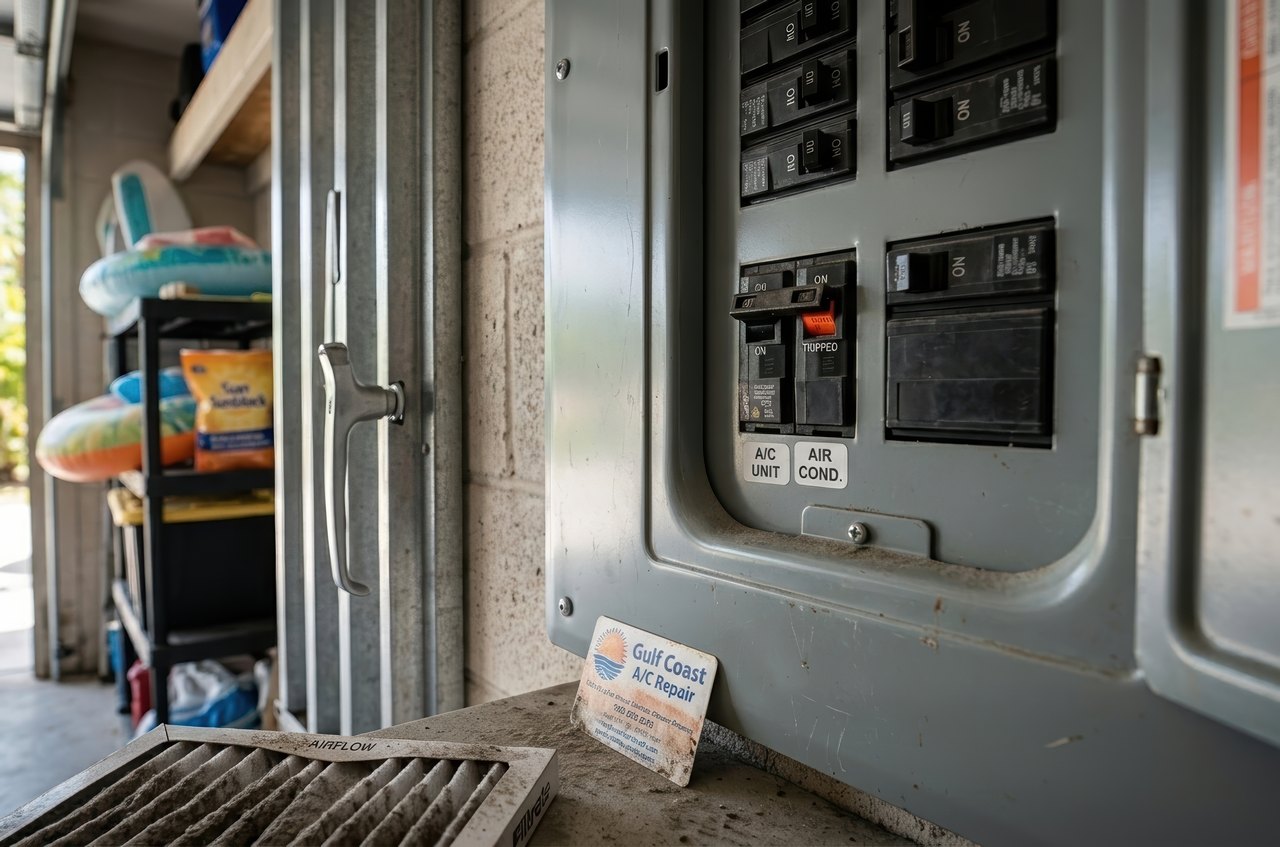
WARNING: If the breaker trips again after resetting, call a professional, as you may have an electrical issue in need of urgent attention.
GOT A HEAT PUMP INSTALLED? CHECK IT’S IN COOLING MODE!
Key questions and fixes:
Is the heat pump set for cooling?
This is an obvious one but some homeowners get confused.
Heat pumps handle both heating and cooling in the home, using a reversing valve to switch between the two modes.
If you’re coming out of winter and the temperatures take an upswing, you might turn on the unit, expect cooling, and forget to check that it is in the correct mode. Alternatively, the reversing valve can stick, keeping the system in heating mode even when you’re trying to cool the house.
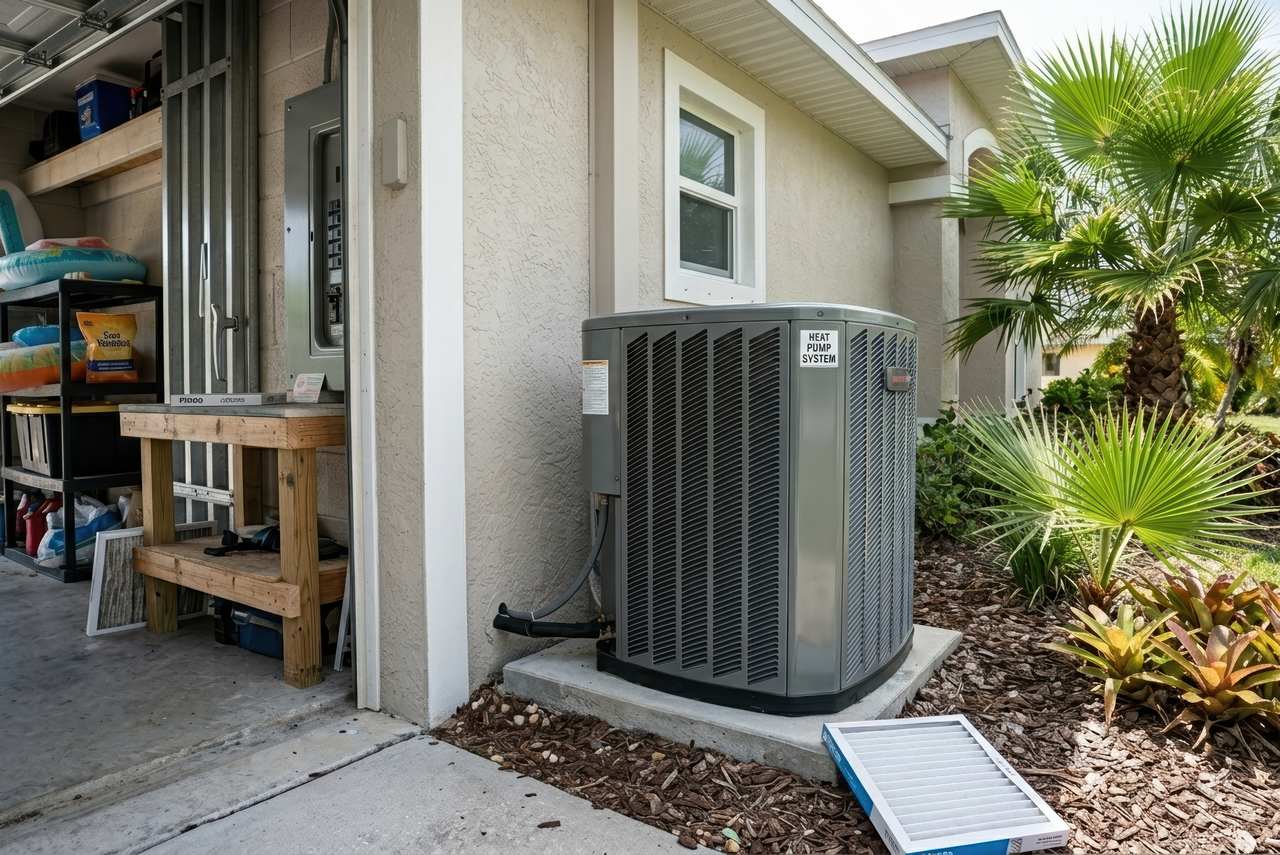
Reduce the risk of this problem by having your heat pump serviced regularly, especially in the spring and fall.
STEP 2: INSPECT THE INDOOR UNIT (AIR HANDLER)
If the most basic steps don’t fix the cooling issue, it’s time to go a bit deeper by checking some common issues with the indoor unit.
In most Florida homes, the indoor air handler is typically located in a garage, a dedicated interior closet, or the attic.
CHECK THE FLOAT SWITCH
Key questions and fixes:
Was the safety switch triggered to stop flooding?
If your AC is not turning on at all, an in-built safety mechanism may have kicked in.
For instance, a clogged condensate line will usually trigger the safety switch that shuts the system off to prevent flooding.
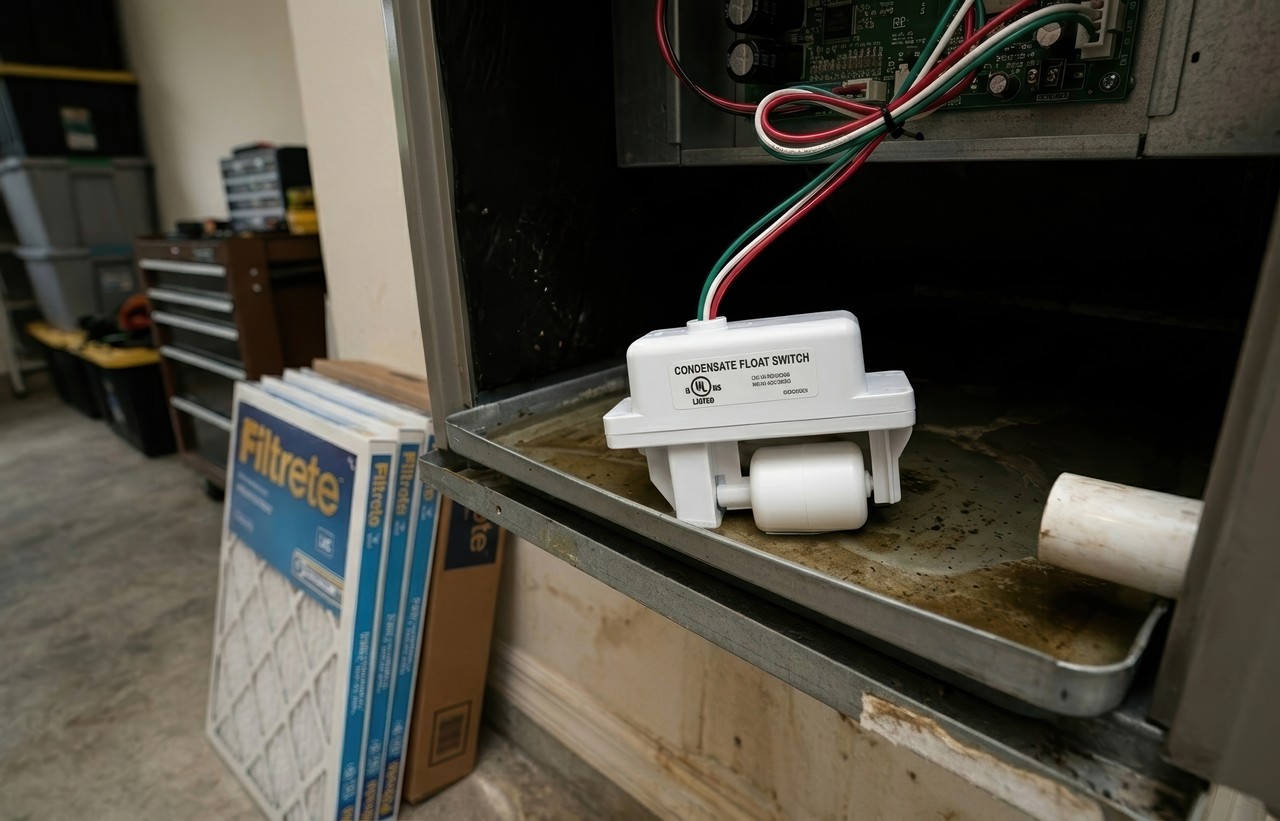
Unclog the condensate line using a wet/dry vacuum on the outside termination point to suck out the sludge. Alternatively, flush the line with warm water and white vinegar.
Note that if the condensate pan is full of water, the switch did its job, but the water must be cleared before the system will restart.
After clearing the condensate line and emptying the pan, switch the unit back on to see if it starts cooling properly again.
CHECK FOR A FROZEN COIL
Key questions and fixes:
Has the evaporator coil frozen up?
If there is ice on the copper refrigerant lines of the unit, which pull heat and humidity from your indoor air, turn the system off immediately but turn the fan to ON to start the thawing process (the blower motor will speed up thawing but the compressor will be off).
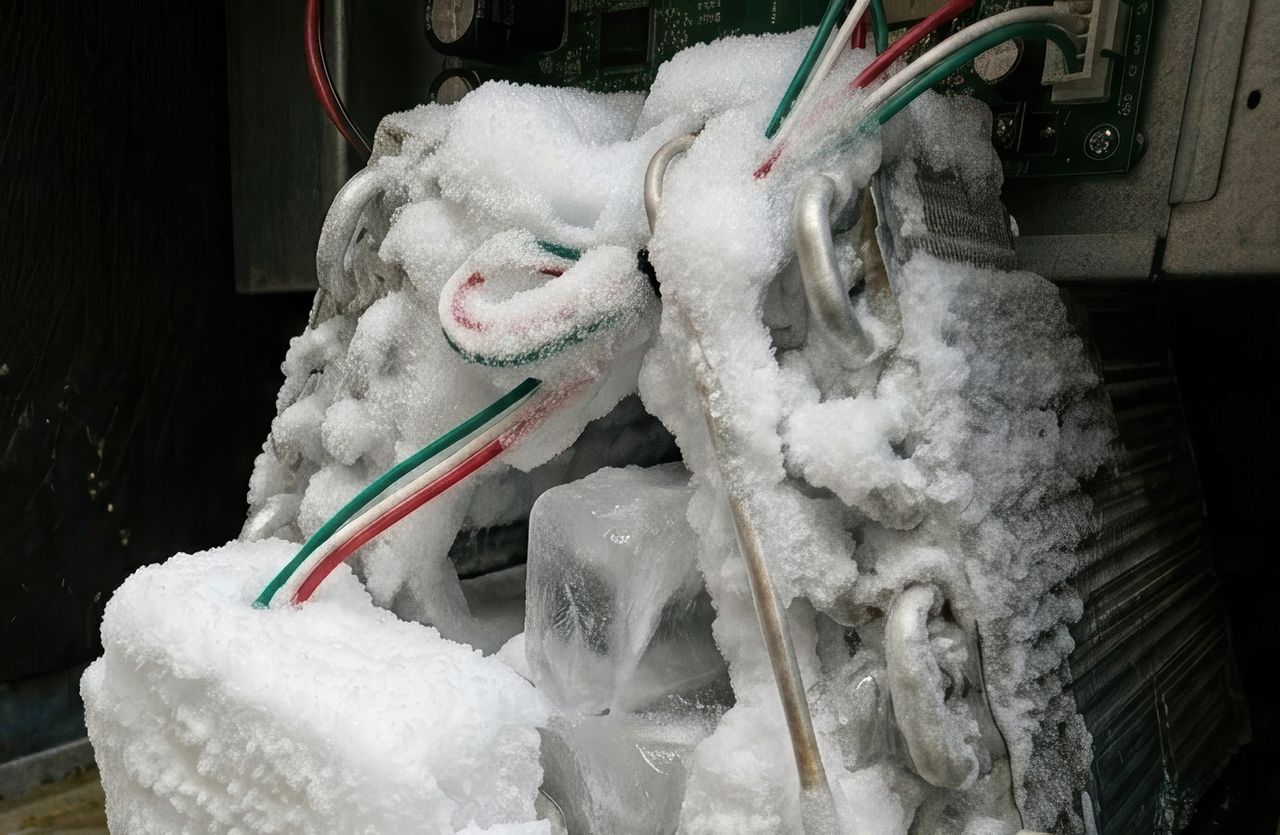
If you replace the filter at the same time, try turning the system on again after it’s fully thawed to see if that fixes the problem (it may have been due to restricted airflow).
If not, call an HVAC technician to troubleshoot the problem.
STEP 3: INSPECT THE OUTDOOR UNIT (CONDENSER)
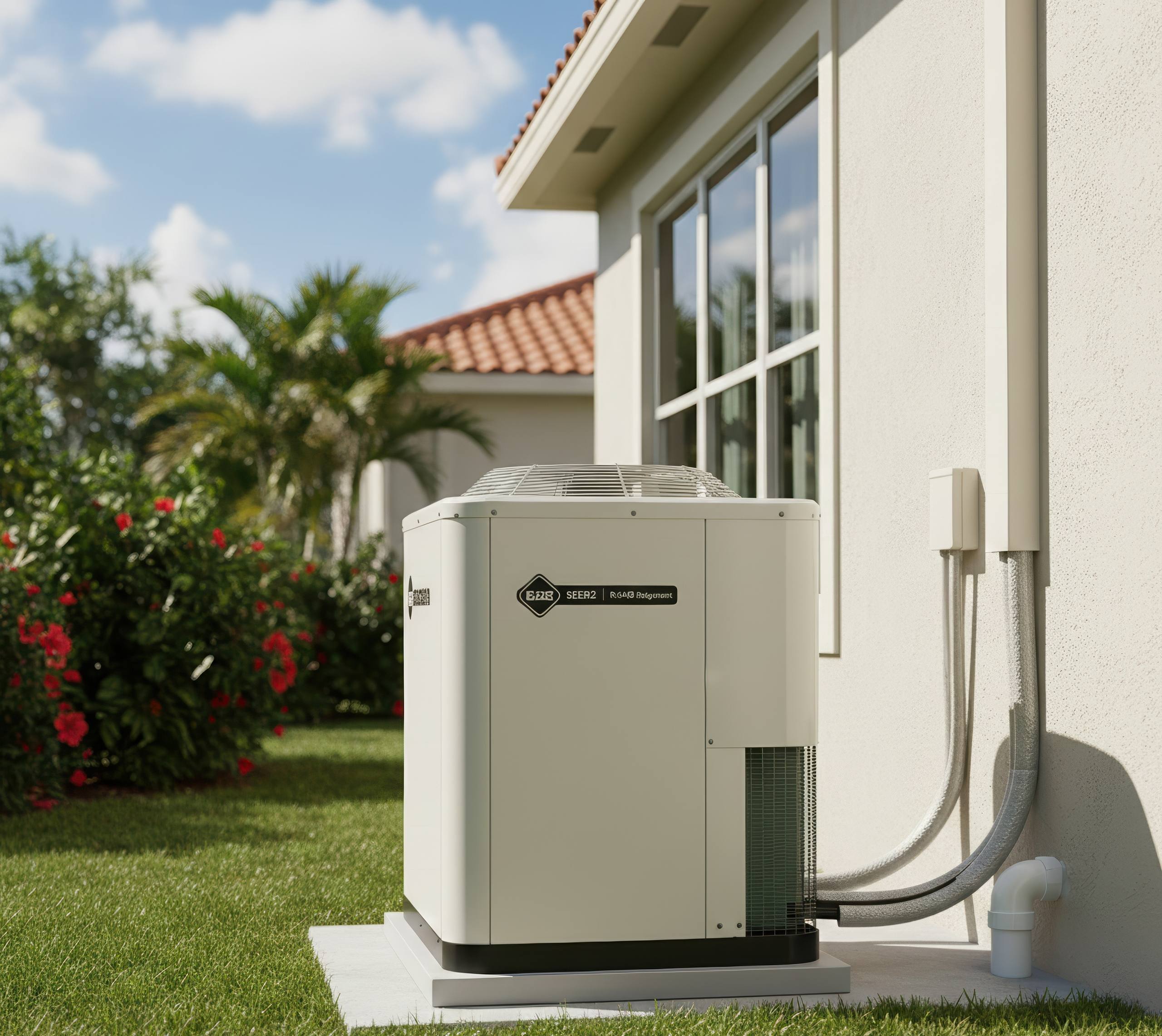
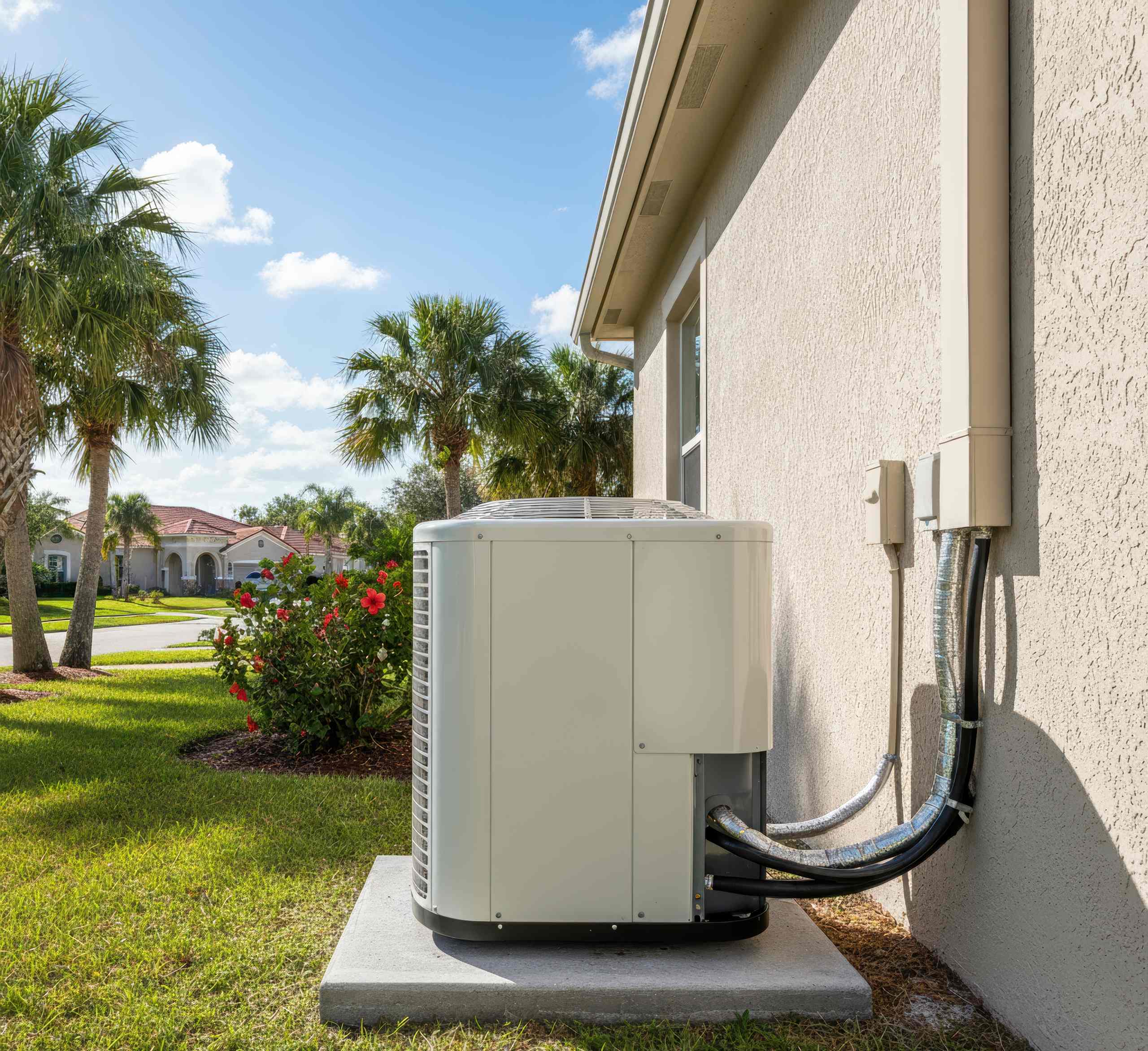
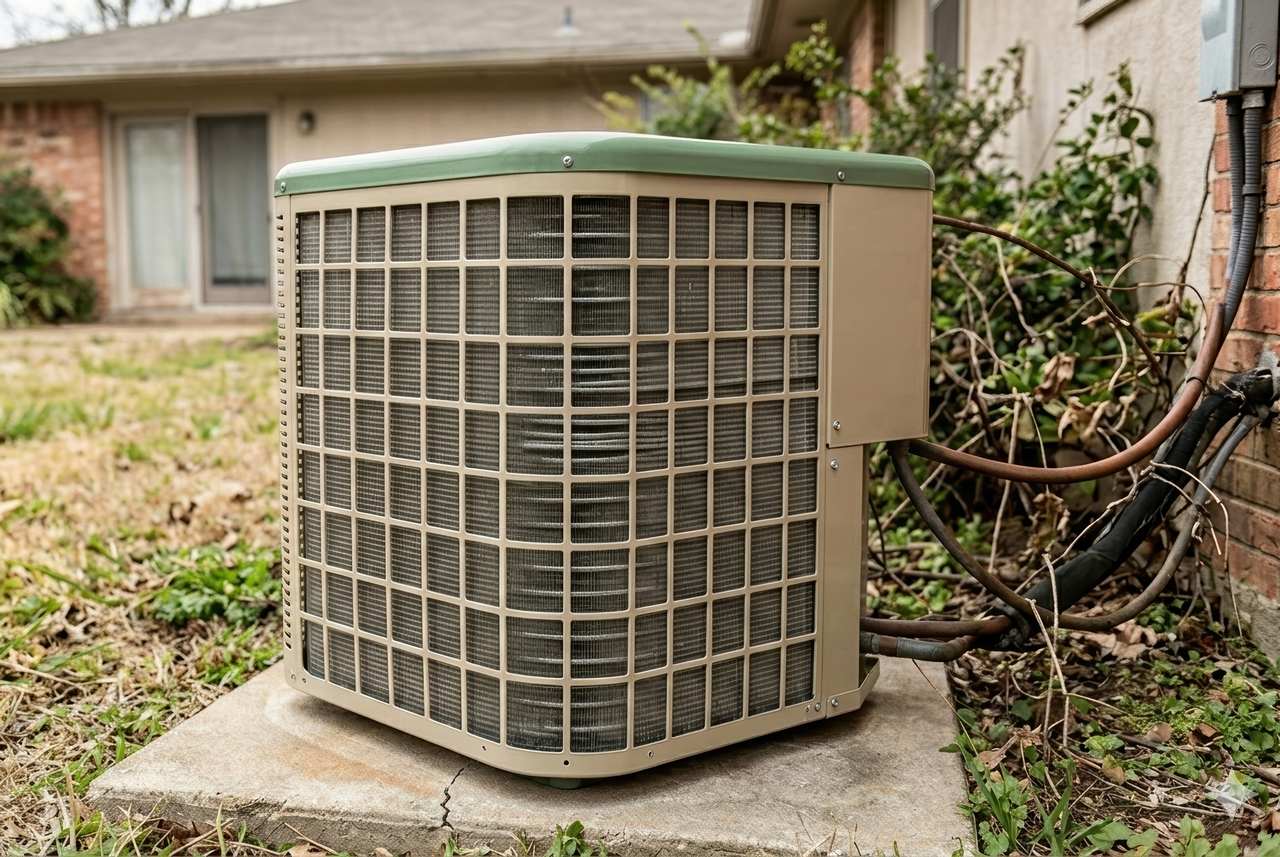
The outdoor unit is known as the condenser unit. It houses the compressor and usually sits adjacent to an outside wall of the home.
The condenser is responsible for dispersing the heat removed from the indoor with the help of a condenser coil, which wraps most of the way around the unit.
CHECK FOR DEBRIS AND GROWTH AROUND THE UNIT
Key questions and fixes:
Is there anything obstructing the unit?
In Florida, palm fronds, vines, and grass clippings could clog or choke the condenser.
Keep the fins of the unit clear year-round by gently brushing, vacuuming, or hosing away dirt with water. Do not use a pressure washer as this could damage the aluminum fins.
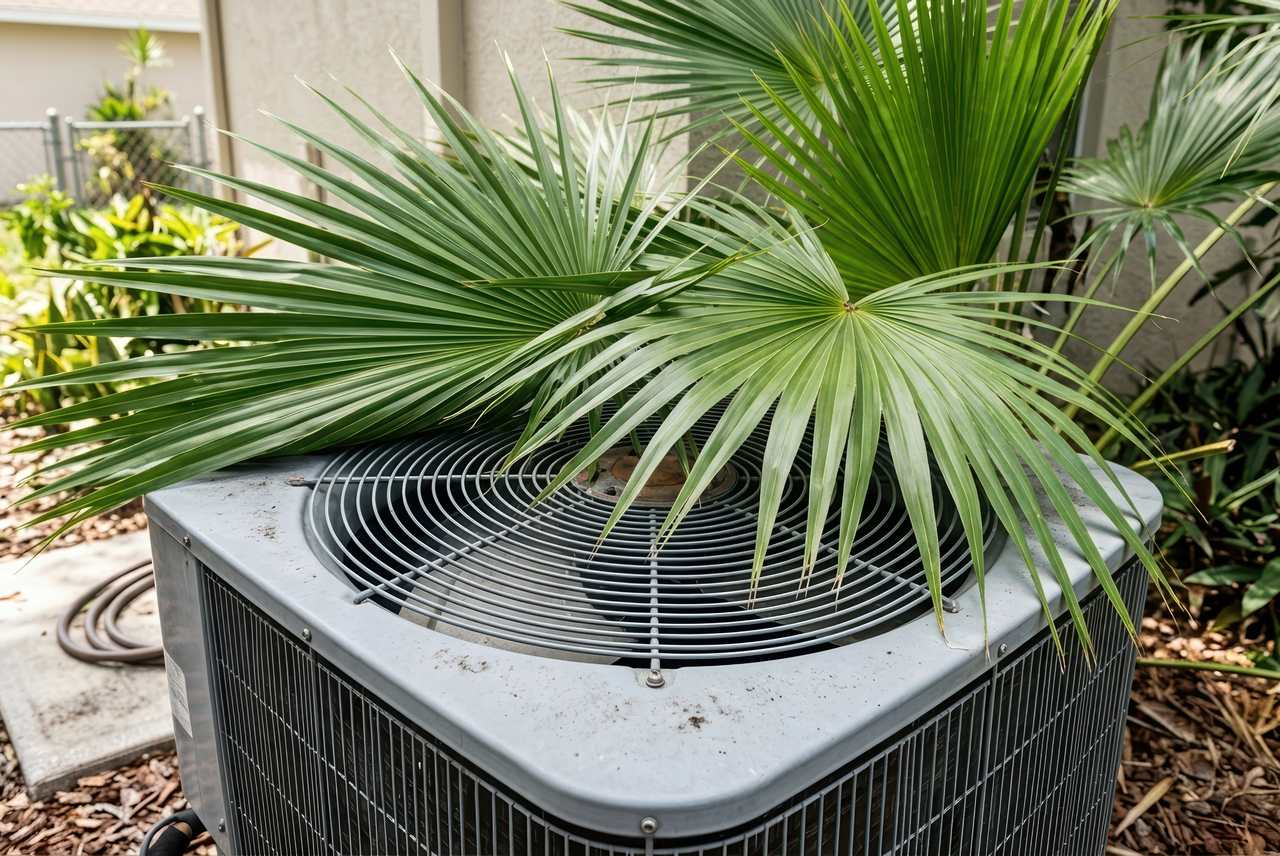
Check after storms to see whether any debris could be blocking airflow around the unit. It’s best to clear at least two feet of space around the unit.
CHECK THE CONDENSER FAN
Key questions and fixes:
Is the fan in the condenser unit spinning and blowing warm air?
If your condenser unit is working properly, the fan inside the unit should be visibly spinning and blowing hot air away from the unit when the AC is on.
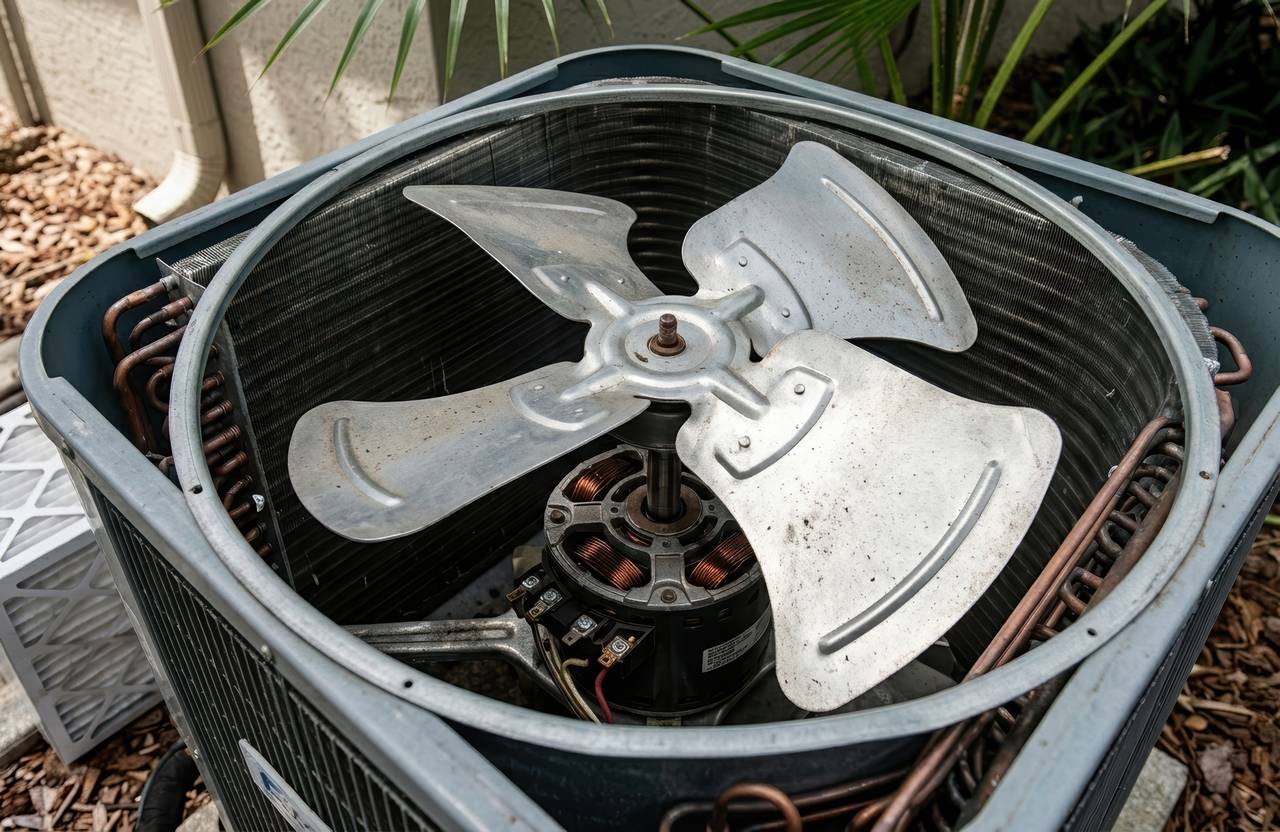
If something’s wrong, it may not be turning at all or it might be blowing cold air. Call an HVAC technician to troubleshoot further.
WHEN TROUBLESHOOTING FAILS: SIGNS YOU NEED A PROFESSIONAL
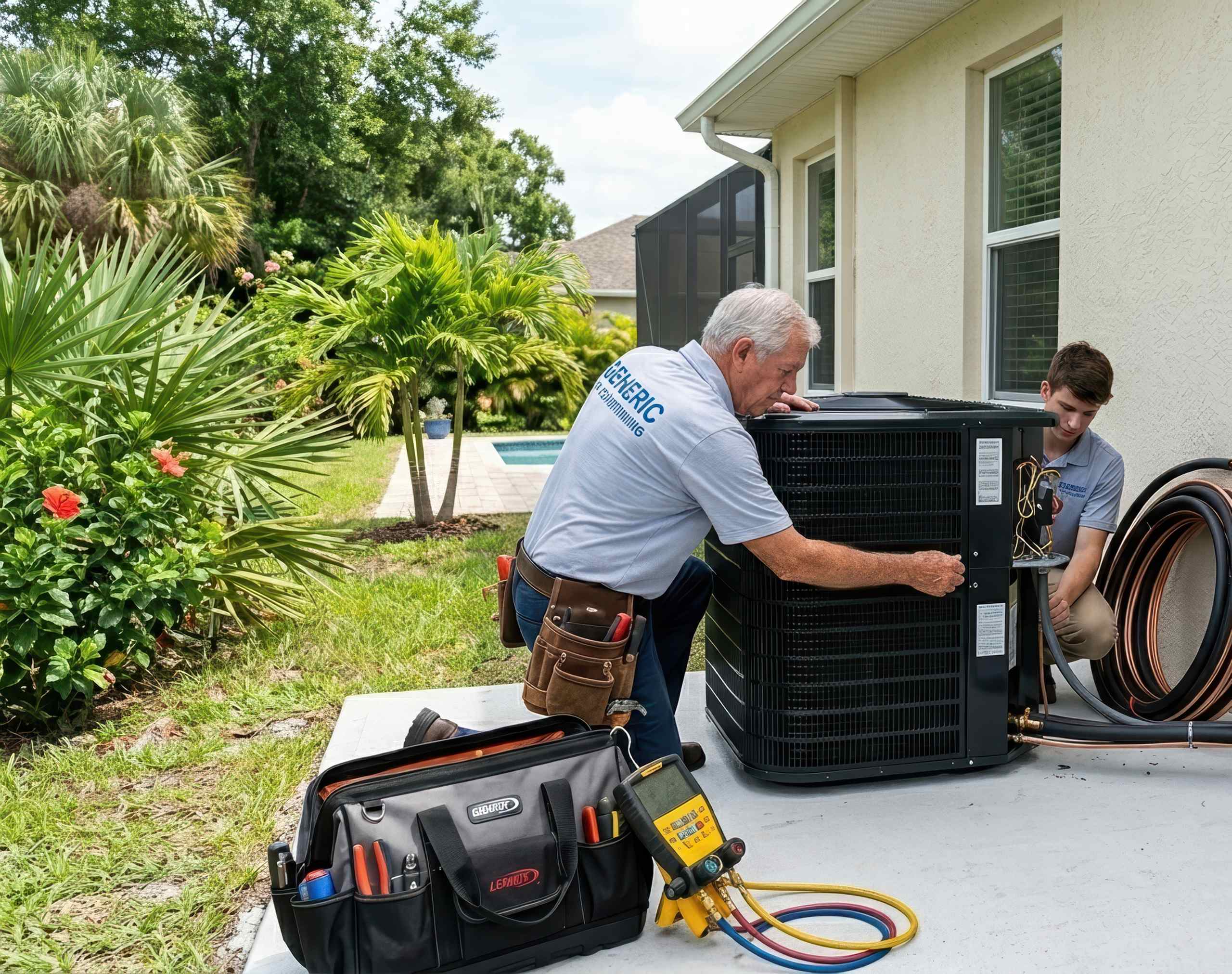
There are many AC issues that DIY simply cannot handle. Attempting fixes could be dangerous. Air conditioning requires a careful balance of calibrated components, electrical work, and refrigerant to function properly.
If your AC is on but not cooling the house, and none of the basic troubleshooting steps above solve the issue, it’s time to call a professional.
Here are some common signs that your AC professional will look for, in addition to those already mentioned:
ELECTRICAL ISSUES
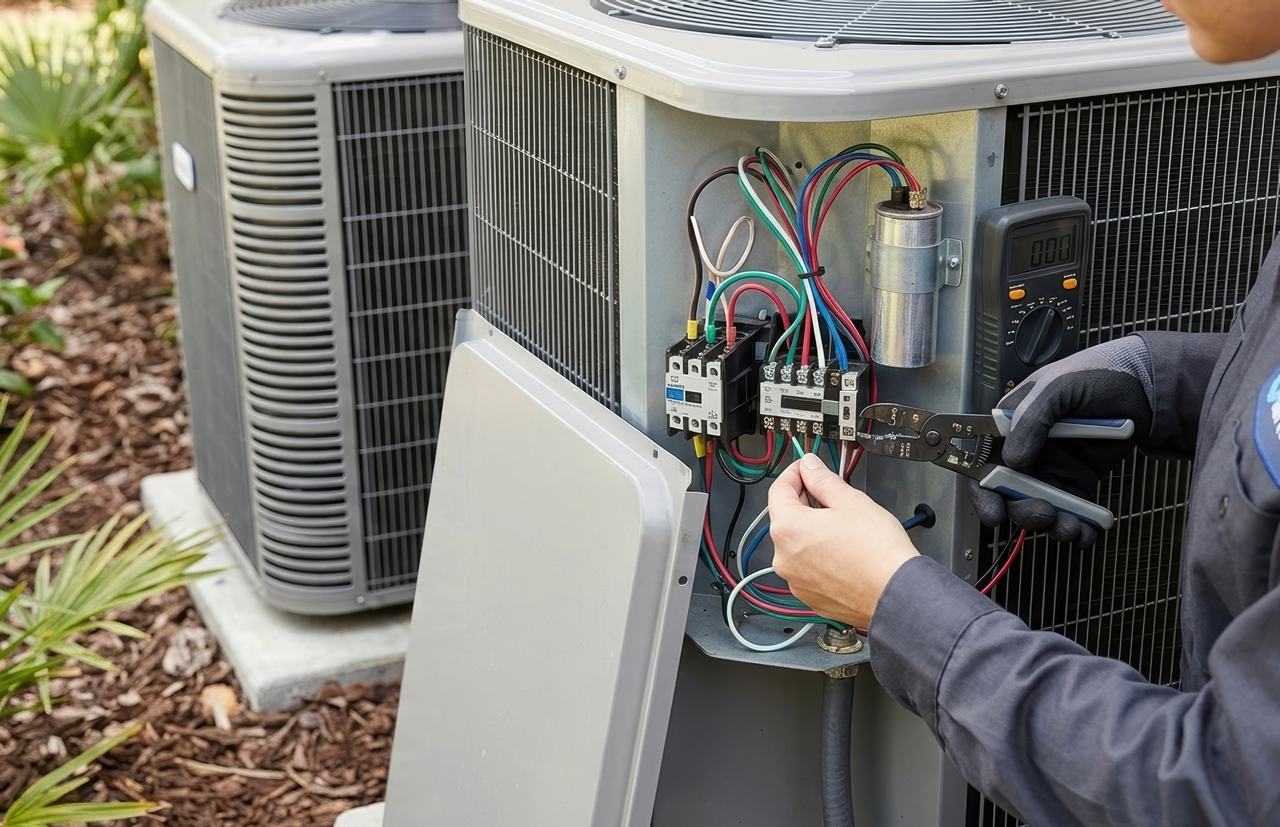
Buzzing sounds or the smell of burning plastic could indicate an electrical issue that should only be handled by a professional.
Problems include a capacitor that needs replacing, damaged or loose wiring, or a faulty electric panel.
REFRIGERANT LEAKS
Strange bubbling or hissing sounds or “sweet” smells emanating from your AC unit may indicate a refrigerant leak.
Refrigerant is central to the cooling process. Your AC uses a specific type of refrigerant that needs careful handling. If there is a leak, the levels drop and the air conditioner may not cool your home properly.
The AC pro will recharge the unit using the correct refrigerant and should also check for the source of the leak to prevent the same problem from recurring.
FAULTY OR DAMAGED PARTS
AC parts wear out and get damaged over time, especially if regular AC maintenance has been neglected or the unit is aging.
If the condenser fan isn’t spinning when the unit is on, for instance, the motor may have given out. If the compressor breaks, repairs may be too expensive and a replacement will be required.
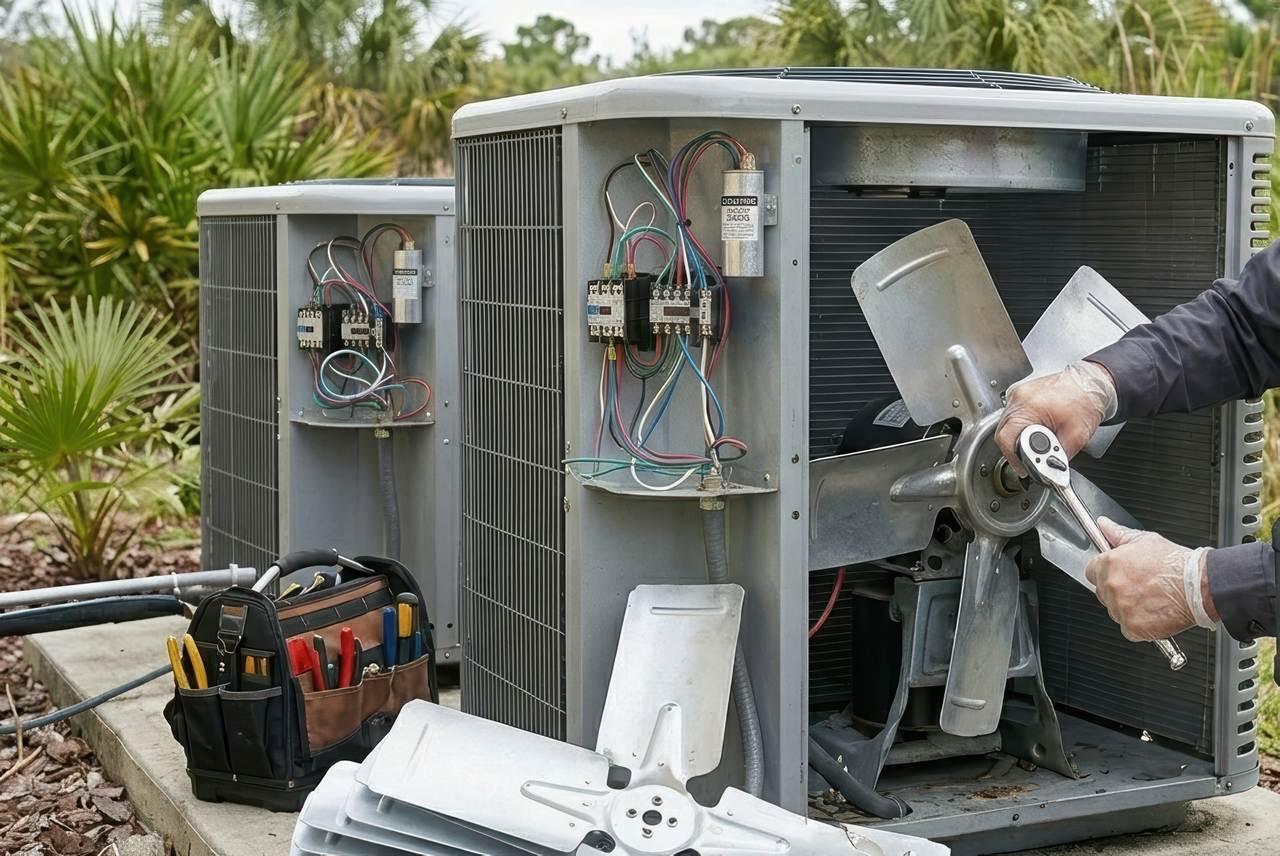
A pro can troubleshoot the impacted parts and recommend whether to replace or repair.
THE UNIT IS THE WRONG SIZE FOR YOUR HOME
If the unit installed in your house is not big enough, it will not adequately cool the space, no matter how long you run it.
So, if the AC never hits the temperature on the thermostat despite being on for hours, and none of the simple fixes work, size may be the problem.
The required cooling capacity in a home is a relatively simple equation for a professional with the right equipment but many homeowners get it wrong.
A professional will assess your home’s square footage, occupancy, insulation, sun exposure, and other factors to determine what BTU/tonnage of unit is required.
If this wasn’t done before installation, you may need to resize your unit. Contact a professional AC contractor to perform a Manual J load calculation that will tell you the size of AC you really need.
THE UNIT IS JUST TOO OLD TO COOL YOUR HOME
AC units don’t last forever. In fact, they last a few years less in Florida than in most of the country, due to the heat, humidity, and salt in the air.
If your unit is 10-15 years old and starts playing up even after maintenance and repairs, it might be time to think about upgrading to a new, high-efficiency unit.
LEAKY DUCTWORK
If cool air is escaping through gaps or disconnected sections in your ductwork, this will also impact cooling in the home.
You might notice weak airflow, certain rooms not cooling properly or a general lack of cooling in the house. A professional will need to pinpoint where the problem is and seal gaps to restore proper airflow.
PREVENTION IS BETTER THAN CURE: YOUR “FLORIDA-PROOF” MAINTENANCE PLAN
In Florida, neglecting annual AC maintenance can result in more than an inefficient system. You could be looking at a complete system failure.
AC units work so hard here that many homeowners get their AC or heat pump maintained twice per year. This helps the AC perform when it’s needed, keeps the bills down, and extends its lifespan.

In between AC tune-ups, change the filter every 1-3 months and keep the area around the outside AC clear.
KEEP YOUR HOUSE COOL ALL YEAR ROUND
Whether you need AC repairs, maintenance, AC resizing, or an upgrade, the One Way Air team understands the climate here and the cooling requirements of homes.
We’ve helped thousands of homeowners just like you across the SW Florida region over the past two decades.
For reliable advice and prompt fixes, contactus today.