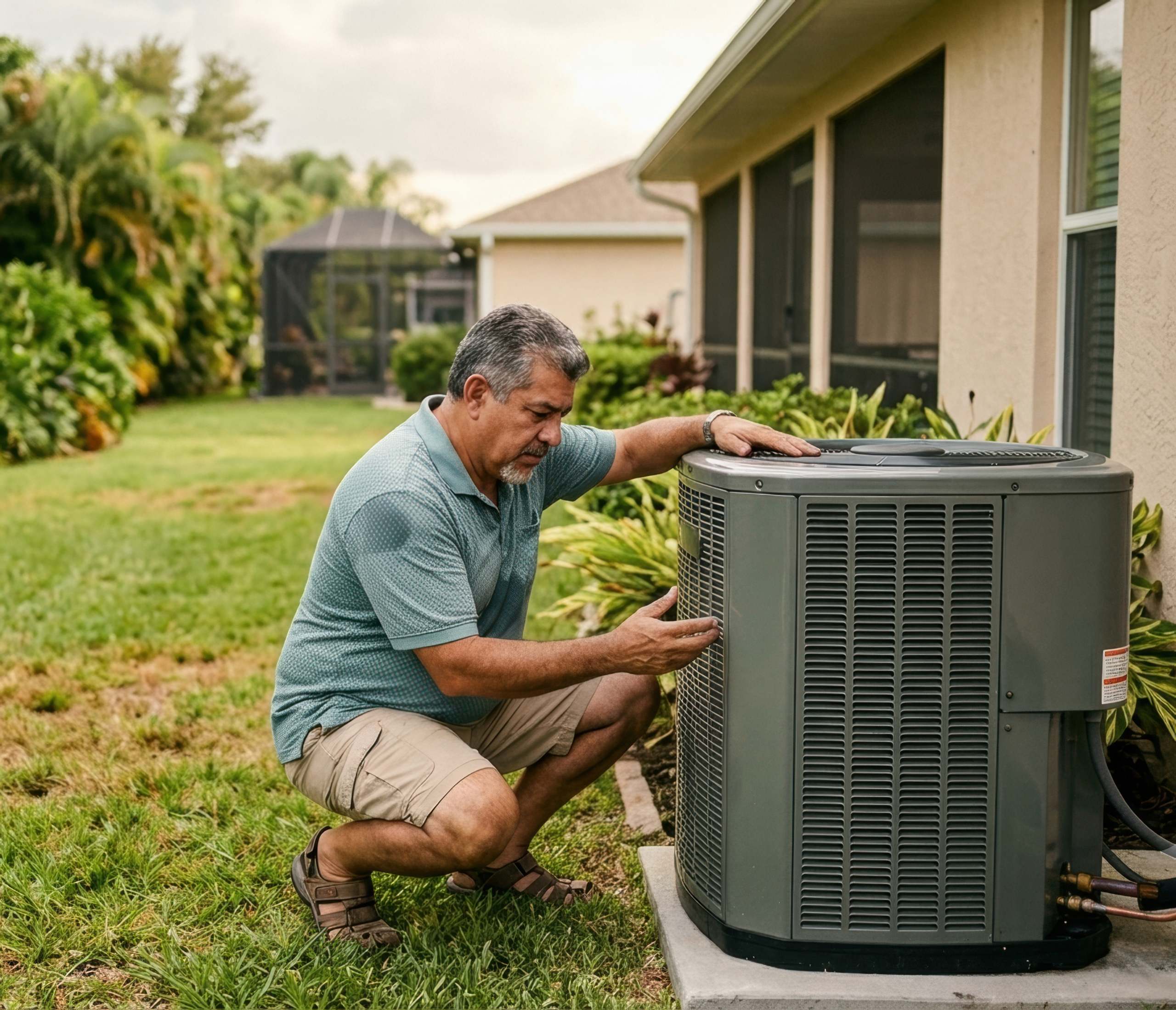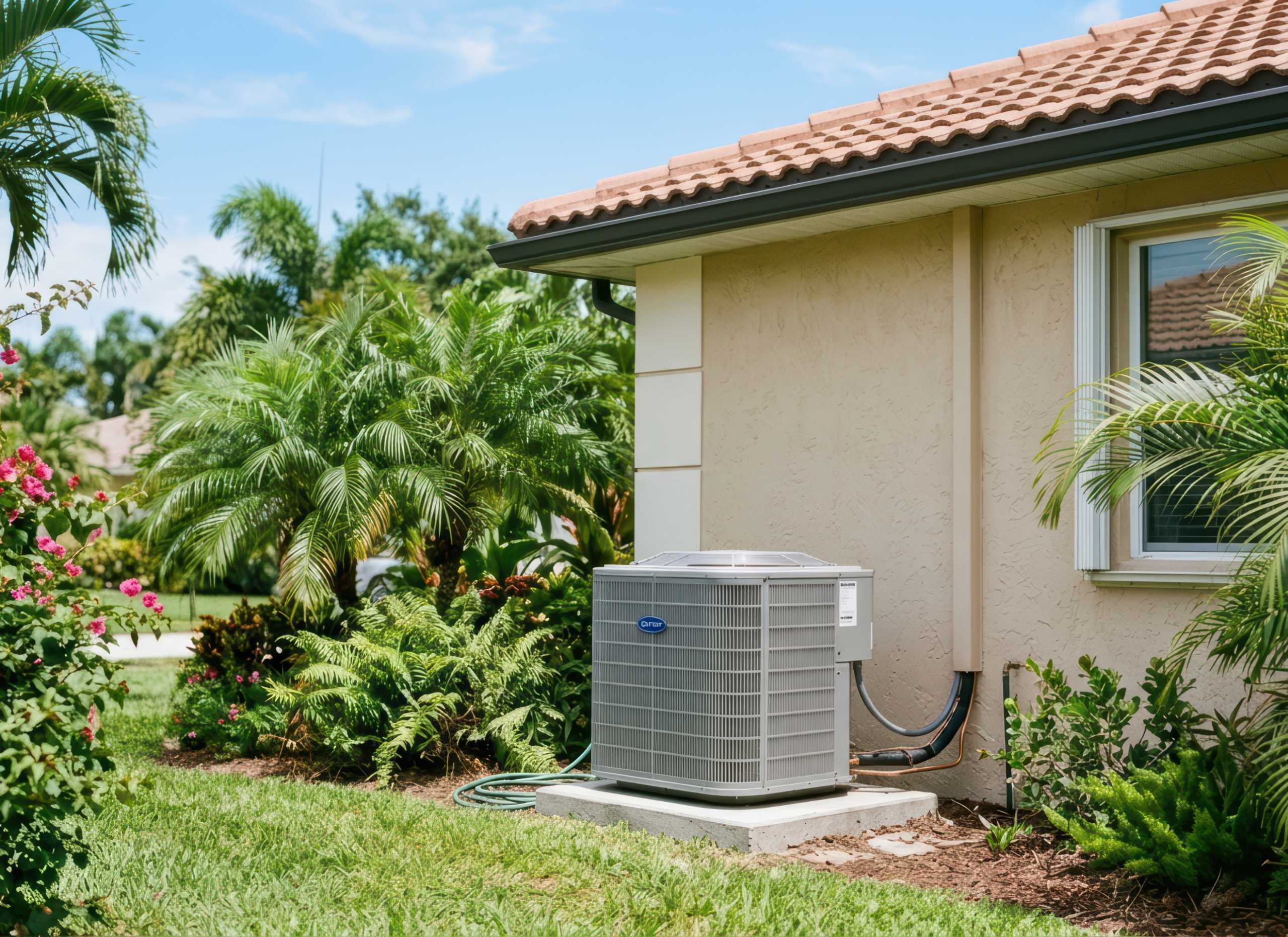
A home that feels warm and sticky even though the air conditioner is running is frustrating. Most people check the thermostat or the air filter first. Many do not think about a small PVC pipe near the indoor unit, yet a clogged AC drainline is one of the more common reasons an air conditioner stops cooling properly. Florida homes are especially affected because high humidity makes the system produce a lot of condensation every day.
This guide explains what the drain line does, how a blockage changes cooling performance, which warning signs to watch for, and what you can safely check yourself. It also covers when an air conditioner repair is the better choice. The information comes from the kind of service calls that One Way Air handles for Florida homeowners.
What Does the AC Drain Line Do?
Cooling air does more than lower its temperature. It also removes moisture. As warm indoor air passes over the cold evaporator coil, water vapor condenses on the coil surface, much like water forming on a cold glass. That water drips into a drain pan below the coil and flows out of the house through the condensate drain line.
In a humid climate, an air conditioner can remove several gallons of water from the air on a hot day. The drain line has to carry all of it away continuously. When the line is clear, you never notice it. When it is blocked, the water has nowhere to go, and that is when AC drain line problems begin to affect both comfort and the home itself.
Main parts of the condensate system
- Evaporator coil: the cold surface where moisture condenses.
- Drain pan: a shallow tray that catches the water.
- Drain line: the PVC pipe that carries water outside or to a approved drain point.
- Float switch: a safety sensor that shuts the system off if water rises too high.
- Access port or vent: an opening near the indoor unit used for cleaning and airflow in the line.
How a Clogged AC Drain Line Affects Cooling
A blocked drain line does not always stop the air conditioner right away. The effect usually builds in stages, and the early stages are easy to mistake for other problems.
Reduced cooling and higher humidity
When water backs up in the pan, the system can no longer remove moisture efficiently. Indoor humidity climbs, and the air feels warmer than the thermostat setting suggests. Rooms may feel clammy even when the air coming from the vents seems reasonably cool. High humidity also encourages musty odors and can contribute to mold growth on ceilings, walls, and ductwork.
Automatic shutoff
Most modern systems have a float switch in or near the drain pan. When the water level rises because of a clog, the switch cuts power to the outdoor unit or the whole system to prevent overflow. From the homeowner’s point of view, the air conditioner simply quits cooling. The thermostat may still call for cooling, and the indoor fan may even keep running, but no cold air is produced. If you have noticed an AC leaking water along with weak cooling, the drain line is one of the first places a technician will look, and the topic is covered in more depth in this guide on why an AC leaks water and how to fix it.
Water damage around the indoor unit
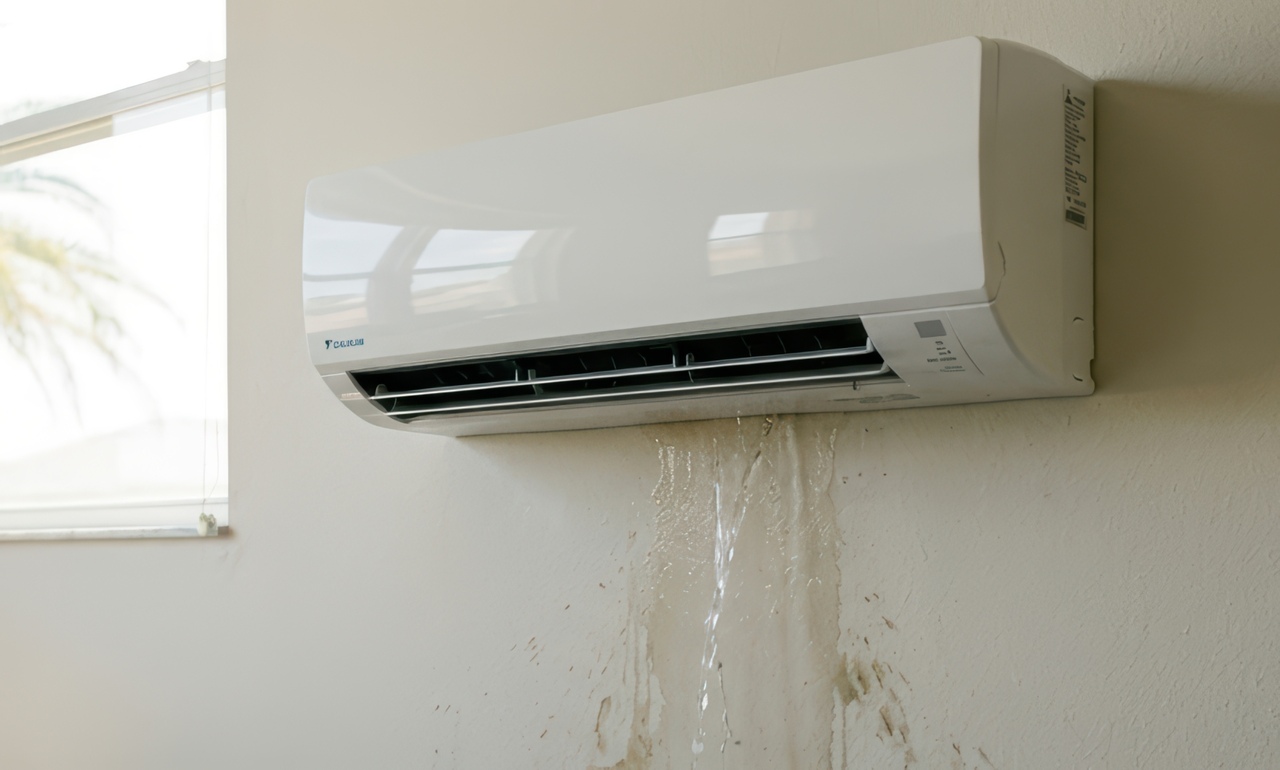
If there is no float switch, or the switch fails, the overflow spills into the surrounding area. In many Florida homes the air handler sits in a garage, a closet, or an attic. Water can stain ceilings, soak insulation, warp flooring, and damage drywall. Repairs for water damage often cost far more than clearing the clog would have.
Added strain on the system
A system that struggles to remove moisture runs longer cycles and works harder to reach the set temperature. Over time, this extra runtime increases energy use and wear on components. A clog that is left alone can turn a simple maintenance task into a larger repair.
Common Causes of AC Drain Line Problems
Understanding why drain lines clog helps with prevention. The inside of the line is dark, damp, and constantly wet, which makes it a good place for buildup.
- Algae and mold: the most common cause in warm, humid regions.
- Dirt and dust: airborne debris that passes the filter can wash into the pan and line.
- Sludge: a slimy mix of biological growth and debris that thickens over time.
- Insects and small debris: insects, spider webs, or even small nests can block the outlet end of the line.
- Poor installation: lines with too little slope or sharp bends collect water and slow the flow.
- Damaged or crushed pipe: a cracked or kinked section can restrict drainage.
- Dirty air filters: a neglected filter lets more dust into the system, which adds to buildup.
Warning Signs of a Clogged AC Drain Line
Catching the problem early limits the damage. Watch for these signs:
- Water pooling around the indoor unit or dripping from the ceiling below it.
- A musty or moldy smell near the vents or the air handler.
- Rising indoor humidity with weak or uneven cooling.
- The system shutting off unexpectedly, especially during humid weather.
- Standing water in the drain pan.
- Water stains on nearby walls or ceilings.
- Visible slime or algae at the end of the drain line outdoors, or no water dripping at all on a hot day.
That last point is worth noting. During hot weather, a working system usually drips water from the drain outlet outside. If the outlet stays completely dry while the system runs for hours, the water may be trapped somewhere along the line.
Symptoms, Causes, and Effects at a Glance
One Way Air, an air conditioning company serving homeowners across Florida, often sees drain line symptoms overlap with other cooling problems. The table below helps separate them and shows what each one usually means for cooling performance.
| Symptom | Likely Cause | Effect on Cooling | Typical Next Step |
|---|---|---|---|
| Water near the indoor unit | Blocked drain line or full drain pan | Weak cooling, possible shutoff | Check the pan and clear the line |
| System stops cooling suddenly | Float switch triggered by backed up water | No cold air until the clog is cleared | Turn the system off and inspect the line |
| Musty smell from vents | Algae or mold growth in the pan or line | Reduced airflow quality, higher humidity | Clean the drain line and pan |
| High indoor humidity | Poor condensate removal | Room feels warm and sticky | Inspect the drain line and coil |
| No dripping at the outdoor drain outlet | Clog or crushed section of pipe | Moisture stays in the system | Request a professional inspection |
| Ice on the indoor coil | Restricted airflow or refrigerant issue | Little or no cooling | Turn the system off and call a technician |
What You Can Safely Check Yourself
A few simple checks are reasonable for most homeowners. Always turn off the air conditioner at the thermostat and the breaker before touching anything near the indoor unit.
- Look at the drain pan. If it holds standing water, a clog is likely.
- Check the outdoor outlet. Look for debris, insects, or slime at the end of the drain line.
- Use a wet and dry vacuum. Placing it at the outdoor end of the line can pull out a loose clog.
- Flush the access port. Pouring a small amount of distilled white vinegar into the port, waiting about thirty minutes, and then flushing with clean water can help break down light algae. Avoid harsh chemicals, which may damage the pipe or nearby components.
- Replace the air filter. A clean filter reduces the debris that reaches the drain.
If water keeps returning, or if the pan overflows again within a short time, the blockage may be deeper in the line or may be linked to another problem. This is where a ice-covered coil often enters the picture. A drain line clog and a frozen AC coil can occur together, because poor airflow and heavy moisture strain the system at the same time, and ice buildup melts into extra water that the drain pan then has to handle.
When to Call an Air Conditioner Repair Company
Some situations are better left to a trained technician. Consider calling an air conditioner repair company if:
- The clog returns shortly after you clear it.
- You see water damage on ceilings, walls, or flooring.
- The float switch keeps shutting the system down.
- You notice ice on the coil or refrigerant lines.
- The drain line is hard to reach, buried, or runs through the attic.
- Mold growth is visible or the odor does not go away.
A professional AC repair service can clear the line with proper tools, inspect the drain pan for rust or cracks, test the float switch, check the slope and connections of the pipe, and look for related issues such as a dirty coil or low airflow. This matters because a drain line problem is often a symptom of a wider condition rather than an isolated event.
How to Prevent AC Drain Line Problems
Prevention is simpler than repair, and most of it fits into routine care.
- Change the air filter regularly, usually every one to three months depending on the filter type, pets, and household dust.
- Flush the drain line on a schedule, with a small amount of vinegar every few months during heavy cooling season.
- Keep the area around the outdoor drain outlet clear of mulch, leaves, and debris.
- Check the drain pan for water and rust whenever you change the filter.
- Install a drain pan sensor or float switch if your system does not have one, so the unit shuts off before water overflows.
- Schedule yearly service. A technician can clean the line, test safety switches, and catch small issues early. A detailed explanation of what a visit covers is available in this overview of annual AC maintenance and why it matters.
In Florida, where air conditioners run almost year round, it also helps to have the system checked before the hottest months arrive. Drain lines in warm climates collect growth faster than lines in cooler regions, so they benefit from more frequent attention.
Conclusion
A clogged AC drain line can affect cooling in several ways. It can raise indoor humidity, trigger an automatic shutoff, cause water damage, and add stress to the whole system. The warning signs are usually easy to notice once you know what to look for: water near the indoor unit, a musty odor, weak cooling, and a dry drain outlet outside. Simple habits such as changing filters, flushing the line, and scheduling yearly service go a long way toward preventing AC drain line problems.
When the clog keeps coming back or the system keeps shutting down, a proper inspection is the safest route. One Way Air provides AC repair service, installation, maintenance, and emergency support for homes across Florida, and its technicians can find the cause of a drain line issue before it grows into a larger repair. Contact our team to schedule an inspection and get your home cooling comfortably again.
Frequently Asked Questions
Yes. A blocked line can cause water to back up into the drain pan. This can trigger a float switch that turns the system off, or it can leave the home humid and warm because moisture is not being removed properly. In either case, cooling drops until the clog is cleared.
Common signs include water near the indoor unit, a musty smell, high humidity, weak cooling, and no dripping from the outdoor drain outlet during hot weather. A technician can confirm the problem by inspecting the pan and testing the flow through the line.
It is rarely an immediate safety risk, but it can lead to water damage, mold growth, and damage to electrical components near the air handler. Turning off the system when you see standing water helps limit the damage until the line is cleared.
Many homeowners flush the line every few months during cooling season, and a technician typically cleans it during annual service. Homes in humid areas, or homes with a history of clogs, may need more frequent attention.
Light clogs can often be cleared with a wet and dry vacuum at the outdoor end and a vinegar flush at the access port. Persistent or repeated clogs, water damage, or a drain line that is hard to reach should be handled by a professional.
Not directly, but the two issues often appear together. Restricted airflow and excess moisture can contribute to ice on the coil, and the melting ice adds more water to a drain system that may already be struggling.
The cost depends on how severe the clog is, how accessible the line is, and whether other parts need attention. A simple cleaning is generally less expensive than repairing water damage or replacing a damaged drain pan, so addressing the problem early usually saves money.